PLI Incentive Calculator
Estimate potential government incentives for your manufacturing project based on India's Production Linked Incentive schemes. This tool uses data from the article about government manufacturing initiatives and sector-specific growth patterns.
Estimated Incentives
Enter your project details to see potential benefits
How PLI Incentives Work
Electronics 10% of production value
Pharmaceuticals 15% of production value
Textiles 15% on machinery imports
Job Impact Note: New factories are highly automated. While production increases, direct manufacturing jobs may not grow proportionally. Expect a shift toward technical roles (robotics, AI monitoring, logistics).
When you hear news about factories popping up across the country, it’s easy to think manufacturing is booming again. But is that true? Are more factories being built-or are we just seeing the same old plants get upgraded with new machines? The answer isn’t as simple as headlines suggest. And if you’re wondering whether this trend affects jobs, supply chains, or even your local economy, you’re not alone.
What’s really driving factory construction today?
It’s not just private companies deciding to build new factories. Government schemes are the biggest catalyst right now. In the last two years, over 1,200 new industrial plots have been approved under national manufacturing incentives. These aren’t random projects-they’re tied to specific policy goals like reducing import dependence, boosting exports, and creating regional employment.
The biggest push comes from programs like Production Linked Incentive (PLI) schemes a government initiative that offers cash rewards to manufacturers who increase production in targeted sectors. Since 2021, India has allocated more than $40 billion across 14 sectors. Electronics, pharmaceuticals, and textiles have seen the most activity. But it’s not just about money-it’s about location. New industrial zones are being built near highways, ports, and rail hubs to cut logistics costs.
Which sectors are seeing the most new factories?
Not all manufacturing is growing at the same pace. Some industries are exploding. Others are barely moving.
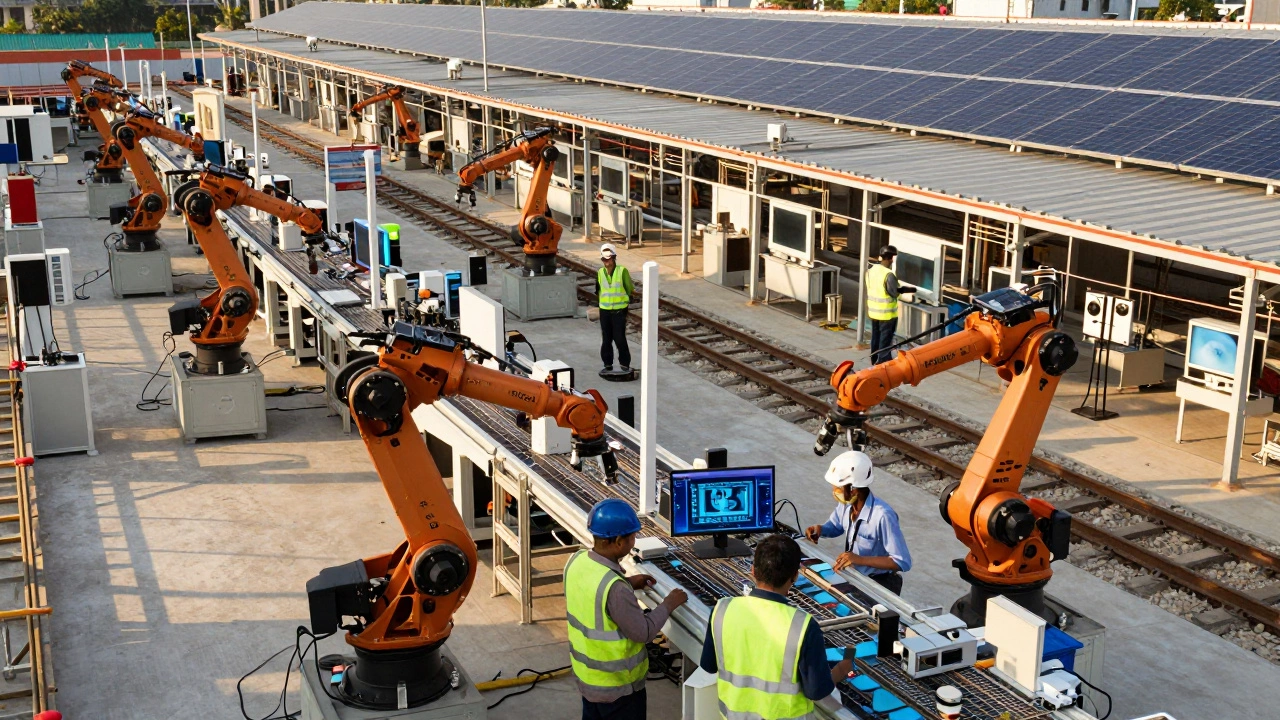
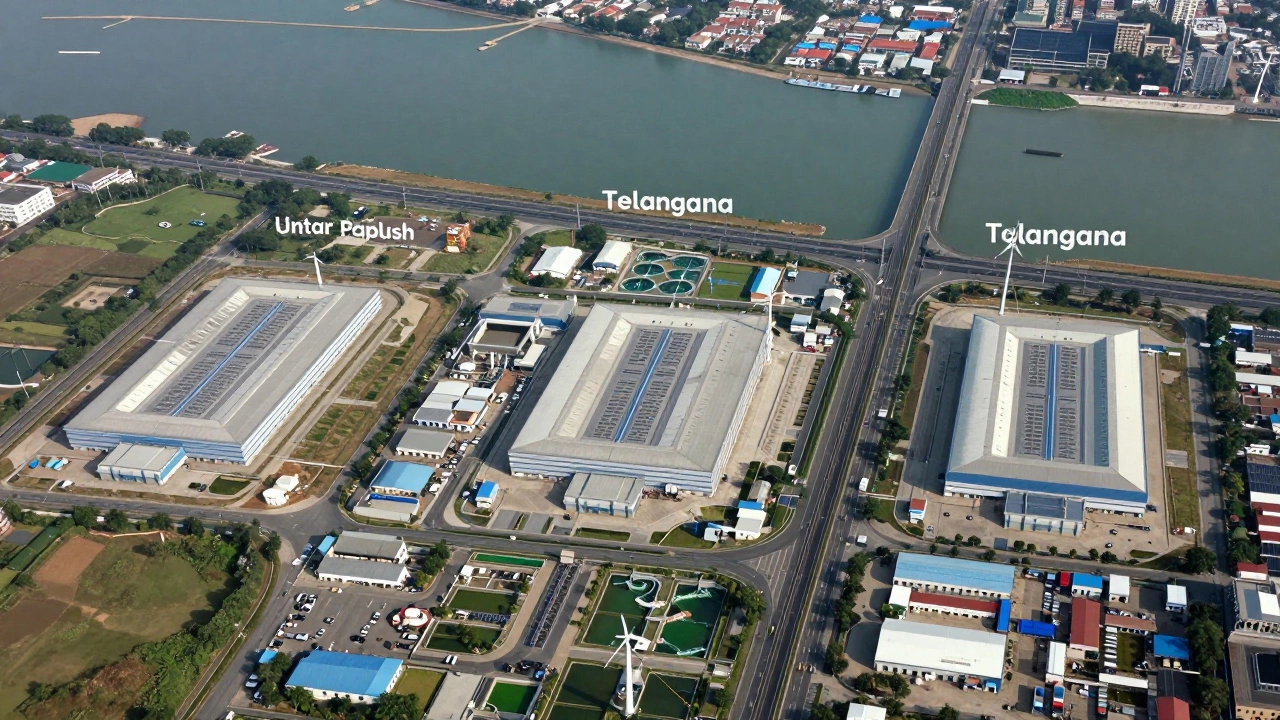
Electronics manufacturing leads the pack. Over 350 new factories have been approved under the PLI scheme since 2022. Companies like Foxconn, Pegatron, and Dixon Technologies have built or expanded facilities in Tamil Nadu, Uttar Pradesh, and Telangana. These aren’t small assembly lines-they’re fully automated plants producing smartphones, laptops, and components for global brands.
Pharma manufacturing is next. After the pandemic exposed supply chain risks, the government fast-tracked approvals for API (active pharmaceutical ingredient) plants. Over 80 new facilities are under construction. This is critical because India used to import over 70% of its basic drug ingredients. Now, the goal is to bring that down to under 30% by 2027.
Textile manufacturing is seeing a quiet but steady rise. New factories are popping up in Gujarat and Maharashtra, focused on high-value technical textiles-not just cotton shirts. Think medical gowns, solar panel backings, and bulletproof fabrics. The government is offering 15% subsidies on machinery imports for these projects.
Meanwhile, sectors like steel, chemicals, and machinery are seeing mostly upgrades-not new builds. Older plants are getting automated. New ones? Rare. The capital needed is too high, and the return on investment too slow.
Why aren’t all industries building factories?
You’d think if the government is offering incentives, everyone would jump in. But that’s not how it works.
Building a factory isn’t like opening a shop. It takes 18-24 months just to get permits, clear land, and install heavy equipment. Then you need trained workers, steady power, and reliable water. Many states still lack this infrastructure.
Also, not every incentive is equal. The PLI scheme focuses on export-oriented production. If you’re making goods just for the domestic market, you don’t qualify for the biggest payouts. That’s why small local manufacturers aren’t rushing to build. They don’t have the scale to meet export targets.
And then there’s the cost of energy. Electricity prices for manufacturers vary wildly. In some states, industrial power costs ₹8 per unit. In others, it’s ₹14. That difference can make or break a factory’s profitability. So companies pick locations based on cost-not just government promises.
What does this mean for jobs?
More factories don’t always mean more jobs. That’s the surprising twist.
The new factories being built are highly automated. A smartphone plant that would’ve needed 2,000 workers in 2015 now runs with 400. Robots handle assembly. AI checks quality. Drones track inventory.
So while the number of factories is rising, the number of factory jobs isn’t. Instead, we’re seeing a shift in job types. There’s growing demand for technicians who can maintain robots, data analysts who monitor production lines, and logistics coordinators who manage supply chains. But fewer assembly-line workers.
This is why training programs are now part of every government scheme. In states like Madhya Pradesh and Odisha, the government is partnering with ITIs (Industrial Training Institutes) to train 50,000 workers per year in automation and robotics. Without this, the new factories won’t have the people to run them.

Is this just a short-term boom?
Some experts worry these factory builds are a one-time surge fueled by pandemic-driven panic and political pressure. Once global supply chains stabilize, will companies keep investing?
So far, the data says yes. Companies that started under the PLI scheme in 2022 are already reporting 30-40% growth in exports. That’s not a fluke. It’s a business model that’s working. And because the incentives are tied to production targets-not just setup costs-companies are locked in for five years. They can’t just walk away.
Also, global brands are shifting away from China. Vietnam and Bangladesh are getting some of that business. But India is the only country with the scale, workforce, and policy stability to handle the next wave. That’s why Apple, Samsung, and Sony are all expanding here-not just in one plant, but across multiple locations.
What’s next?
The next phase of factory growth won’t be about building more plants. It’ll be about making existing ones smarter.
Look for more focus on:
- Green factories with solar power and zero-waste water systems
- Clusters of small suppliers around big manufacturers
- AI-powered quality control systems replacing manual inspections
- Exports to Africa and Southeast Asia, not just the US and EU
The government is already planning Phase 2 of the PLI scheme, targeting 2027-2032. This time, it’s not just about electronics and pharma. It’s about electric vehicle parts, defense equipment, and renewable energy components.
If you’re in manufacturing, this isn’t a trend you can ignore. Whether you run a small workshop or a large plant, the rules are changing. The factories being built today aren’t just factories-they’re nodes in a new industrial network. And if you’re not part of it, you’re falling behind.
Are more factories being built in India right now?
Yes, but not everywhere and not in every sector. Over 1,200 new industrial plots have been approved since 2022, mostly in electronics, pharmaceuticals, and textiles. These are driven by government schemes like the Production Linked Incentive (PLI). Most new factories are large, automated, and export-focused. Smaller, traditional factories aren’t expanding as fast.
Which government schemes are causing this factory boom?
The main driver is the Production Linked Incentive (PLI) scheme, which offers cash rewards to manufacturers who increase production in targeted sectors. Over $40 billion has been allocated across 14 sectors, including electronics, pharma, and textiles. Other supporting schemes include Make in India, Industrial Parks Development, and state-level subsidies for machinery imports.
Why aren’t all industries seeing new factories?
High setup costs, long approval times, and inconsistent infrastructure are major barriers. Sectors like steel and chemicals need massive capital and energy, which many regions can’t support. Also, PLI incentives only apply to export-oriented production, so businesses focused on the domestic market don’t get the same benefits. Many small manufacturers simply can’t meet the scale requirements.
Are these new factories creating more jobs?
Not as many as you’d expect. New factories are highly automated, so they need fewer assembly-line workers. Instead, demand is rising for technicians, data analysts, and logistics experts. Governments are responding by training 50,000 workers per year in automation and robotics through Industrial Training Institutes (ITIs). The job shift is real-from manual labor to tech-driven roles.
Is this factory growth sustainable?
So far, yes. Companies that joined PLI schemes in 2022 are already seeing 30-40% export growth. The incentives are tied to multi-year production targets, so businesses can’t walk away. Global brands are shifting supply chains away from China, and India is the only country with the scale, workforce, and policy stability to take on large volumes. The next phase will focus on green energy, AI, and regional supply clusters-not just more buildings.