
Turning an idea into a physical product isn’t about having a big factory or millions in funding. It’s about moving step by step, from a sketch on a napkin to something people actually buy. If you’ve got an idea for a product - whether it’s a kitchen gadget, a wearable accessory, or a custom tool - you don’t need to wait for permission. You just need to start.
Start with a clear problem, not just a cool idea
Too many people fall in love with their idea instead of the problem it solves. Ask yourself: Who exactly has this problem? How do they deal with it today? What do they hate about current solutions?
For example, a friend in Brisbane designed a foldable laundry basket with built-in drying racks. She didn’t start with ‘I want to make a basket.’ She noticed how many apartment dwellers in Queensland struggle with drying clothes indoors during humid months. That’s the real hook.
Write down your answer to these three questions:
- Who is my user?
- What pain point am I fixing?
- Why won’t they just keep using what they’ve got?
If you can’t answer those clearly, go back to the drawing board. No amount of manufacturing skill will save a product nobody needs.
Build a rough prototype - fast and cheap
You don’t need a CAD model or a 3D printer to test your idea. Start with cardboard, duct tape, clay, or even Lego. The goal isn’t to make it look pretty. It’s to see if it works.
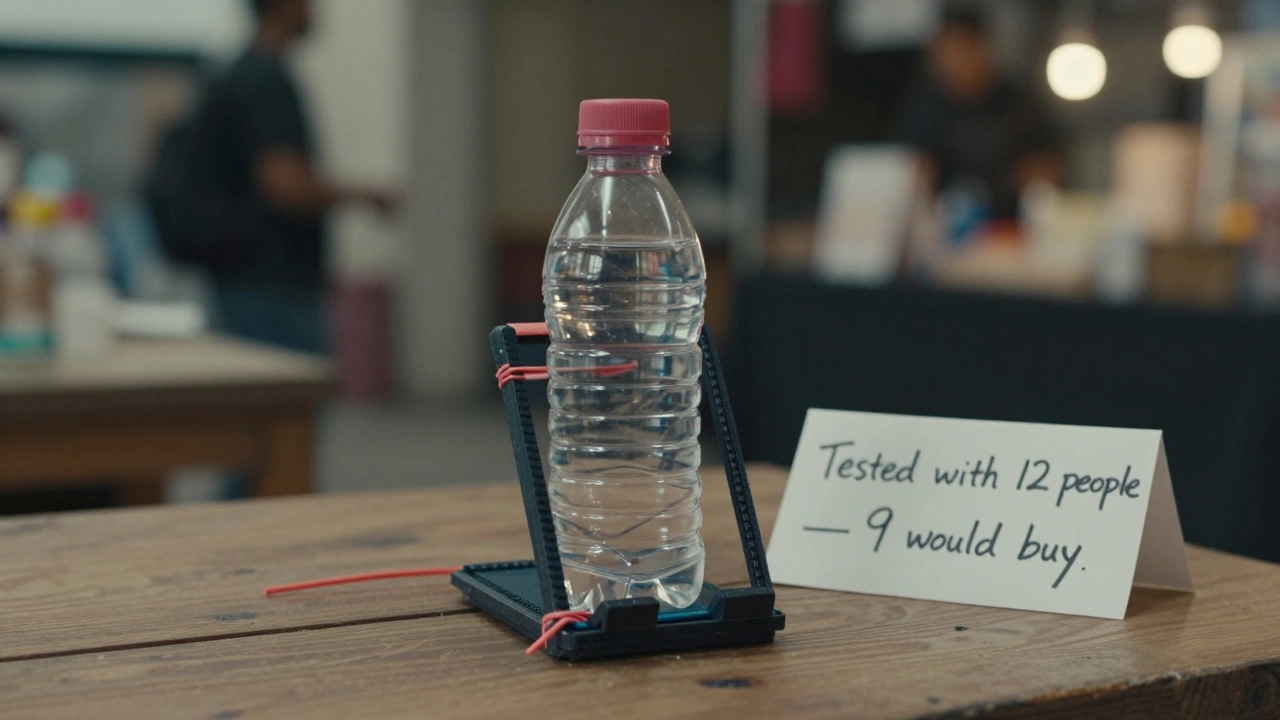
One maker in Melbourne turned his idea for a phone stand with a built-in cable organizer into a prototype using a plastic bottle, hot glue, and zip ties. He showed it to 12 people at a local market. Nine said they’d buy it. That’s all he needed to move forward.
Here’s how to build your first prototype:
- Use materials you already have - no shopping required.
- Make it functional, not polished.
- Test it with real people. Watch how they use it.
- Ask: ‘Would you pay $20 for this tomorrow?’ If they hesitate, fix the design.
Prototypes don’t need to be perfect. They just need to prove the concept holds up in real life.
Find your first manufacturer - not the biggest one
Most beginners think they need to find a factory in China. That’s wrong. Start local. Look for small workshops, hobbyist makers, or even co-working spaces with CNC machines and laser cutters.
In Australia, places like MakeHaus in Brisbane or Griffith University’s Innovation Hub offer access to equipment and mentors for under $50 a month. You can rent time on a 3D printer, laser cutter, or CNC mill. Some even help you source materials.
Here’s what to look for in a small manufacturer:
- They’ve made similar products before
- They’re open to small runs (10-100 units)
- They’ll let you visit and watch the process
- They don’t demand full payment upfront
Don’t sign anything until you’ve seen at least one sample. Ask for a ‘test batch’ of 5-10 units. Pay for it. If they refuse, walk away.
Test demand before you mass-produce
Never spend thousands on molds or tooling before you know people will buy. Use pre-orders. Set up a simple landing page. Take payments via PayPal or Stripe. Offer early-bird pricing.
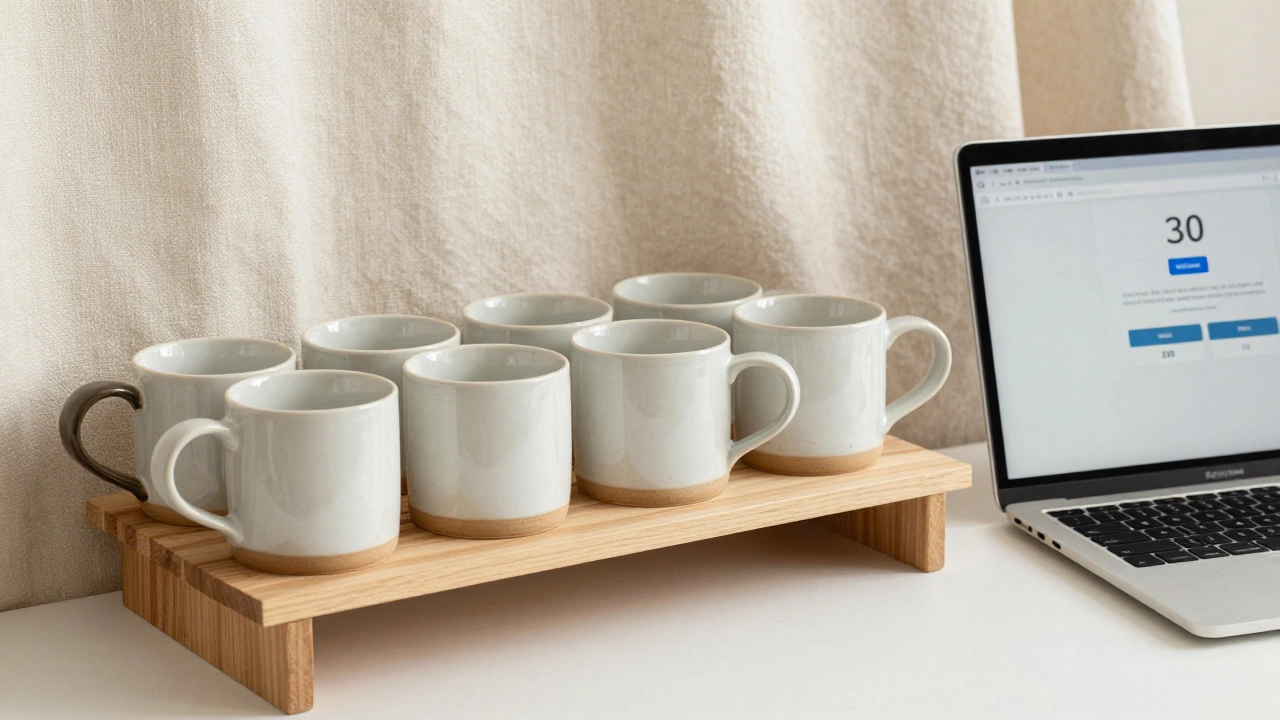
One woman in Sydney made 30 handmade ceramic coffee mugs with custom handles. She posted them on Instagram with a link to pre-order. In 72 hours, she sold out. That gave her the cash to invest in a real mold - and proof that demand existed.
Here’s how to test demand without inventory:
- Create a simple website with one image and a ‘Pre-order Now’ button
- Use Facebook or Instagram ads targeting people who follow similar products
- Offer a 20% discount for the first 50 buyers
- Track how many people click, sign up, or pay
If fewer than 20 people commit, rethink your product or pricing. If 50+ do, you’re ready for the next step.
Choose materials that are easy to source and recycle
Material choice isn’t just about cost - it’s about supply chains and sustainability. Avoid exotic plastics, rare metals, or imported components unless you absolutely need them.
For example, if you’re making a handheld device, use ABS plastic instead of polycarbonate. It’s cheaper, easier to mold, and widely recyclable. If you’re making clothing, look for locally woven cotton or recycled polyester from Australian mills like Ecotextile Solutions.
Ask your manufacturer: ‘What materials do you use most often?’ They’ll point you to reliable suppliers. Stick with what’s common. It cuts costs and delays.
Start small. Really small.
Your first run shouldn’t be 1,000 units. Aim for 50. Or even 20.
Why? Because every product has flaws. You’ll find out what they are after production starts. A small batch lets you fix them before you’re stuck with 1,000 broken items.
Use your first batch to:
- Get photos for your website
- Send samples to reviewers or influencers
- Test packaging and shipping
- Collect customer feedback
Many successful small manufacturers in Australia started with just one product, made in batches of 10-30. They grew slowly, reinvesting profits. That’s how you avoid debt and burnout.
Protect your idea - without spending a fortune
You don’t need a patent on day one. In fact, most small manufacturers never file one.
Instead, do this:
- Document everything - sketches, emails, prototypes, test results
- Use a dated, signed notebook (or digital timestamp via a service like MyInventor)
- Sign a simple NDA with your manufacturer before showing detailed designs
- Trademark your brand name (not the product) - it’s cheaper and more useful
Patents cost $5,000+ and take years. A trademark for your brand name costs under $300 in Australia and lasts 10 years. Focus on building a name people recognize. That’s your real protection.
Scale only after you have repeat customers
Don’t chase growth. Chase loyalty.
If 70% of your first 50 customers come back for a second item, that’s your signal. You’ve nailed the product. Now you can scale.
When you’re ready:
- Negotiate bulk material deals
- Ask your manufacturer if they can handle 200-500 units
- Start selling on Etsy, Amazon Handmade, or your own site
- Use customer feedback to improve version 2
There’s no rush. The market doesn’t disappear. But bad inventory does.
What most people get wrong
Here’s the truth: 9 out of 10 people who say they want to start manufacturing never make it past the idea stage. Why? They wait.
They wait for:
- The perfect design
- The right investor
- The perfect factory
- More money
Here’s what actually works: Start with what you have. Test with real people. Make 10 units. Sell them. Learn. Repeat.
The first product doesn’t have to be revolutionary. It just has to be real.