Ever wondered why some manufacturing companies thrive while others struggle? The answer often lies in three key areas-3 P's of manufacturing: People, Process, and Product. Governments worldwide use these pillars to shape industrial policies that drive economic growth. Let's break down how each P works in real-world government schemes.
People: Building a Skilled Workforce
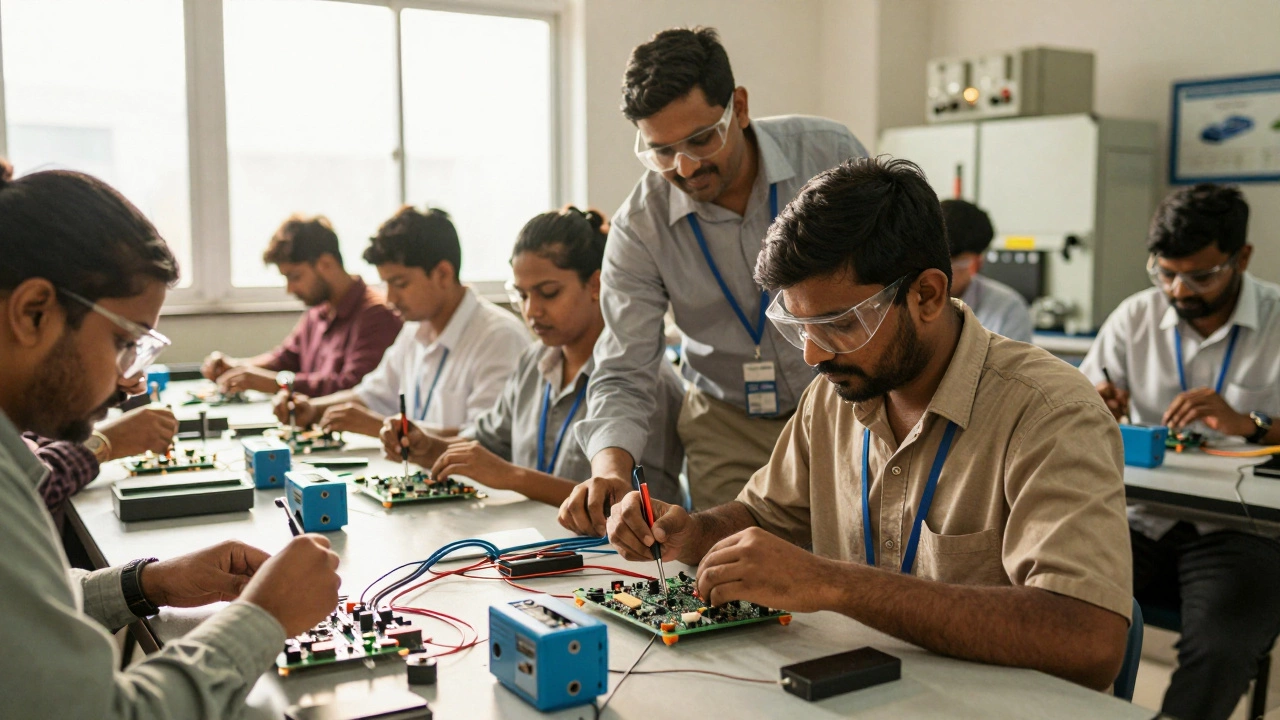
Manufacturing success starts with people. Governments focus on training and developing skilled labor to meet industry demands. For example, India's Skill India initiative has trained over 50 million workers since 2015, targeting sectors like textiles and electronics. The program partners with private companies like TATA and Reliance to create job-ready training modules. In Vietnam, the government's vocational training system has helped factories produce high-quality electronics by ensuring workers have the right technical skills. Without skilled people, even the best processes and products can fail. A single factory in Gujarat now employs 5,000 trained workers thanks to Skill India, boosting local employment by 30%.
Process: Optimizing Manufacturing Operations
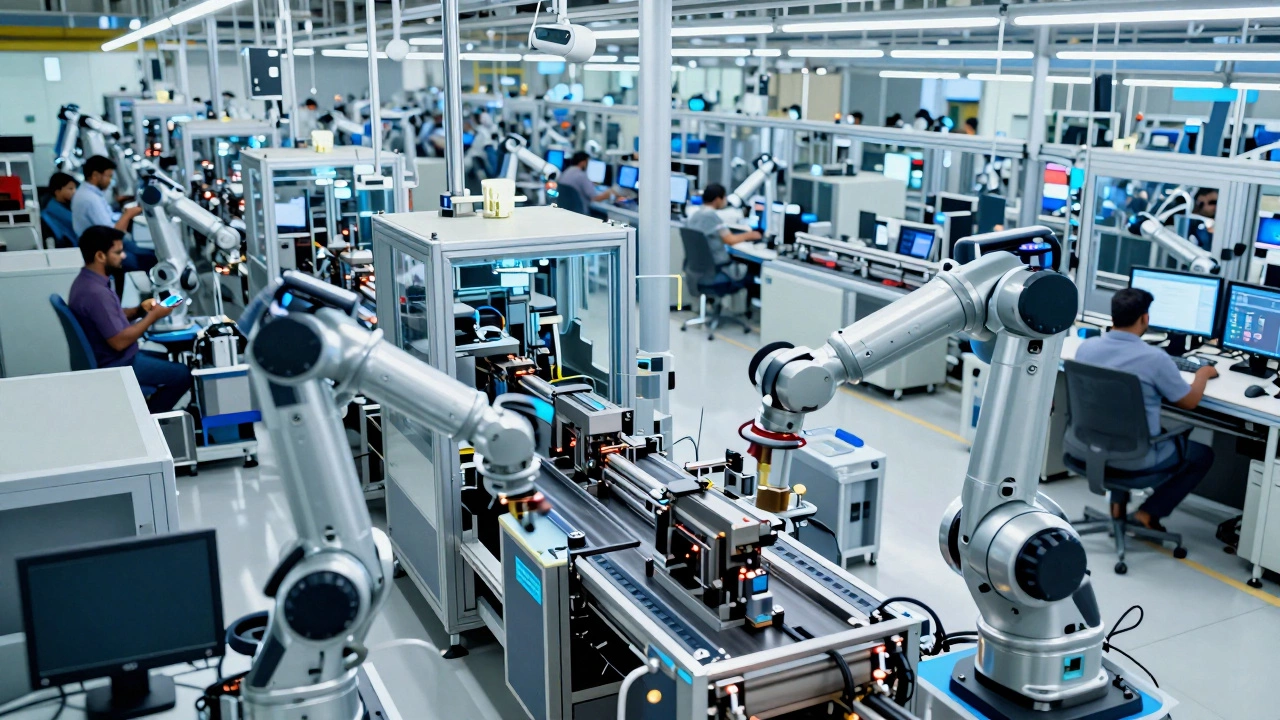
Efficient processes are crucial for competitiveness. Governments implement schemes to modernize production lines and reduce costs. India's Production Linked Incentive (PLI) scheme offers financial rewards for domestic manufacturing growth. For electronics, companies receive 4-6% of sales as incentives for increasing production. This has led to a 60% rise in smartphone manufacturing since 2020, with companies like Samsung and Foxconn expanding local factories. Similarly, Germany's Industry 4.0 initiative funds automation and smart factories, helping manufacturers cut waste and boost output. When processes are streamlined, companies can produce more at lower costs, making them globally competitive. In Tamil Nadu, PLI-driven factories now operate 24/7 with robotic assembly lines, cutting production time by 40%.
Product: Ensuring Quality and Innovation
High-quality products drive exports and brand reputation. Governments establish standards and support innovation. India's Make in India campaign promotes strict quality benchmarks for exports. For instance, textile manufacturers must meet European Union standards to sell abroad, which has increased exports by 25% in recent years. In South Korea, the government funds R&D for semiconductor technology, leading to breakthroughs in memory chips used worldwide. These efforts ensure products meet global demands, helping countries build strong manufacturing reputations. Tata Motors now exports 15,000 vehicles annually to Europe after meeting Make in India's quality standards.

How the 3 P's Work Together
When governments combine these three elements, manufacturing ecosystems thrive. Take Vietnam, for example. The government's investment in vocational training (People) has created a skilled workforce for electronics assembly. Meanwhile, incentives for factory upgrades (Process) have modernized production lines. Combined with strict product quality checks (Product), Vietnam now exports $200 billion worth of electronics annually. This synergy shows how the 3 P's create a self-reinforcing cycle of growth. Companies don't just survive-they lead global markets. In India's Maharashtra state, a similar approach has helped small auto parts suppliers secure contracts with global brands like Ford and BMW.
What are the 3 P's of manufacturing?
The 3 P's of manufacturing are People, Process, and Product. These three pillars form the foundation of industrial success. Governments worldwide use them to design policies that boost workforce skills, streamline production, and ensure high-quality products. For example, India's Skill India program focuses on People, PLI schemes on Process, and Make in India on Product standards.
How do government schemes address the 'People' aspect?
Governments address the 'People' aspect through workforce training and skill development programs. India's Skill India initiative trains millions in sectors like textiles and electronics. Vietnam's vocational schools partner with factories to teach specific skills. These programs ensure workers have the technical knowledge needed for modern manufacturing, reducing skill gaps and increasing productivity.
Which government schemes focus on improving manufacturing processes?
Schemes like India's Production Linked Incentive (PLI) and Germany's Industry 4.0 initiative focus on process optimization. PLI offers financial incentives for domestic production growth, encouraging companies to modernize factories. Industry 4.0 funds smart manufacturing technologies like IoT and automation. These programs help manufacturers reduce costs, improve efficiency, and stay competitive in global markets.
How do product standards influence export success?
Product standards ensure quality and safety, which are critical for exports. For example, India's Bureau of Indian Standards (BIS) certification helps textile exporters meet EU regulations, boosting exports by 25%. Similarly, South Korea's semiconductor industry benefits from strict quality controls, making its chips trusted worldwide. Without these standards, products would fail to enter international markets, hurting trade and economic growth.
Can you give a real-world example of the 3 P's in action?
Vietnam's electronics industry is a great example. The government invested in vocational training (People) to build a skilled workforce. They also provided incentives for factory automation (Process), modernizing production lines. Combined with strict quality checks for exports (Product), Vietnam now exports $200 billion worth of electronics annually. This synergy between all three P's turned the country into a global manufacturing hub.