
Small Factory Startup Cost Calculator
Calculate Your Startup Costs
Estimated Startup Costs
Note: These are estimates based on typical small factory startup costs. Actual costs may vary based on local regulations, equipment quality, and other factors.
Setting up a small factory isn’t about borrowing money and buying machines. It’s about solving a real problem with a product people actually want. Too many people jump into manufacturing because they think it’s profitable - but profit comes from knowing your market, not your machinery. If you’re reading this, you’re probably tired of side hustles and ready to build something real. Here’s how to do it without going broke.
Start with a product that sells
Before you rent a space or sign a lease, answer this: Who will buy what you’re making? A small factory doesn’t need to make everything. It needs to make one thing really well - and sell it repeatedly. Look at local demand. Are there gaps in your area? Maybe no one makes affordable wooden furniture in your town. Maybe local restaurants need custom packaging. Maybe your region has a shortage of low-cost plastic components for small appliances.
Don’t guess. Talk to 20 potential customers. Ask them what they struggle to find. Visit local shops. Check online marketplaces like Etsy, Amazon, or regional B2B platforms. If you find three or more people saying, ‘I wish someone made this,’ you’ve got a starting point. Don’t fall for the myth that you need a patent or a revolutionary idea. Most small factories succeed by doing something ordinary, but doing it reliably and cheaply.
Choose the right type of manufacturing
Not all factories are the same. Your product determines your setup. A food processing unit needs hygiene certifications, refrigeration, and shelf-life testing. A plastic injection molding shop needs high-temperature machines and ventilation. A textile unit needs looms, dye vats, and water treatment.
Here’s a quick breakdown of common small factory types and their starting costs:
| Factory Type | Equipment Cost | Space Needed | Staff (Initial) | Regulatory Requirements |
|---|---|---|---|---|
| Food Processing | $10,000-$50,000 | 800-2,000 sq. ft. | 3-5 | Health dept., FDA/FSMA |
| Plastic Molding | $25,000-$80,000 | 1,500-3,000 sq. ft. | 4-6 | Environmental, fire safety |
| Textile Cutting/Seaming | $8,000-$30,000 | 1,000-2,500 sq. ft. | 5-8 | Labor, safety |
| Furniture Assembly | $15,000-$60,000 | 2,000-4,000 sq. ft. | 6-10 | Building code, dust control |
| Electronics Assembly | $20,000-$70,000 | 1,200-3,000 sq. ft. | 4-7 | Electrical safety, EMI |
Start with the lowest-cost option that still gives you good margins. Don’t over-invest in machinery you don’t need yet. You can always upgrade later.
Find the right location
Location isn’t just about rent. It’s about logistics, labor, and laws. Look for areas with:
- Good road access for deliveries
- Reliable power and water supply
- Availability of skilled or trainable workers
- Zoning that allows manufacturing
Avoid city centers unless you’re doing high-value, low-volume work. Industrial parks or outskirts of towns are better. Many local governments offer tax breaks or subsidized rent for small manufacturers. Check with your city’s economic development office. Some places even provide free site inspections and help with permits.
Don’t sign a long lease until you’ve tested the space. Run your equipment for a day. Check if the floor can handle heavy machines. Ask about noise restrictions. A quiet neighborhood might not allow a press machine. A warehouse that looks perfect might have no loading dock - and that could kill your delivery schedule.
Buy equipment smartly
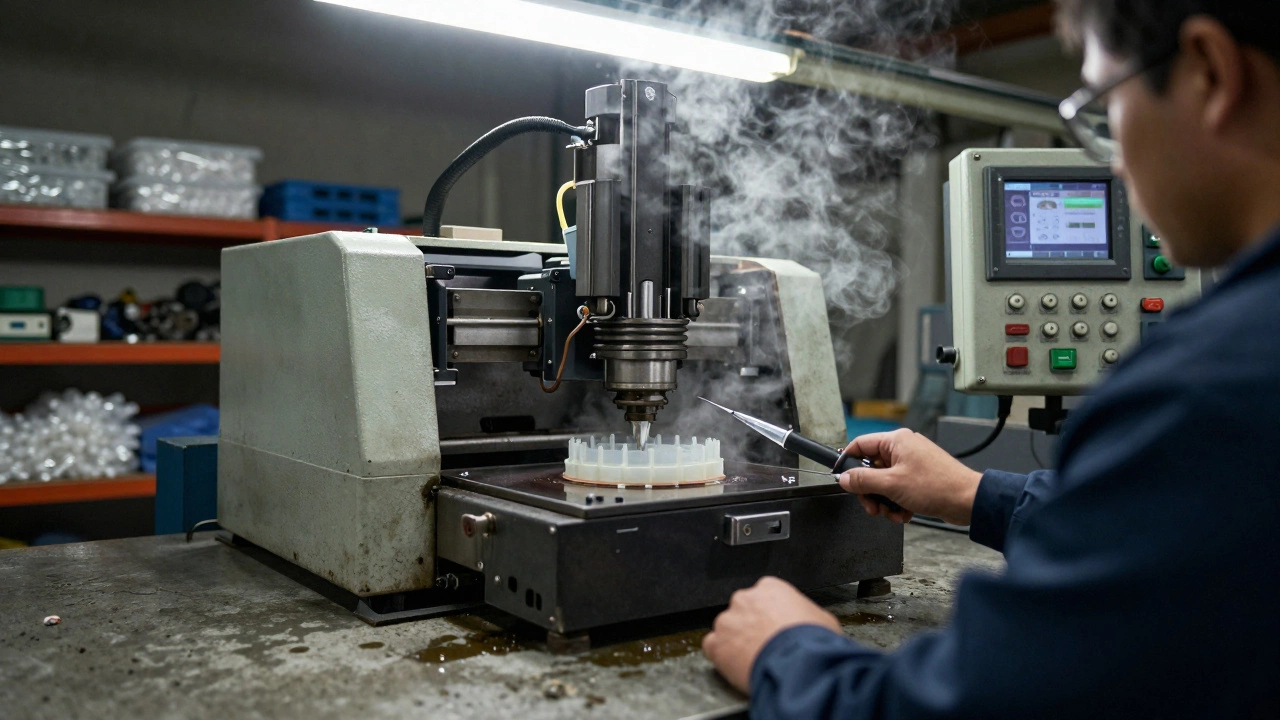
You don’t need brand-new machines to start. Used equipment from closed factories can save you 50-70%. Look on platforms like MachineryTrader, eBay Industrial, or local auctions. Check for:
- Service history
- Availability of spare parts
- Warranty or seller support
For example, a used injection molding machine from 2015 can still run perfectly if maintained. A 10-year-old sewing machine might cost $1,200 instead of $5,000 new. But don’t buy something just because it’s cheap. If the machine breaks down every two weeks, it’s costing you more in downtime than a better one would.
Start with core machines only. You can outsource secondary tasks like painting, packaging, or labeling until you have enough volume to justify buying those machines.
Handle permits and compliance
Skipping permits sounds tempting, but one inspection can shut you down. You’ll need:
- Business license
- Environmental clearance (for waste, emissions, water use)
- Fire safety certificate
- Factory registration under local labor laws
- Product certifications (if selling to retailers or online)
Some countries have simplified processes for small manufacturers. In India, for example, the Udyam Registration is free and takes less than a day online. In the U.S., check with your state’s Department of Labor and Environmental Protection Agency. Don’t wait until you’re producing to apply. Permits can take weeks or months.
Keep all documents digital and backed up. Inspectors will ask for them. You’ll also need them if you apply for loans or grants later.
Build your team - not just workers
Early on, you’ll wear many hats: sales, production, accounting, maintenance. But as soon as you can afford it, hire one person to handle operations. Look for someone who’s reliable, not necessarily experienced. A good worker can learn your process faster than a seasoned manager who doesn’t care about your vision.
Train them well. Write down your steps. Use photos or short videos. A simple checklist for each product reduces errors and makes scaling easier. Pay on time. Treat people with respect. Word spreads fast in small industrial communities. A good reputation attracts better workers.
Don’t hire too many too soon. Start with three people: one machine operator, one packager, and one person who handles logistics and sales. You can grow from there.
Price for profit - not competition
Undercutting competitors is a trap. If you sell below cost, you’re not winning - you’re bleeding. Calculate your true cost:
- Raw materials per unit
- Machine depreciation per hour
- Electricity and water usage
- Labor per unit
- Packaging and shipping
- Overhead (rent, insurance, admin)
Add 30-50% for profit. Then check what competitors charge. If your price is 20% higher, you better have better quality, faster delivery, or better service. If it’s lower, make sure you’re not cutting corners that will hurt your reputation.
Many small factories fail because they price like retailers, not manufacturers. Retailers mark up 100-200%. Manufacturers usually mark up 30-70%. Know your place in the chain.
Start small, sell fast
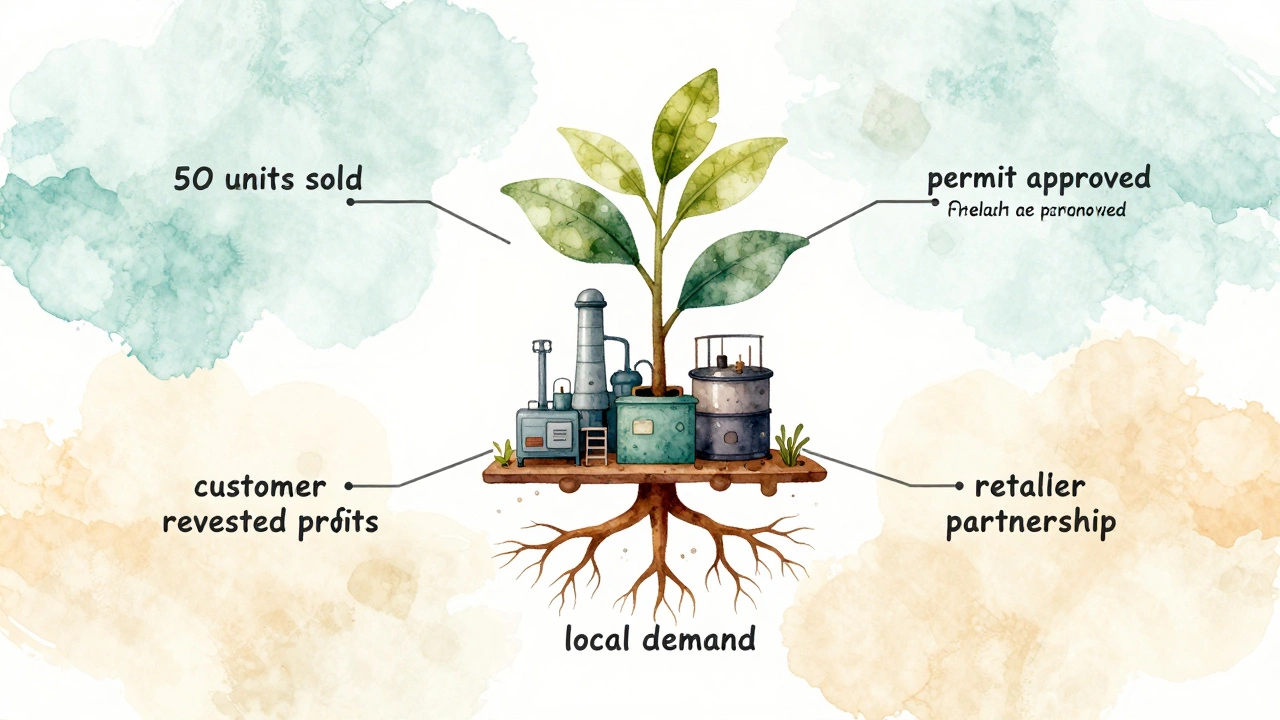
Don’t wait to make 1,000 units before selling. Make 50. Sell them. Get feedback. Fix what’s wrong. Repeat. This is called lean manufacturing. It’s how most successful small factories grow.
Sell directly at first: local markets, Facebook groups, Instagram, WhatsApp catalogs. Build relationships with small retailers. Offer them a good deal if they buy in bulk. Ask for reviews. Take photos of customers using your product. Social proof is your best marketing tool.
Once you’re selling consistently, reinvest profits into better machines, better packaging, or more staff. Don’t take a salary until the business can support it. That’s the rule.
Scale only when you’re ready
Scaling too fast kills more small factories than not scaling at all. If you’re making 200 units a week and selling every one, that’s your signal. If you’re struggling to hit 100, stop buying more machines. Fix your sales, your quality, your delivery.
Look for ways to automate one step at a time. Maybe you can use a semi-automatic packaging machine. Maybe you can switch to bulk raw materials to cut costs. Don’t go all-in on automation until you know your demand won’t drop.
Most small factories that survive beyond five years did it by staying focused, listening to customers, and growing slowly. They didn’t try to be Amazon. They became the go-to supplier for a specific need in their region.