US Steel Production Estimator
Steel Production Impact Calculator
Compare the environmental impact of different US steelmaking methods
Integrated (BF-BOF)
Traditional Blast FurnaceElectric Arc (EAF)
Recycled Scrap MetalAnalysis Summary
Select a method and enter tonnage to see the environmental breakdown.
Walk into any hardware store or construction site in the United States today, and you’ll see steel everywhere. It’s in the beams holding up skyscrapers, the rebar inside your driveway, and the frame of your car. But here is a question that pops up more often than you might think: is any steel actually made in the USA? The short answer is yes. The long answer involves tariffs, electric arc furnaces, and a complex web of global trade.
If you are worried that American steel plants have all shut down, you can breathe easy. The United States remains one of the top five steel-producing nations in the world. However, the landscape has changed dramatically over the last two decades. We aren’t just talking about volume; we are talking about *how* it’s made and *who* makes it. Let’s break down the current state of domestic steel production without the political noise.
The Big Picture: How Much Steel Does America Make?
To understand if steel is made here, you first need to look at the numbers. In recent years leading up to 2026, the United States has consistently produced between 80 and 90 million metric tons of crude steel annually. That sounds like a lot, and it is. For context, China produces around 1,000 million tons. India is climbing fast, too. But the US isn't far behind countries like Japan and South Korea.
The key metric here isn't just total output; it's capacity utilization. American mills are running hot. When demand spikes for infrastructure projects or housing, domestic producers ramp up. The American Iron and Steel Institute (AISI) tracks this closely. They report that domestic production meets roughly 70-80% of US consumption. The rest? That’s imports. So, while not every bolt in your garage was forged in Ohio or Pennsylvania, the majority of the structural steel in American buildings definitely was.
Crude Steel Production is the total amount of raw steel produced before further processing into finished goods. In the US, this includes both integrated mill output and electric arc furnace output.
Who Are the Major Players? The Giants of US Steel
You don't need to be an industry insider to know the names. A few major corporations dominate the landscape. If you are looking for proof that steel is made in the USA, these companies are your evidence.
- Nucor Corporation: Based in Charlotte, North Carolina, Nucor is the largest steel producer in the US. They rely heavily on Electric Arc Furnaces (EAFs), which recycle scrap metal. This makes them agile and environmentally friendlier than older methods.
- Steel Dynamics: Headquartered in Fort Wayne, Indiana, they are another EAF giant. They own mills across multiple states, including Indiana, Illinois, and Mississippi.
- Cleveland-Cliffs: This company operates the only remaining fully integrated blast furnace in the US, located in Youngstown, Ohio. Integrated mills make steel from raw iron ore and coal, rather than scrap.
- United States Steel (USS): One of the oldest brands in the game. While they faced bankruptcy restructuring recently, they remain a critical player, especially in flat-rolled steel used for cars and appliances.
These aren't shell companies moving paper around. They operate massive physical facilities with thousands of employees. When you buy a product labeled "Made in USA," there’s a high probability one of these giants supplied the raw material.
Integrated Mills vs. Electric Arc Furnaces: The Two Ways Steel is Made
This is where things get technical, but it matters for understanding quality and sustainability. There are two main ways steel is manufactured in the US today.
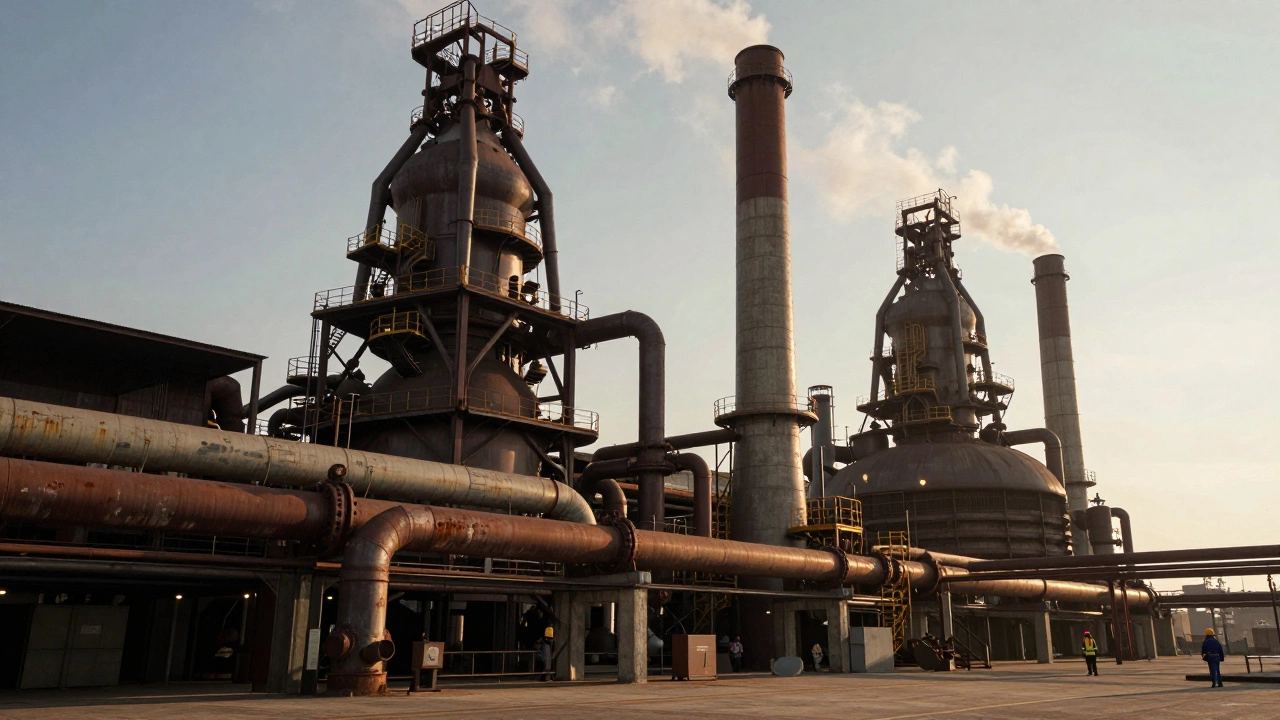
1. Integrated Blast Furnace-Basic Oxygen Furnace (BF-BOF): This is the traditional method. You take iron ore and coke (processed coal), heat them in a blast furnace to create molten iron, then refine it in a basic oxygen furnace. Cleveland-Cliffs’ Youngstown plant is the last big example of this in the US. It’s energy-intensive and produces more carbon emissions, but it creates high-quality steel ideal for heavy infrastructure.
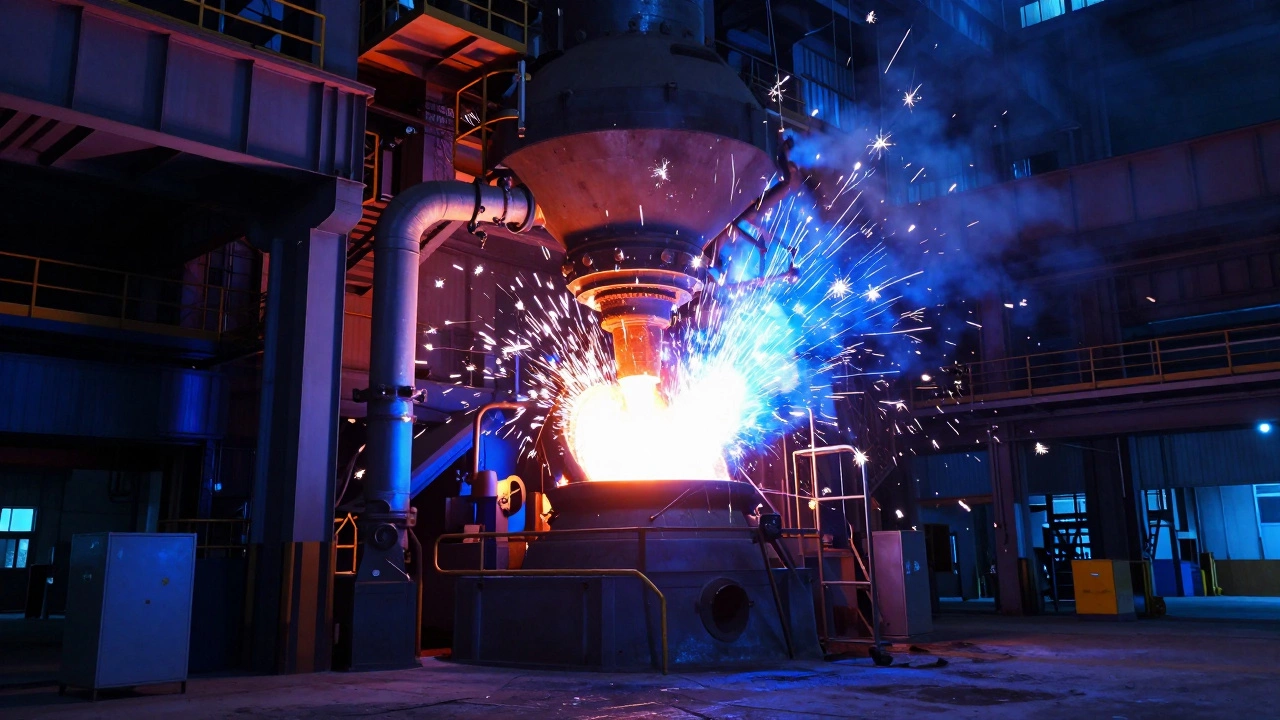
2. Electric Arc Furnace (EAF): This is the modern standard for most US production. Companies like Nucor and Steel Dynamics use massive electrodes to melt down recycled scrap steel using electricity. It’s faster, cheaper, and has a smaller carbon footprint. Over 70% of US steel comes from EAFs now. This shift explains why the US can maintain high production levels even as older, polluting mills close.
| Feature | Integrated (BF-BOF) | Electric Arc Furnace (EAF) |
|---|---|---|
| Primary Raw Material | Iron Ore & Coal | Recycled Scrap Steel |
| Carbon Footprint | High | Lower (depends on grid energy) |
| Flexibility | Low (hard to turn off/on) | High (can start/stop quickly) |
| Dominant US Producers | Cleveland-Cliffs | Nucor, Steel Dynamics |
Where Is the Steel Actually Made? The Geography of Production
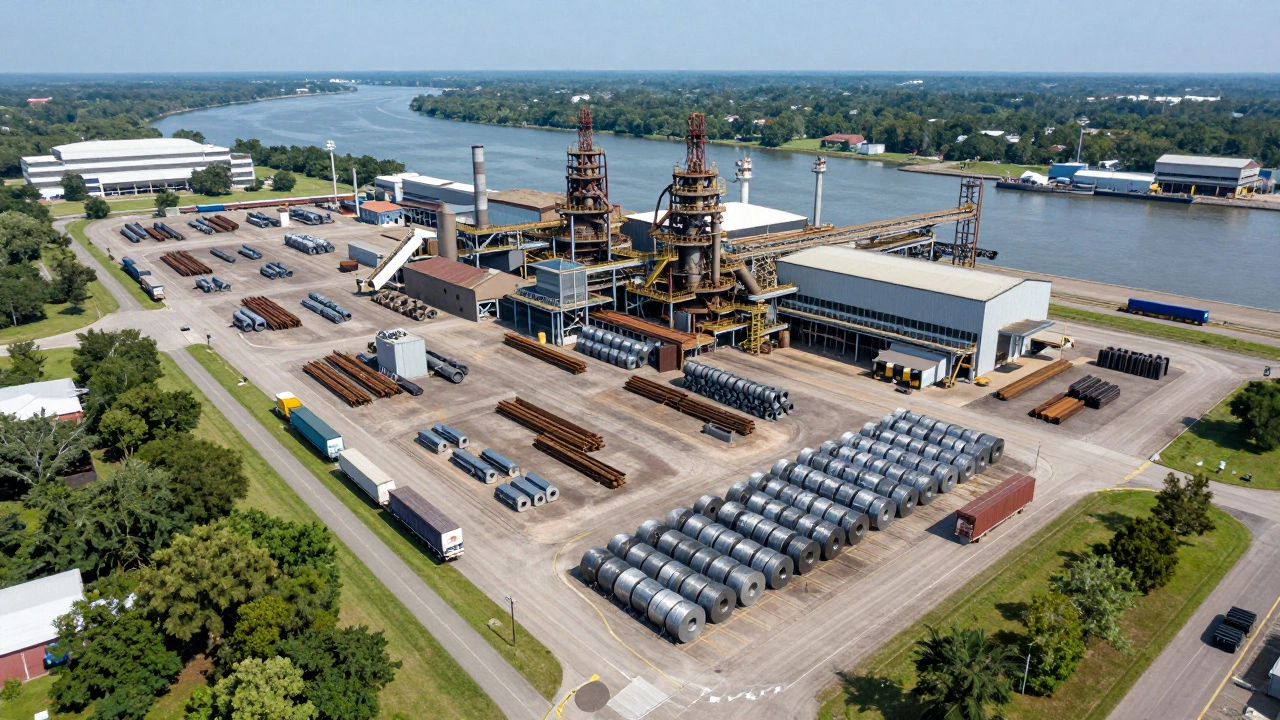
Steel isn't made evenly across the country. It clusters in regions with access to raw materials, transportation hubs, or cheap energy. If you map out US steel production, you’ll see heavy concentration in the Midwest and the Southeast.
- Pennsylvania & Ohio: The heartland of historical steelmaking. Still home to major finishing operations and the last integrated blast furnace.
- Texas: Home to large EAF mills, benefiting from cheap natural gas and proximity to Gulf Coast shipping.
- Indiana & Illinois: Key locations for Steel Dynamics and other midwest producers.
- Alabama & Mississippi: Growing hubs for mini-mills due to lower labor costs and river transport access.
If you live in these areas, you likely know someone who works in a mill. These aren't abstract concepts; they are local employers supporting communities.
The Tariff Factor: Section 232 and Market Protection
You can’t talk about US steel without mentioning tariffs. In 2018, the Trump administration imposed a 25% tariff on imported steel under Section 232 of the Trade Expansion Act, citing national security concerns. The Biden administration kept these tariffs in place through 2026, though they tweaked some exemptions for allies.
Did this help domestic production? Yes, and no. It certainly boosted prices for US-made steel, allowing struggling mills to stay open and invest in upgrades. It reduced the flood of cheap Chinese steel dumping into the market. However, it also raised costs for American manufacturers who buy steel, like appliance makers and automakers. They had to pay more for domestic steel, which sometimes led to higher consumer prices.
The result? A protected but expensive domestic industry. US steelmakers are healthier than they were in 2015, but they still face pressure from global competitors when tariffs are waived or circumvented.
Quality Concerns: Is US Steel Better?
A common myth is that foreign steel is inferior. In reality, modern steel technology is standardized globally. High-grade automotive steel from Japan or South Korea is excellent. However, US steel has a reputation for consistency and traceability. Because the supply chain is shorter, you can often verify exactly where the metal came from. This matters for critical infrastructure like bridges and power grids, where failure is not an option.
Additionally, the shift toward EAF production means US steel is increasingly "green." With the rise of renewable energy in states like Texas and Iowa, some mills are experimenting with green hydrogen and solar-powered arcs. This positions US steel as a premium, low-carbon option for international buyers looking to meet their own ESG goals.
Challenges Facing the Industry in 2026
Despite robust production, the industry faces headwinds. Labor shortages are real. Finding skilled welders, operators, and engineers is harder than ever. Many veteran workers retired during the pandemic, and training new ones takes time.
Energy costs also fluctuate. Since EAFs run on electricity, spikes in power prices directly impact profitability. Finally, environmental regulations are tightening. The EPA is pushing for stricter emissions standards, forcing mills to invest billions in cleanup technology. This is good for the planet but adds financial strain.
How to Verify "Made in USA" Steel
If you are a contractor or buyer, how do you know you’re getting domestic steel? Look for certifications. The National Association of Manufacturers (NAM) provides guidelines, but specific industries have their own rules. For example, the Buy American Act requires federal projects to use domestically produced iron and steel. Suppliers must provide affidavits confirming origin.
Ask for Mill Test Reports (MTRs). These documents detail the chemical composition and mechanical properties of the steel batch. Reputable US suppliers will provide transparent MTRs that trace back to the specific heat number produced in a US facility.
Is all steel sold in the USA made in the USA?
No. Approximately 20-30% of steel consumed in the US is imported from countries like Canada, Mexico, Brazil, and South Korea. However, the majority (70-80%) is produced domestically by companies like Nucor and Cleveland-Cliffs.
What is the largest steel company in the US?
Nucor Corporation is the largest steel producer in the United States by volume. They specialize in Electric Arc Furnace (EAF) production, which uses recycled scrap metal.
Are there any integrated steel mills left in the US?
Yes. Cleveland-Cliffs operates the last fully integrated blast furnace in the US, located in Youngstown, Ohio. Most other US production comes from mini-mills using Electric Arc Furnaces.
Does the US government subsidize steel production?
The US government does not directly subsidize steel production in the way some other countries do. Instead, it uses tariffs (like Section 232) to protect domestic producers from unfair foreign competition and offers tax incentives for clean energy investments in manufacturing.
Is US steel more expensive than imported steel?
Generally, yes. Due to higher labor costs, stricter environmental regulations, and the removal of artificial price suppression seen in some exporting nations, US steel tends to command a premium. However, tariffs on imports narrow this gap significantly.