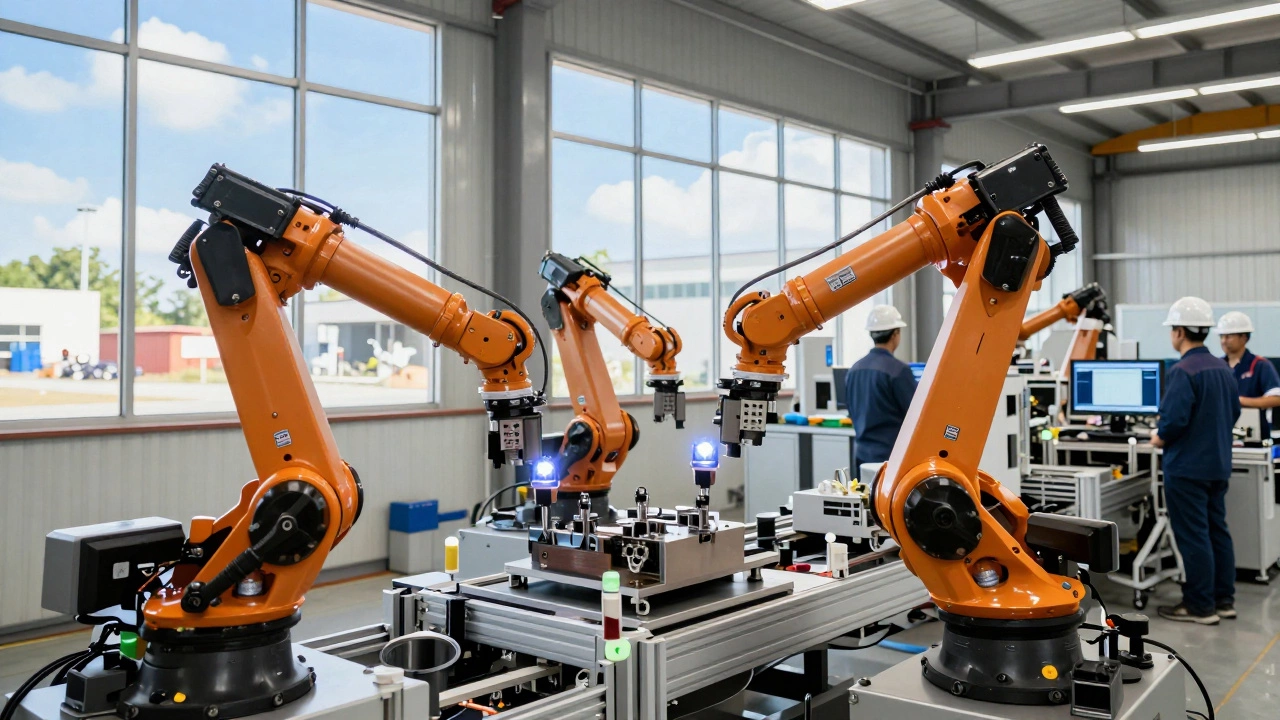
Manufacturing Efficiency Calculator
How Automation Boosted US Manufacturing
The US manufacturing industry has transformed from manual labor to high-efficiency production. This tool compares output per worker before and after automation to show how productivity has improved.
In 1980, US factories produced $1.2 trillion worth of goods with 19 million workers. Today, we produce $2.8 trillion with 13 million workers - more than double the output with fewer people.
Results
Output per Worker (1980)
$63,157.89
Output per Worker (2024)
$215,384.62
Efficiency Gain
241%
This means that for every worker, manufacturing output has more than tripled since 1980. Modern factories can produce much more with fewer people because of automation, robotics, and better technology.
While factory jobs decreased from 19 million to 13 million, production has more than doubled, showing how efficiency has transformed the industry.
The decline in manufacturing jobs isn't a sign of failure - it's proof of innovation. Automation has made factories more productive than ever before.
Today's manufacturing jobs are different: they require skills in robotics, programming, and data analysis. These are high-quality jobs with salaries often exceeding $55,000 annually.
The US remains the second-largest manufacturer globally, producing $2.8 trillion worth of goods in 2024 - more than double the 1980 value.
Every few years, someone declares that manufacturing in the US is dead. Newspapers run headlines about closing factories. Politicians point to job losses as proof of economic decline. But if you drive through Ohio, Tennessee, or Texas today, you’ll see something different: new warehouses, automated production lines, and workers in hard hats operating robots. The truth isn’t as simple as ‘dying’ or ‘reviving.’ It’s transforming.
Factory Jobs Have Fallen - But Output Hasn’t
Yes, the number of people working in US factories has dropped since its peak in the 1970s. Back then, over 19 million people held manufacturing jobs. Today, it’s around 13 million. That sounds like a collapse. But here’s what most people miss: we’re making more stuff than ever.
In 1980, the US produced $1.2 trillion worth of manufactured goods. In 2024, that number hit $2.8 trillion. We’re producing more than double the value with fewer workers. Why? Automation. Robotics. Better materials. A single car plant today can produce twice as many vehicles as it did 30 years ago - with half the staff.
This isn’t about laziness or failure. It’s about efficiency. Machines don’t get tired. They don’t need breaks. And they don’t make mistakes when calibrated right. The factories that survived didn’t just hang on - they upgraded.
The Myth of the ‘Lost’ Manufacturing Base
People often blame China for taking American manufacturing. It’s true that a lot of low-cost, labor-heavy production moved overseas in the 1990s and 2000s. But that wasn’t the whole story. Many companies didn’t just move - they restructured.
Think about smartphones. Apple doesn’t assemble iPhones in the US. But the chips? Made in Arizona. The glass? Made in upstate New York. The software? Designed in California. The design, engineering, and R&D? Almost entirely American. The final assembly happens abroad because it’s cheaper - not because the US lost the ability to make it.
Today, over 80% of the value in a typical US-made product still comes from domestic labor, technology, and innovation. That’s not outsourcing. That’s global supply chain management. And the US is still the leader.
Government Schemes Are Bringing Manufacturing Back
The Inflation Reduction Act of 2022 wasn’t just about clean energy. It was a massive bet on reshoring. The law includes tax credits for companies that build battery plants, solar panel factories, and semiconductor facilities right here in the US.
Since 2023, more than $180 billion in private investment has been announced for US manufacturing projects. Intel is building two new chip plants in Ohio. Ford and CATL are teaming up on a $5.8 billion battery factory in Tennessee. Tesla’s Gigafactory in Texas now makes more Model Ys than any other plant in the world.
The CHIPS Act, passed in 2022, gave $52 billion directly to semiconductor companies. The results? Over 100 new projects in 34 states. Texas, Arizona, and Ohio are now hotspots for high-tech manufacturing. These aren’t temporary jobs. They’re skilled, well-paying roles that require training - not just manual labor.
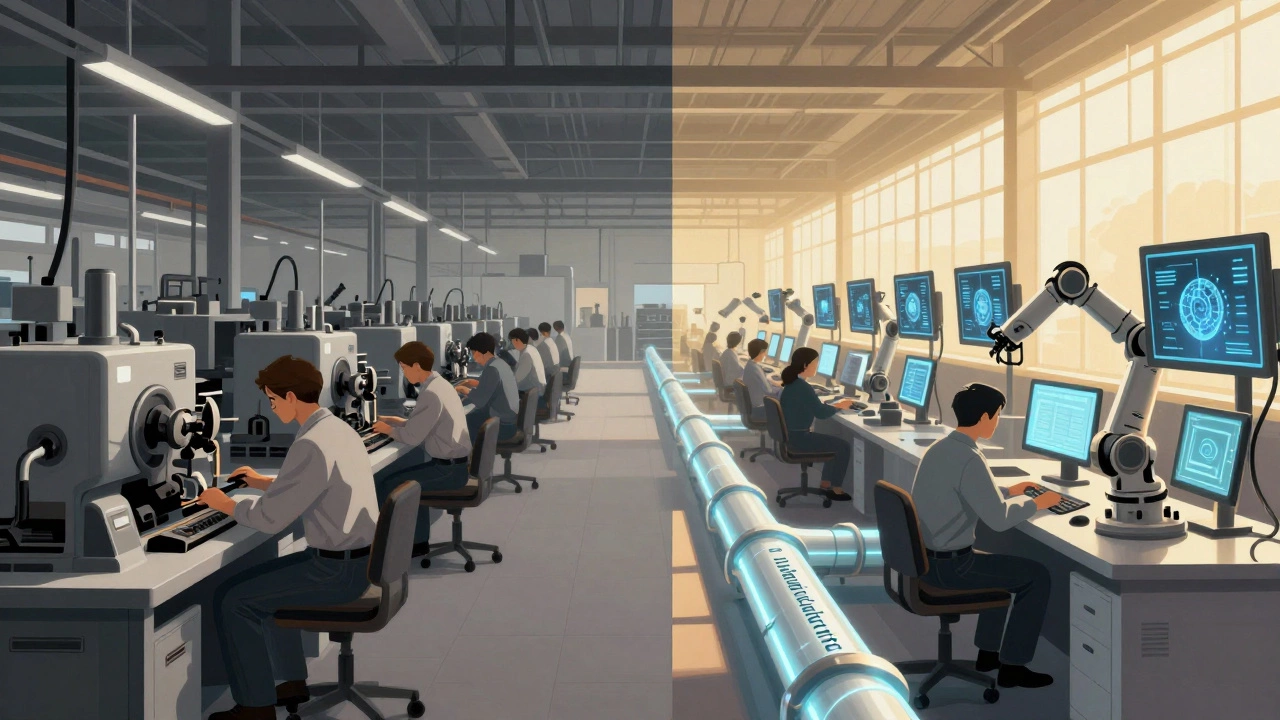
It’s Not Just Big Companies
Most people picture giant factories when they think of manufacturing. But small and mid-sized manufacturers now make up 90% of all US manufacturing firms. And they’re adapting fast.
Take a machine shop in Wisconsin that used to make parts for tractors. Five years ago, they were struggling. Now, they use AI-powered quality control systems and 3D printing to produce custom parts for medical devices. Their revenue tripled. They hired six new engineers.
Small manufacturers are benefiting from government grants, low-interest loans, and training programs through the Department of Commerce. Programs like Manufacturing USA - a network of 16 innovation hubs - help small businesses access cutting-edge tech without the price tag of buying it themselves.
These aren’t handouts. They’re investments. And they’re working.
The Skills Gap Is Real - But Fixable
There’s a shortage of skilled workers in manufacturing. Not because no one wants to work in factories. But because the jobs have changed.
Today’s factory worker doesn’t just push buttons. They monitor AI-driven systems. Program robots. Diagnose sensor failures. They need math, coding, and problem-solving skills. Many high school graduates don’t have that training. Community colleges do.
States like North Carolina and Georgia have partnered with manufacturers to create paid apprenticeships. Students learn on the job while earning credits. Graduates get hired with starting salaries of $55,000 - more than many college grads.
And it’s not just young people. Former retail workers, truck drivers, and even teachers are being retrained. One program in Pennsylvania took 300 laid-off coal miners and turned them into robotics technicians. Their unemployment rate? Down to 2%.
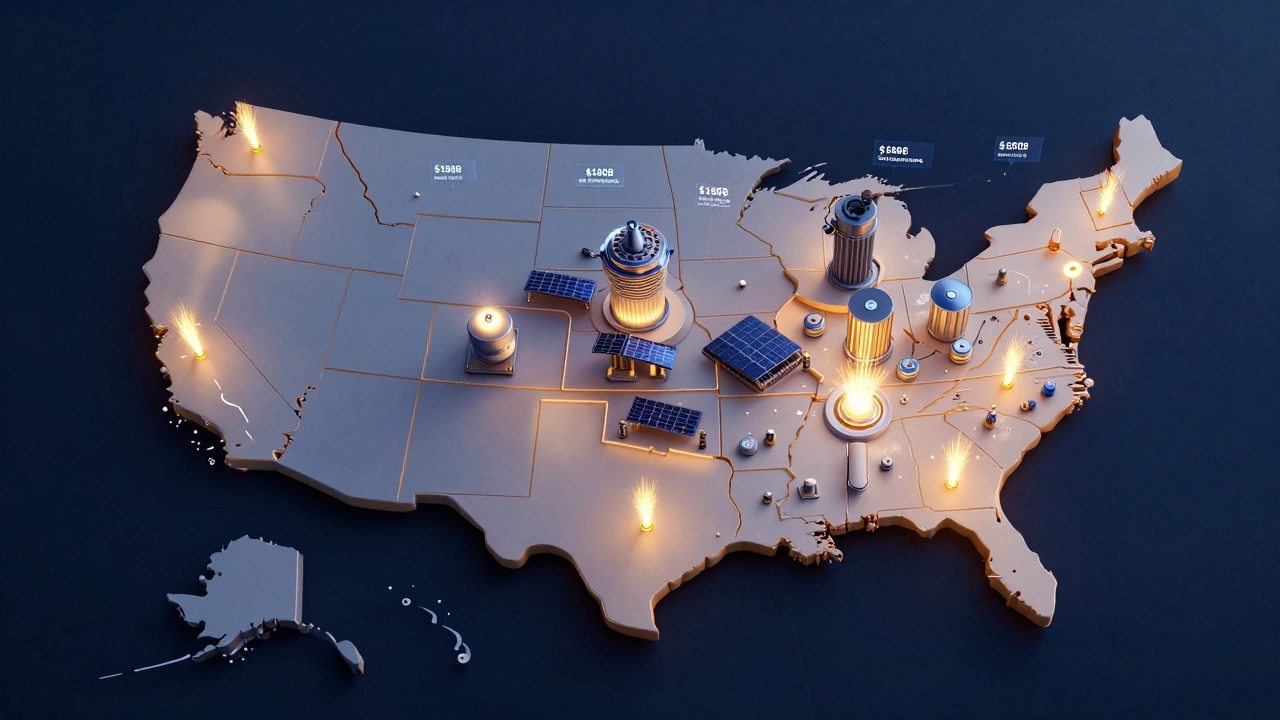
Why the ‘Dying’ Narrative Persists
So why do people still think manufacturing is dying? Because the changes are invisible.
When a factory closes in Detroit, the news spreads. When a new automated plant opens in Indiana with 500 high-tech jobs, it rarely makes headlines. The media focuses on loss, not transformation.
Also, many of the new jobs aren’t in the rust belt. They’re in the Sun Belt - Texas, Georgia, Alabama. People who remember the old industrial map don’t recognize the new one.
And let’s not forget politics. Saying ‘manufacturing is dead’ is a powerful campaign slogan. It’s emotional. It’s simple. But it’s not accurate.
The Future Isn’t About Bringing Back Old Jobs
The real question isn’t whether manufacturing is dying. It’s whether we’re ready for what it’s becoming.
The next generation of manufacturing won’t be about mass production. It’ll be about customization. On-demand. Local. Smart. Companies are now using digital twins - virtual copies of physical factories - to test new products before they’re built. That means less waste. Fewer recalls. Faster innovation.
And it’s not just cars and chips. It’s medical implants made in Ohio. Solar panels printed in Florida. Biodegradable packaging made in Iowa. The US isn’t losing manufacturing. It’s upgrading it.
The data doesn’t lie: US manufacturing output is at record highs. Investment is surging. Workforce training is expanding. And the government is putting billions behind it.
Manufacturing didn’t die. It evolved. And it’s stronger than ever - just not the way you remember it.
Are factory jobs really disappearing in the US?
Yes, the number of factory jobs has dropped since the 1970s, but not because factories are closing. Automation and efficiency have replaced manual labor. Today’s factories produce more with fewer people. The jobs that remain require higher skills - programming, robotics, data analysis - not just physical labor.
Is the US still a major manufacturer?
Absolutely. The US is the second-largest manufacturer in the world, behind China but ahead of Japan and Germany. In 2024, US factories produced $2.8 trillion in goods. That’s more than double what was produced in 1980. The US leads in high-value manufacturing like semiconductors, aerospace, and medical devices.
What government programs are helping manufacturing come back?
The CHIPS Act and Inflation Reduction Act have poured over $200 billion into reshoring manufacturing. Tax credits, grants, and low-interest loans are helping companies build semiconductor plants, battery factories, and clean energy equipment in the US. Manufacturing USA, a network of 16 innovation hubs, also helps small businesses access advanced tech.
Can small manufacturers compete with big companies?
Yes. Small manufacturers make up 90% of US manufacturing firms. With access to government grants, training programs, and shared tech labs through Manufacturing USA, small businesses are adopting automation, 3D printing, and AI quality control. Many are now producing custom, high-margin products that big factories can’t easily replicate.
Are new manufacturing jobs good jobs?
Yes. The average starting salary for a skilled manufacturing technician is $55,000. For engineers and robotics specialists, it’s $80,000+. These jobs require training, but not always a four-year degree. Community college programs and apprenticeships now offer paid pathways into these roles, with high retention and career growth.