Bootstrapping Manufacturing: How Small Teams Build Real Products Without Big Money
When you think of manufacturing, you probably picture big factories, robots, and million-dollar machines. But bootstrapping manufacturing, the practice of building products with minimal external funding, using personal savings, sweat equity, and smart resource use. Also known as lean manufacturing for startups, it’s how many of India’s most resilient makers started—no investors, no loans, just grit and a clear idea. You don’t need a warehouse or a team of 50 to be a manufacturer. If you turn raw plastic into a useful product—even in your garage—you’re doing bootstrapped manufacturing. And it’s growing fast in India, where local makers are skipping the traditional path and building profitable businesses with under ₹5 lakh in startup costs.
What makes bootstrapping manufacturing different? It’s not about cutting corners. It’s about cutting waste. Think of the small scale manufacturing, local businesses that produce goods in small batches, often customized, with hands-on control over quality and process. Also known as micro-manufacturing, it’s the backbone of India’s informal industrial sector. These makers buy plastic pellets in bulk, use simple injection molds, and sell directly to local retailers or online. They don’t chase scale—they chase sustainability, speed, and customer loyalty. One maker in Ludhiana started by making plastic storage bins from recycled HDPE, sold them on Instagram, and now supplies 300 kirana stores. No bank loan. No government grant. Just repeat sales.
Bootstrapping manufacturing thrives where big players can’t move fast. It’s not about competing with Godrej or Ashley Furniture. It’s about solving hyper-local problems: a durable lunch box for street vendors, a stackable container for urban apartments, or a reusable packaging solution for small pharmacies. These are the gaps that big factories ignore because the margins are too thin. But for a bootstrapped maker, even a ₹10 profit per unit adds up when you sell 5,000 a month. And with India’s push for local production under Make in India, these small players are getting better access to raw materials, training, and even digital tools to track orders and manage inventory.
What you’ll find in this collection are real stories from Indian makers who built manufacturing businesses with little more than a dream and a used machine. You’ll see how one entrepreneur turned plastic waste into phone stands, how another started with a single mold and now exports to Nepal, and why some of the most profitable operations have no name on their packaging—just a reliable product and a loyal customer base. These aren’t startup hype stories. They’re quiet, daily wins built on smart decisions, not big budgets. If you’ve ever thought, ‘I could make this,’ this is your roadmap.
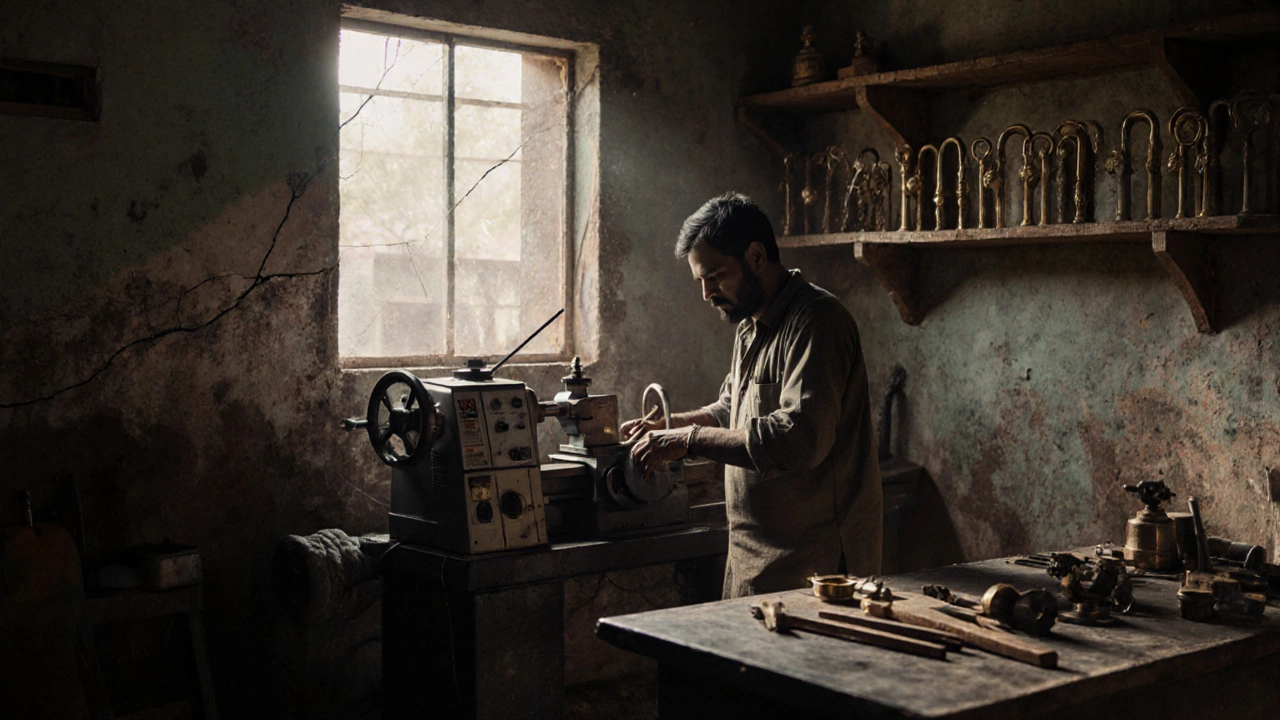
How to Fund a Startup with No Money in Manufacturing
You can start a manufacturing startup with no money by using what you already own, selling before you produce, bartering skills, and leveraging government schemes. Real examples show how zero-budget manufacturing works in practice.