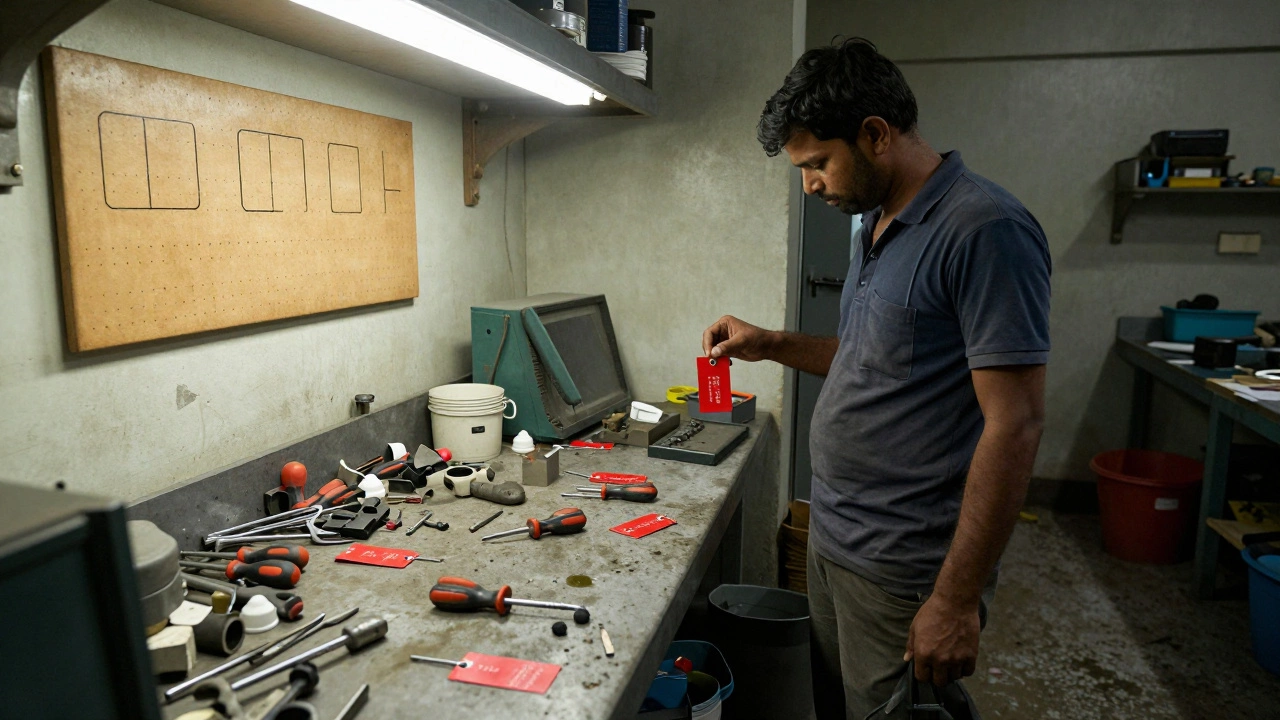
If you’ve ever walked into a factory and felt like everything was just... out of place - tools scattered, labels peeling off bins, floors sticky with oil - you’ve seen what happens when the 7S of manufacturing are ignored. These aren’t fancy management buzzwords. They’re the bare-minimum rules that keep factories running safely, efficiently, and profitably. And yes, they’re used everywhere from small workshops in Tamil Nadu to giant plants in Germany.
What Exactly Are the 7S of Manufacturing?
The 7S method is a workplace organization system rooted in Japanese lean manufacturing principles. It evolved from the original 5S system - Seiri, Seiton, Seiso, Seiketsu, and Shitsuke - and added two more elements to handle modern production demands. Think of it like cleaning your kitchen before cooking. If you don’t organize your knives, wipe the counters, or throw out expired food, you’re setting yourself up for chaos. Factories are no different.
Each ‘S’ stands for a Japanese word, but in practice, they’ve been translated into simple English actions:
- Sort - Remove anything you don’t need.
- Set in Order - Put everything you need in its place.
- Shine - Clean the workspace daily.
- Standardize - Make the first three steps a routine.
- Sustain - Keep it up, every day.
- Safety - Eliminate hazards before they cause harm.
- Security - Protect tools, materials, and data from theft or misuse.
Some companies still call it 5S. But if you’re running a factory in 2026, you’re missing half the picture without Safety and Security.
Sort: Get Rid of the Clutter
Imagine a machine operator spends 15 minutes every shift hunting for a torque wrench. That’s 75 minutes a week. Over a year? Over 60 hours - nearly two full workweeks - wasted just looking for tools.
Sorting means asking one brutal question: Do I use this? If not, why is it still here?
In a small electronics assembly line in Pune, workers kept 17 different screwdrivers on the bench - most were broken, mismatched, or from old projects. After sorting, they kept only the four they used daily. The rest went to a central tool room. Productivity jumped 18% in three weeks.
Use red tags. Put them on anything unused for 30 days. Move questionable items to a holding area. If no one asks for them after a week, toss or recycle them. Don’t overthink it. If it’s not helping you make the product, it’s just taking up space.
Set in Order: Everything Has a Home
After you’ve cleared the junk, you need to put what’s left where it’s easy to find. This isn’t about perfection - it’s about speed.
Shadow boards are the gold standard. Paint the outline of a tool on a wall, and when the tool’s missing, you know instantly. Labels on bins. Color-coded zones. Floor markings for carts. All of these cost almost nothing and save massive time.
At a textile factory in Surat, workers used to walk 20 meters to grab thread spools. After installing a rotating spool rack right at each sewing station, changeover time dropped from 90 seconds to 12 seconds. That’s a 87% improvement - just by moving things closer.
Rule of thumb: If you reach for something more than five times a shift, it belongs within arm’s reach. If you use it once a week, put it in a shared storage area. If you use it once a month? Store it off-site.
Shine: Cleanliness Isn’t Optional
Shine doesn’t mean making the floor sparkle. It means cleaning so you can spot problems early.
Oil leaks? Dust buildup? Worn-out wiring? These don’t show up on spreadsheets. They show up on the floor, on the machine casing, in the air vents.
At a steel plant in Jamshedpur, workers started wiping down hydraulic lines every morning. Within two months, they caught three small leaks before they became major failures. That saved over $12,000 in unplanned downtime.
Assign cleaning duties like you assign production tasks. Make it part of the shift handover. Use checklists. Don’t wait for the janitor. The people who run the machines know best where dirt hides.
Shine is also about visibility. If you can’t see the problem, you can’t fix it. A clean machine is a healthy machine.
Standardize: Turn Good Habits Into Rules
Sorting, setting, and shining work great for a week. But without structure, they collapse. Standardization turns effort into habit.
This is where you write down how things should be done. Not in a 50-page manual. Just a simple one-page visual guide. Photos of the tool rack. A checklist for morning cleanup. A diagram of the floor layout.
One furniture workshop in Coimbatore made a laminated card for each station. It showed: “Tools here. Trash bin here. Daily wipe-down checklist.” Workers hung them on the wall. New hires learned in 10 minutes. No training sessions needed.
Standardization isn’t about control. It’s about consistency. When everyone follows the same steps, quality stays high, mistakes drop, and training gets easier.
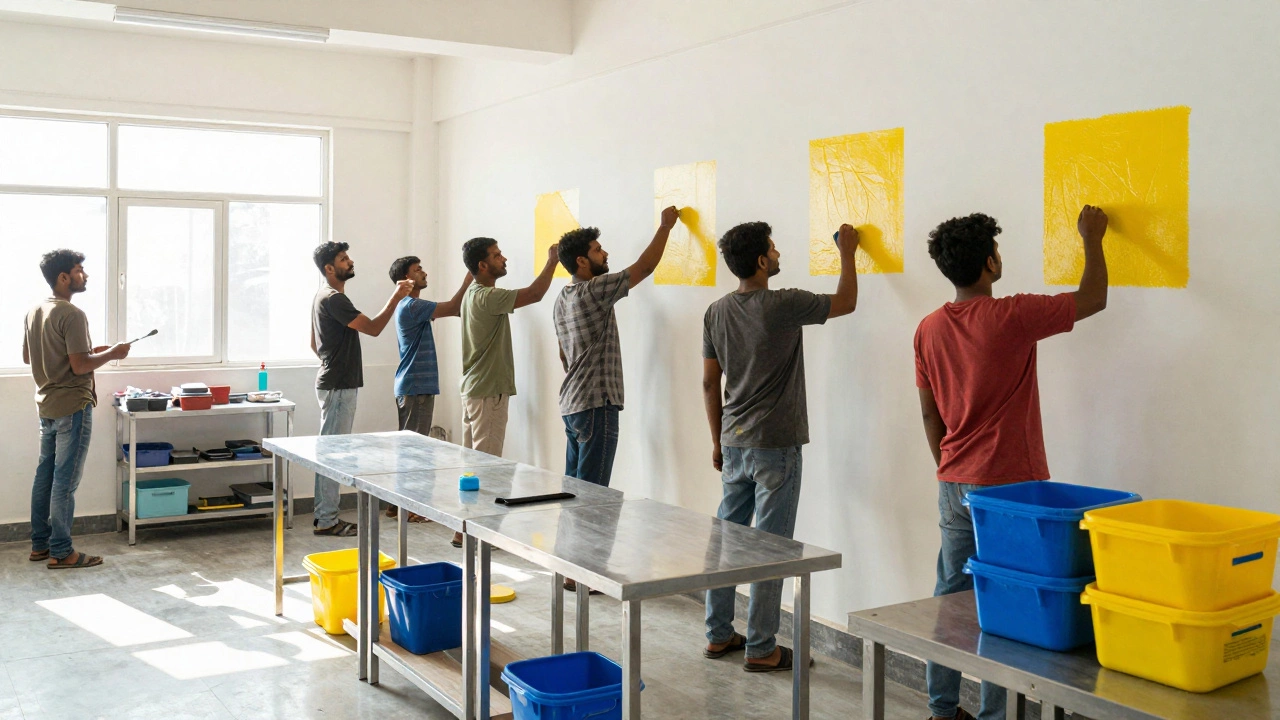
Sustain: Make It Stick
This is where most companies fail. They do a big 7S blitz, take photos for the CEO’s presentation, and then go back to old ways.
Sustaining means making 7S part of daily life. Not a project. Not a campaign. A habit.
Here’s how it works:
- Start every shift with a 5-minute 7S check.
- End every shift by resetting everything.
- Have team leads do random spot checks - no warnings, just feedback.
- Recognize the best station each month. Not with a bonus - with a photo on the wall.
In a small pharma packaging unit in Hyderabad, they started a “7S Champion” program. Workers nominated peers who kept their area spotless. Winners got to pick the next week’s music playlist. No money changed hands. But participation jumped from 40% to 92% in six months.
People don’t resist systems. They resist being told what to do. Give them ownership, and they’ll defend the system.
Safety: The Most Important ‘S’
Every year, over 300,000 manufacturing workers suffer serious injuries. Most are preventable.
Safety isn’t about hard hats and posters. It’s about removing risk before it happens.
Is there a wet floor near a machine? Fix the leak. Is a guard missing from a saw? Stop the line until it’s replaced. Are chemicals stored near heat sources? Relocate them.
In a plastic molding plant in Ahmedabad, workers kept using extension cords because the outlets were too far. One cord frayed, sparked, and nearly started a fire. After that, they installed 12 new outlets. Cost: $800. Potential loss: $200,000 in damage and downtime.
Safety is the only ‘S’ that can kill you if you ignore it. Make it non-negotiable. If a worker says, “This is unsafe,” you listen - no questions asked.
Security: Protect Your Assets
Security is often overlooked. But in 2026, it’s just as critical as safety.
It’s not just about locking doors. It’s about protecting:
- Tools and spare parts (theft is common in small factories)
- Raw materials (especially high-value ones like copper, rare plastics)
- Production data (machine settings, quality logs, customer specs)
- Intellectual property (designs, formulas, processes)
A small electronics manufacturer in Bengaluru lost $15,000 worth of microchips in three months. No alarms. No break-ins. Just workers taking them home. After installing locked tool cabinets with keycard access and tagging all components, theft dropped to zero.
Security also means digital. If your CNC machines are networked, lock down access. Change passwords. Don’t use default settings. Hackers target small factories because they think they’re easy.
Security isn’t expensive. It’s about awareness. Train workers to lock up, log out, and report suspicious behavior.
Why the 7S Method Works - Real Results
Companies that stick with 7S don’t just have tidy floors. They see real gains:
- 20-40% reduction in setup time
- 30-50% drop in defects
- Up to 25% increase in output
- 70% fewer workplace injuries
- Higher employee morale and retention
These aren’t guesses. They’re from studies by the Japan Productivity Center and real-world reports from Indian SMEs that adopted 7S between 2022 and 2025.
One textile mill in Tiruppur went from 12% defect rate to 3% in 11 months. They didn’t buy new machines. They just cleaned up, labeled everything, and made workers responsible for their area.
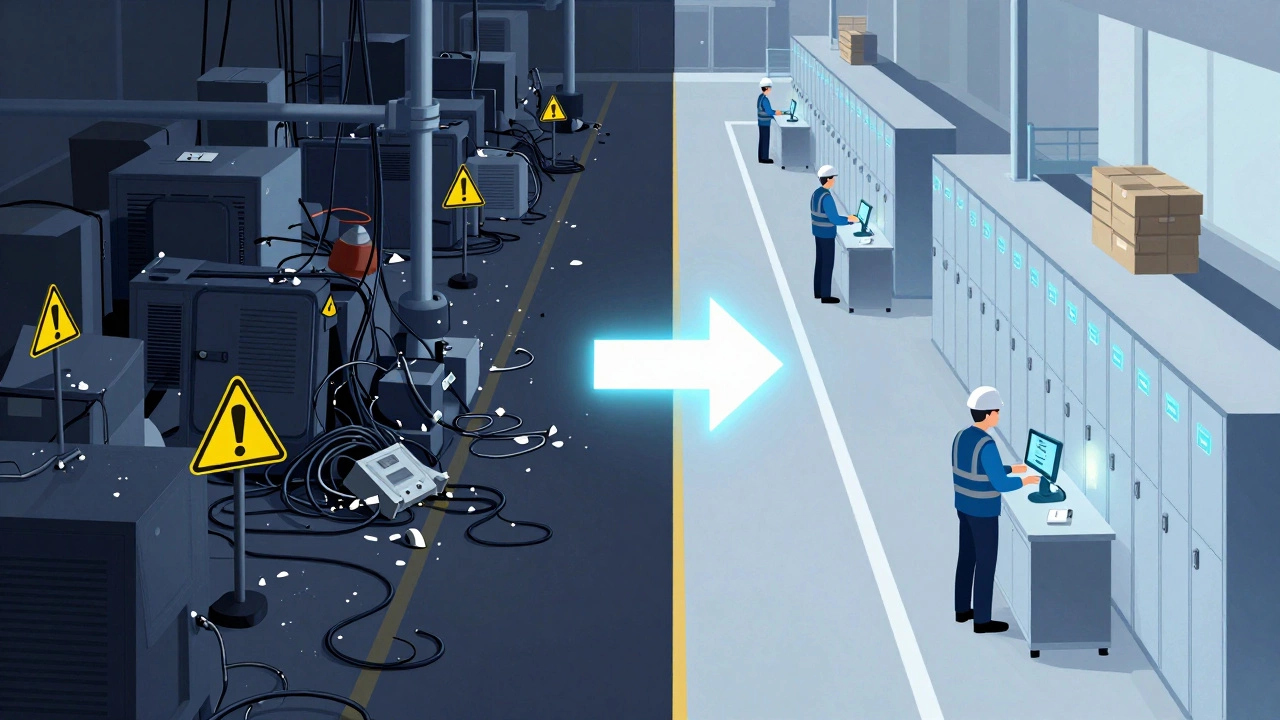
How to Start - Step by Step
Don’t try to do all seven at once. Pick one station. One line. One shift.
- Choose a small area to pilot - maybe a tool bench or packaging station.
- Get the team together. Explain why you’re doing this. Ask for their input.
- Sort first. Remove everything that doesn’t belong.
- Set in order. Assign spots. Label everything.
- Shine. Clean thoroughly.
- Standardize. Write down the new routine.
- Sustain. Make it part of the daily checklist.
- Add Safety and Security last - but don’t skip them.
Do this for one area. Celebrate the win. Then move to the next.
Common Mistakes to Avoid
- Doing it as a one-time cleanup - not a daily habit
- Letting managers do the work instead of frontline staff
- Using expensive gadgets instead of simple labels and signs
- Ignoring Safety because “nothing bad has happened yet”
- Forgetting Security - especially digital access to machines
7S isn’t about perfection. It’s about progress. Even getting 50% of it right will make your factory 30% better.
What Comes After 7S?
Once 7S is solid, you’re ready for the next step: Kaizen (continuous improvement), TPM (Total Productive Maintenance), or even lean production systems.
But here’s the truth: Most factories never even get to 7S right. If you master this, you’re already ahead of 80% of your competitors.
Are the 7S of manufacturing only for big factories?
No. The 7S method works best in small operations. Big factories have teams and budgets. Small workshops don’t. That’s why 7S is perfect for them - it’s low-cost, easy to learn, and gives fast results. A one-person workshop in Kerala improved its delivery time by 50% using just labels and a daily cleanup routine.
Do I need special software for the 7S method?
No. Most factories use paper checklists, whiteboards, and photos. Digital tools like apps or QR codes can help, but they’re not required. The real power of 7S comes from people doing the work, not software tracking it.
How long does it take to see results from 7S?
You’ll notice changes in days. Workers will find tools faster. Fewer mistakes will happen. Within 30 days, you should see measurable improvements in efficiency and safety. Full cultural change takes 3-6 months, but the early wins keep people motivated.
Is 7S the same as 5S?
7S is 5S plus Safety and Security. The original 5S (Sort, Set, Shine, Standardize, Sustain) came from Toyota in the 1950s. As factories got more complex - with digital systems, high-value materials, and safety regulations - Safety and Security were added. Today, 7S is the modern standard.
Can government schemes help me implement 7S?
Yes. In India, schemes like PM-MITRA and Make in India offer training grants and subsidies for small manufacturers adopting lean practices. Many state industrial departments run free 7S workshops. Check with your local MSME office - they often have partners who’ll come in and help you start.
Final Thought
The 7S method doesn’t require new machines, big budgets, or fancy consultants. It just requires you to care enough to keep things orderly. If your factory feels messy, slow, or unsafe - it’s not broken. It’s just unorganized. Fix that, and everything else gets easier.