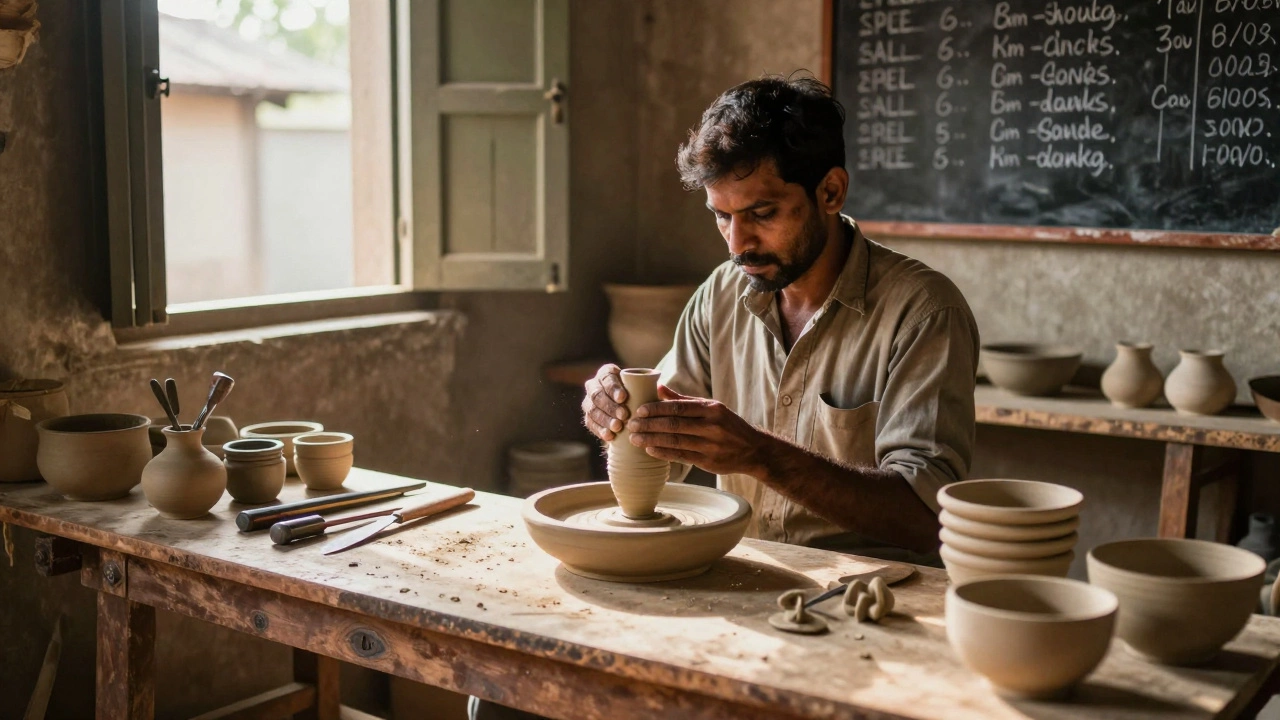
When you start a small scale manufacturing business, you’re not trying to compete with giants. You’re not building a factory with thousands of workers or exporting to 50 countries. You’re building something real, something that fits your community, your skills, and your resources. So what’s the real goal here? It’s not just to make money - though that’s part of it. The main objective of a small scale business in manufacturing is to create sustainable value by solving local problems with practical, affordable products.
Solve a Real Problem in Your Community
Think about the most successful small manufacturers you know. They didn’t start by asking, ‘How do I get rich?’ They started by asking, ‘What’s missing around here?’ In rural India, a small workshop started making low-cost water filters from locally sourced ceramic. In Brisbane, a family-run shop began producing handmade wooden kitchen utensils because people were tired of cheap plastic that cracked after three months. These aren’t grand innovations - they’re smart fixes.
Small scale manufacturing thrives when it fills gaps big companies ignore. Big factories chase volume. Small ones chase relevance. If your neighborhood needs durable tool handles, affordable school desks, or custom metal brackets for local machinery, that’s your opportunity. You don’t need a patent. You need to listen.
Use Local Resources Wisely
One of the biggest advantages small manufacturers have is access to local materials and labor. You don’t have to import plastic pellets from China if you can source sawdust from a nearby timber yard. You don’t need to hire engineers from Sydney if your cousin’s uncle used to fix sewing machines for 30 years.
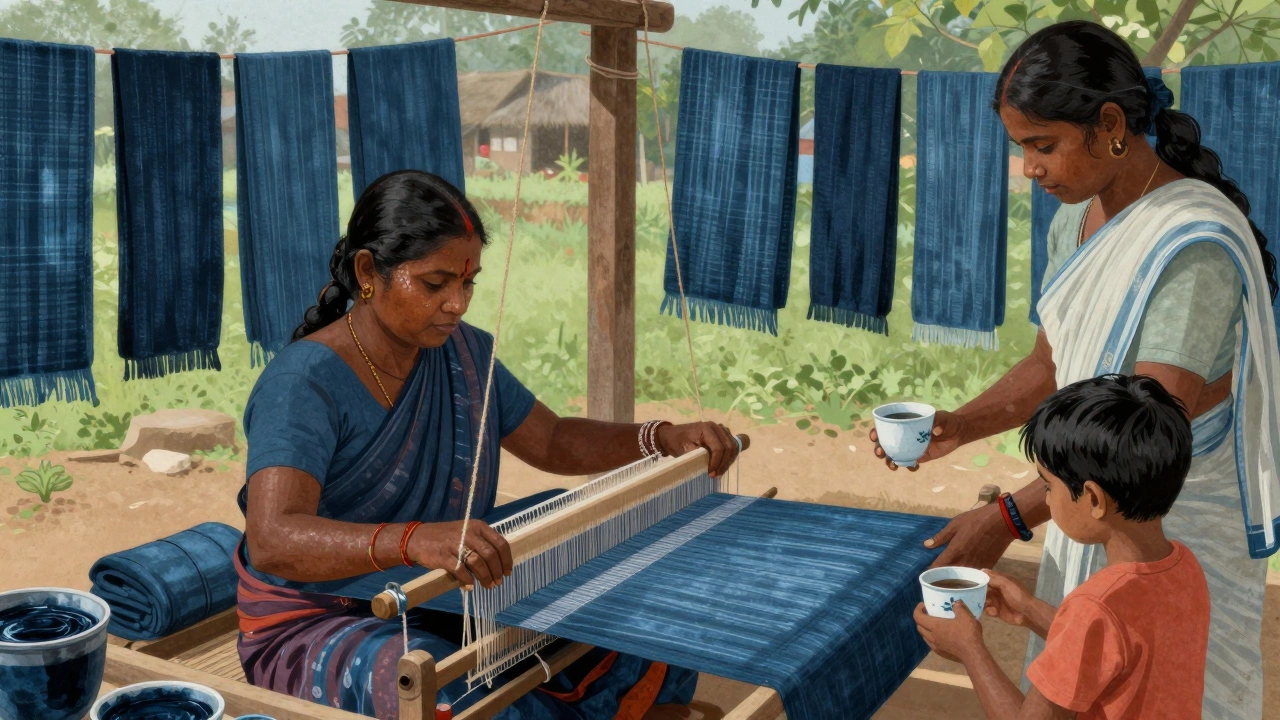
That’s not just cost-saving - it’s resilience. When global supply chains break down, small manufacturers who use local inputs keep running. In 2022, when shipping delays hit hard, a small textile unit in Tamil Nadu switched from imported dyes to natural indigo from a village 40 kilometers away. Their production didn’t drop. Their margins improved. And their customers loved the story behind the fabric.
Small scale manufacturing isn’t about being the cheapest. It’s about being the most adaptable. Use what’s nearby. Build relationships with local suppliers. Turn waste into raw material. That’s how you build a business that lasts.
Create Jobs That Stick Around
A small manufacturing unit with 12 employees doesn’t just make products - it creates livelihoods. These aren’t temporary gigs. They’re skilled jobs that grow with the business. A welder who starts at $10 an hour might become a supervisor in two years. A seamstress might learn pattern-making and start designing her own line.
Compare that to a big factory that automates everything and lays off half its staff every quarter. Small manufacturers hire people, not robots. They train them. They keep them. And in places where unemployment is high, that’s not just good business - it’s community development.
In Indonesia, a small metal fabrication shop trained 18 women from nearby villages to operate CNC machines. Five years later, three of them opened their own workshops. That’s the ripple effect small scale manufacturing creates. One job becomes ten. Ten become a local industry.
Keep Profit Margins Healthy Without Big Investment
Big manufacturers need $5 million in machinery. Small ones need $50,000. That difference changes everything. With lower overhead, you can afford to make smaller batches, test new designs quickly, and adjust prices without losing your shirt.
Take a small food processing unit in Kerala. They make spicy mango chutney in 500-gram jars. Their equipment? A single steam cooker, a hand-cranked grinder, and a few glass jars. They sell directly to local grocers and farmers’ markets. Their profit margin? 45%. A big brand selling the same product in supermarkets? Maybe 18%, after shelf fees, advertising, and logistics.
Small scale manufacturing wins by being lean. You don’t need a marketing team. You need a good product and word-of-mouth. You don’t need a warehouse. You need a corner of your garage. That’s how you make money without burning cash.
Build Trust Through Transparency
People are tired of faceless brands. They want to know who made their shoes, where their soap came from, and if the person who built their table got paid fairly.
Small manufacturers have a natural edge here. You can put your name on the product. You can show customers your workshop. You can tell them how many hours went into each item. That’s authenticity. And in a world full of greenwashing and fake reviews, that’s worth more than any ad campaign.
A small furniture maker in Karnataka started labeling each chair with the name of the craftsman who built it - and the date. Sales jumped 30% in six months. Customers weren’t just buying furniture. They were buying a story, a person, a promise.
Transparency isn’t a marketing tactic. It’s your business model.

Stay Agile and Keep Learning
Big companies move slowly. They need board approvals for a new color. Small manufacturers? One person can decide to switch from plastic to bamboo in a week.
That agility is your superpower. You can test a new product line with 100 units. If it sells, you scale. If it flops, you pivot - no lawsuits, no layoffs, no press releases.
Look at the rise of custom metal planters in urban areas. A small workshop in Pune started making them as a side project. Within a year, they were selling 500 a month. Why? Because they listened to Instagram comments. Someone said, ‘I wish these had drainage holes.’ They added them. Sold out in two days.
Small scale manufacturing isn’t about having the best technology. It’s about being the first to listen.
It’s Not About Being Big - It’s About Being Essential
The main objective of a small scale business in manufacturing isn’t to become the next Tesla or Samsung. It’s to become the one thing your town can’t do without. The place where the local mechanic gets his brackets. The factory that makes the only affordable lunchboxes for school kids. The workshop that keeps the village’s irrigation pumps running.
That’s not a small goal. It’s a powerful one. You’re not just making things. You’re keeping your community alive.
When you focus on solving real problems, using local resources, hiring neighbors, staying lean, and building trust, you don’t need to be big to matter. You just need to be consistent. And that’s how small scale manufacturing doesn’t just survive - it thrives.
What is the primary goal of a small scale manufacturing business?
The primary goal is to create sustainable value by solving local problems with affordable, practical products. Unlike large manufacturers that chase volume and global markets, small scale businesses focus on relevance, adaptability, and community impact. They thrive by filling gaps big companies ignore - like making durable school desks, custom machine parts, or locally sourced food products.
How do small scale manufacturers compete with big companies?
They don’t compete on scale - they compete on speed, personalization, and trust. Big companies rely on mass production and advertising. Small manufacturers win by listening to customers, using local materials, and offering handmade or custom solutions. A small workshop that makes wooden utensils from reclaimed timber can charge more than a factory selling plastic ones because customers value the story, quality, and local connection.
Is small scale manufacturing profitable?
Yes, when done right. Profit margins are often higher than in large-scale manufacturing because overhead is lower. A small food processor making chutney in 500g jars might earn 45% profit after direct costs, while a big brand selling the same product in supermarkets makes only 18% after shelf fees and logistics. Small manufacturers avoid expensive marketing, warehousing, and distribution networks by selling locally - through markets, word-of-mouth, or direct online orders.
What are the biggest mistakes small manufacturers make?
The biggest mistake is trying to be everything to everyone. Many small manufacturers waste money on expensive machinery they don’t need, chase export markets before mastering local demand, or copy big brands instead of focusing on what makes them unique. Another common error is underpricing - thinking low cost means more sales. In reality, customers pay more for quality, transparency, and local impact. Know your value and price accordingly.
Do I need formal training to start a small manufacturing business?
No, but you need hands-on experience. Many successful small manufacturers learned by doing - fixing machines, apprenticing with local artisans, or starting with one product and refining it over time. Formal training helps, but real skills come from trial, feedback, and persistence. Focus on mastering one process first - whether it’s welding, sewing, or food preservation - before expanding.
If you’re thinking about starting a small manufacturing business, start small. Solve one problem. Use what’s around you. Build trust. And let your business grow from there. You don’t need a billion-dollar vision. You just need to make something that matters to someone nearby.