Resale Profitability Calculator
Analysis Results
Total Costs
$0.00
Platform Fees
$0.00
Net Profit
$0.00
Return on Investment (ROI)
0%Profit Margin
0%Everyone wants the secret list. You know the one-a magic spreadsheet that tells you exactly what to buy at a garage sale and sell on eBay for triple the price. The truth is, there isn’t one single "most profitable" item. If there were, everyone would be buying it, and the margins would vanish overnight. Profitability in flipping comes down to three things: speed of sale, margin percentage, and your ability to spot value where others see junk.
In 2026, the landscape has shifted. We aren't just talking about finding a rare comic book anymore. With advanced AI tools helping us scan marketplaces instantly and social commerce platforms like TikTok Shop driving impulse buys, the game is faster than ever. But the core principle remains: buy low, add value (through cleaning, repairing, or better photography), and sell high.
The Math Behind the Flip: Margin vs. Volume
Before picking an item, you need to understand the two paths to profit. Some items have huge margins but sell slowly. Others have tiny margins but move like hotcakes. For most beginners, the sweet spot is a 3x to 5x return on investment. This means if you spend $20 on an item, you aim to sell it for $60-$100 after fees.
You also need to factor in the "hidden costs." Shipping heavy items eats into profits. Platform fees (eBay takes roughly 13%, Etsy around 6-8% plus payment processing) can destroy thin margins. Always calculate your net profit before you buy. A quick rule of thumb: if the selling price doesn't cover your purchase price, shipping, and platform fees with at least 40% left over, walk away.
1. Furniture: The Highest Absolute Dollar Return
If you want the biggest paycheck per transaction, furniture is king. Specifically, mid-century modern pieces, solid wood dressers, and vintage cabinets. These items are heavy, which keeps casual flippers away, giving you less competition.
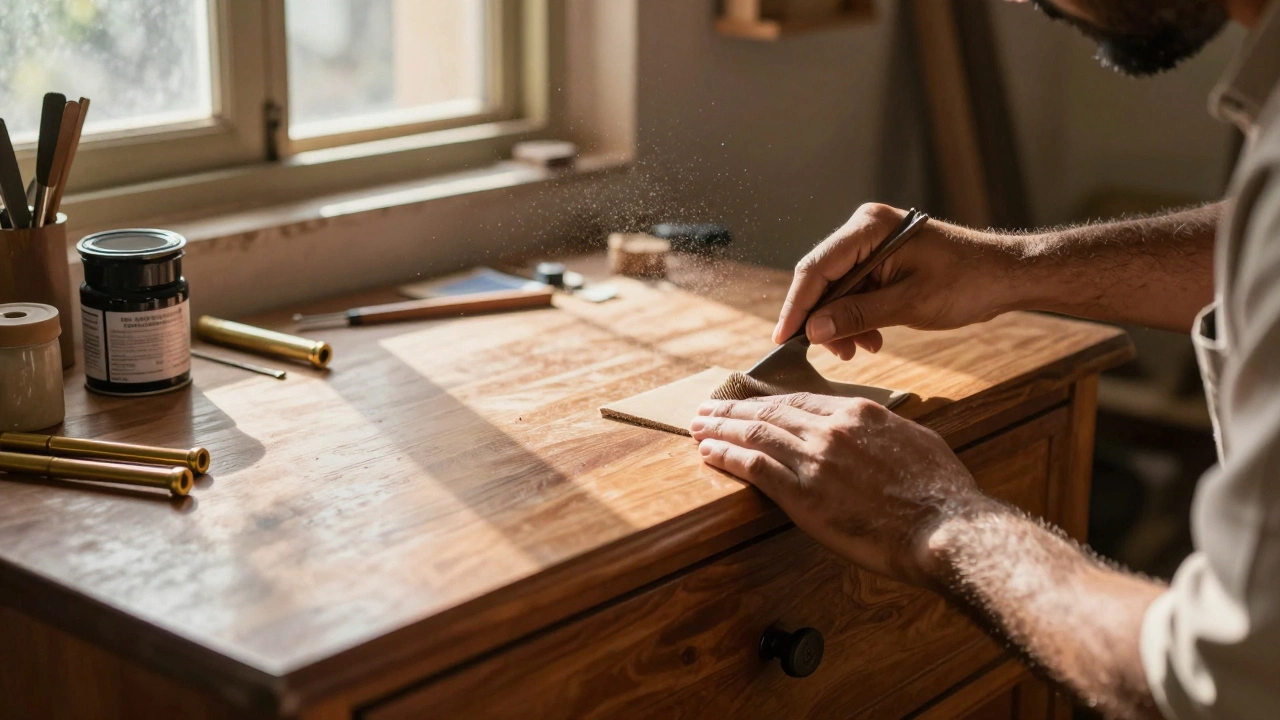
Furniture Flipping involves sourcing undervalued wooden pieces, refinishing them, and reselling for a premium. Think about a scratched oak dresser found at a local charity shop for $15. With some sandpaper, stain, and new hardware costing another $30, you’ve spent $45 total. That same dresser, photographed well against a clean background and listed on Facebook Marketplace or Craigslist, can easily sell for $250-$400.
The key here is labor. You’re trading sweat equity for cash. You don’t need expensive tools-just a good eye for joinery (solid wood vs. particle board) and the willingness to do the work. Solid wood holds value; particle board does not. Learn to identify dovetail joints and mortise-and-tenon constructions. These are signs of quality that buyers pay for.
2. Vintage Electronics: Nostalgia Meets Tech
This category is tricky but incredibly lucrative if you know your niches. It’s not about broken iPhones. It’s about retro gaming consoles, film cameras, and professional audio gear.
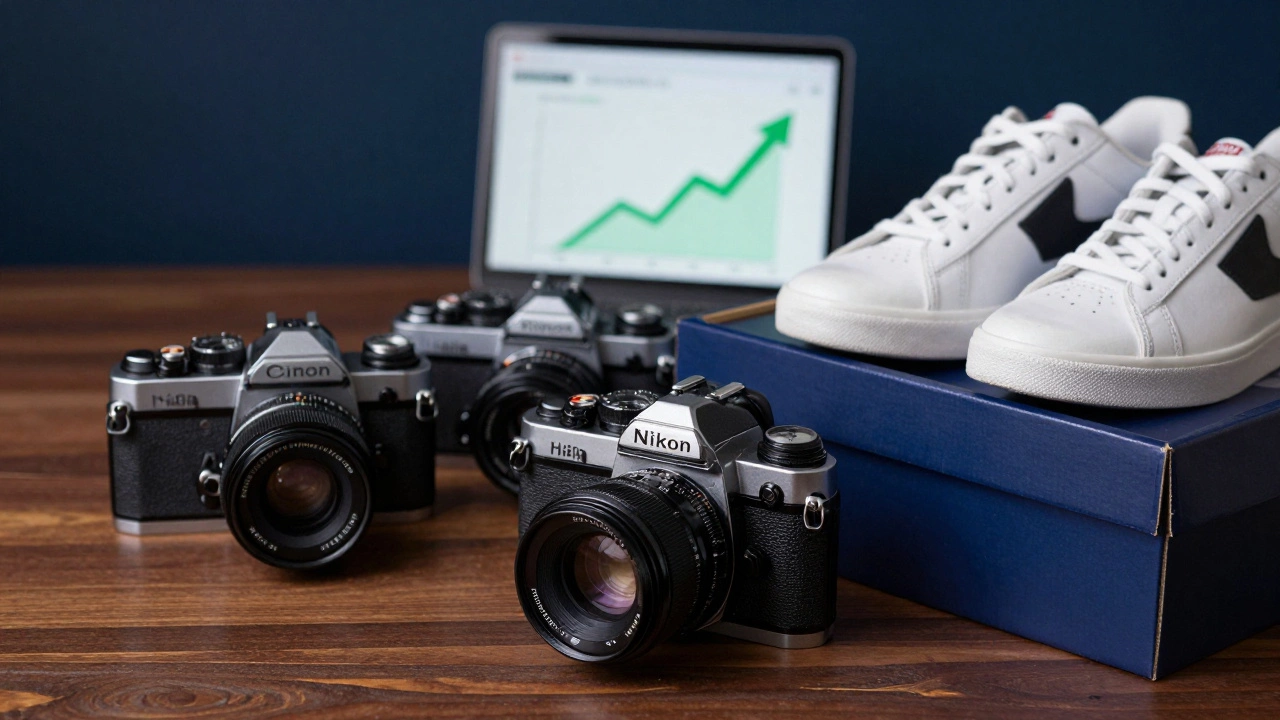
Vintage Cameras, particularly film SLRs, are high-demand items driven by the resurgence of analog photography among Gen Z. Brands like Canon AE-1, Nikon F3, and Pentax K1000 are consistently sought after. You might find one at a flea market for $10 because the seller thinks it’s useless since it uses film. Clean the lens, check the shutter speed, and list it for $80-$150.
Gaming consoles like the original Nintendo Entertainment System (NES), Sega Genesis, or even early PlayStation models hold their value well. However, these require more technical knowledge. You need to test them. A working console sells for significantly more than a non-working one. Also, look for "complete in box" (CIB) items-those with manuals and boxes command top dollar.
3. Sneakers: The Fastest Turnaround
Sneaker culture isn’t going anywhere. In fact, it’s becoming more institutionalized. Platforms like StockX and GOAT have made sneaker flipping almost as easy as trading stocks.
Sneaker Reselling focuses on limited-edition athletic footwear from brands like Nike, Adidas, and New Balance. The most profitable sneakers are those with limited release quantities or collaborations with artists and celebrities. Look for models like the Air Jordan 1, Yeezy Boosts, or Off-White collaborations.
The challenge here is acquisition. You often need to "camp" online for drops or build relationships with local consignment shops. Margins can be tight (sometimes only 20-30%), but the volume is high. If you can turn over inventory every week, the annualized return is massive. Just beware of fakes. Invest in authentication guides and learn to spot counterfeit stitching and glue patterns.
4. Books: Low Risk, Steady Income
Books are the safest entry point for new flippers. They are lightweight, cheap to ship, and virtually indestructible. While you won’t get rich on a single book, the volume adds up.
Focus on three types: textbooks, first editions, and niche hobby books. Textbooks change editions frequently, so older editions sold by students at the end of the semester are goldmines. Use an app like BookScouter to scan barcodes and instantly see which buyer pays the most. Often, a textbook bought for $5 can sell for $30-$50 to a specific university buyer.
First editions of famous authors (Stephen King, J.K. Rowling, etc.) can be very valuable, but you need to know how to identify them. Look for the copyright page details. If it says "First Printing" or lists numbers ending in 1, it’s likely a first edition. Condition matters immensely here-no writing inside, tight binding, and intact dust jackets.
5. Clothing: Designer and Vintage
Clothing flipping is all about brand recognition. A generic t-shirt won’t flip well, but a vintage Levi’s trucker jacket or a designer handbag will.
Vintage Denim, specifically Levi’s 501s from the 90s, are highly coveted for their unique wash and fit, often selling for hundreds of dollars. Thrift stores are full of these. Look for red tabs, rivets, and leather patches. The style has cycled back in popularity, driving prices up.
Designer bags from brands like Louis Vuitton, Gucci, and Chanel retain value exceptionally well. Even gently used bags can sell for 50-70% of their retail price. Platforms like Poshmark, Depop, and The RealReal are ideal for this. Again, authenticity is key. Buy from reputable sources or learn to authenticate yourself using serial number databases and craftsmanship cues.
Comparison Table: Best Items to Flip in 2026
| Item Category | Avg. Buy Price | Avg. Sell Price | Effort Level | Speed of Sale | Risk Factor |
|---|---|---|---|---|---|
| Furniture | $15 - $50 | $150 - $500 | High (Labor) | Slow (Days/Weeks) | Medium (Damage) |
| Vintage Electronics | $10 - $30 | $50 - $200 | Medium (Testing) | Medium | Low |
| Sneakers | $100 - $200 | $150 - $400 | Low (Sourcing) | Fast (Hours/Days) | High (Counterfeits) |
| Books | $1 - $5 | $10 - $50 | Low | Fast | Very Low |
| Designer Clothing | $5 - $20 | $30 - $150 | Medium (Authenticity) | Medium | Medium |
Where to Source Inventory
Your source determines your margin. The closer you are to the source, the better your deal. Here are the best places to look in 2026:
- Facebook Marketplace & Craigslist: Great for furniture and bulky items. People often underprice these because they want them gone quickly. Search for keywords like "moving sale," "estate sale," or "must go today."
- Thrift Stores (Goodwill, Salvation Army): Hit them early in the morning when new donations are processed. Focus on bins rather than racks for hidden gems.
- Estate Sales: These are treasure troves for antiques, jewelry, and collectibles. Go late in the sale when prices are dropped further.
- Online Arbitrage: Use tools like Keepa or CamelCamelCamel to monitor Amazon price drops. Buy discounted items from major retailers and resell them on Amazon FBA. This requires more capital but scales well.
- Garage Sales: Still the classic method. Drive through affluent neighborhoods on weekends. Cash is king here-negotiate hard.
Tools to Speed Up Your Process
You can’t rely on gut feeling alone anymore. Use technology to validate your purchases instantly.
- Scan apps: Apps like OfferUp, eBay, and Mercari allow you to scan barcodes to see recent sales data.
- Image search: Use Google Lens or Pinterest to identify unknown antiques or furniture styles.
- Photography: Good photos sell items. You don’t need a DSLR. A smartphone with natural light and a clean background (white sheet or wall) works wonders. Edit lightly to adjust brightness and contrast.
- Packaging: Invest in bubble wrap, sturdy boxes, and packing tape. Damaged goods lead to returns and bad reviews.
Common Mistakes to Avoid
Even experienced flippers make errors. Here’s how to avoid the biggest ones:
- Emotional Buying: Don’t buy something because you like it. Buy it because the data shows it sells. If the math doesn’t work, leave it.
- Ignoring Fees: Calculate shipping and platform fees before buying. A $50 item that sells for $60 might actually lose you money after a 13% fee and $10 shipping.
- Poor Photography: Dark, blurry photos scream "junk." Spend 10 minutes setting up good lighting. It increases your listing views by up to 50%.
- Holding Too Much Inventory: Cash flow is critical. Don’t tie up all your money in slow-moving items. Aim for a mix of fast-turnover and high-margin items.
Next Steps for Beginners
Start small. Pick one niche-say, vintage cameras or children’s toys-and master it. Learn what makes a good example, how to clean it, and where to sell it. Track every transaction in a spreadsheet: date bought, cost, date sold, revenue, and net profit. This data will reveal patterns and help you refine your strategy.
As you gain confidence, expand your categories. Remember, flipping is a skill, not a lottery. The more you practice, the sharper your eye becomes. And always, always prioritize customer service. Positive reviews build trust, which leads to faster sales and higher prices.
What is the easiest item to flip for beginners?
Books and clothing are the easiest for beginners. They are low-cost, easy to ship, and have a wide audience. You can start with just $20-$50 and learn the basics of sourcing, pricing, and listing without significant financial risk.
How much money can you make flipping items?
It varies widely. Part-time flippers might make $500-$1,000 a month. Full-time flippers with optimized processes and multiple income streams can earn $3,000-$10,000+ monthly. It depends on your reinvestment rate, niche selection, and sales velocity.
Is flipping items legal?
Yes, flipping is completely legal. However, you must report your income to tax authorities. In many countries, if you make a profit, it is considered taxable income. Keep detailed records of your purchases and sales for tax purposes.
What are the best platforms to sell flipped items?
eBay is great for collectibles and electronics. Facebook Marketplace is ideal for local, bulky items like furniture. Poshmark and Depop are best for clothing and accessories. Amazon FBA works well for branded goods and books. Choose the platform based on your item type and target audience.
How do I avoid counterfeit items when flipping?
Educate yourself on brand-specific authentication markers. For sneakers, check stitching, logos, and box labels. For luxury bags, examine hardware, stitching, and serial numbers. When in doubt, use third-party authentication services or buy from reputable sources. Never assume an item is genuine based on appearance alone.