Demand Validation Calculator for Manufacturing Startups
Based on real-world data from 80+ Australian manufacturing startups. Validate your market before you invest in production.
Validate Your Manufacturing Product
Before you invest in production, calculate if there's real demand for your product. The article shows 50% of manufacturing startups fail because they build something nobody wants.
Results will appear here after calculation
Most people think startups die because they run out of money. That’s true-but it’s not the root cause. In small manufacturing, the real killers are quieter, sneakier, and way more common than you’d expect. I’ve seen over 80 manufacturing startups in Australia come and go. Half of them folded before they even hit their first year. And the ones that lasted? They didn’t have the best product. They didn’t have the most funding. They had one thing everyone else ignored: clarity.
They built something no one asked for
Here’s the brutal truth: if you’re making something because you think it’s cool, you’re already behind. I worked with a guy in Geelong who spent $120,000 building a smart compost bin for home gardeners. He had a prototype that looked like a Tesla. The problem? No one was searching for it. No one was talking about it. He didn’t test demand. He didn’t talk to 50 potential customers before spending a dime. He assumed. And that’s how you lose.
In manufacturing, you can’t afford to guess. You need proof someone will pay. That means:
- Talking to 30+ people who actually run small farms, community gardens, or urban homesteads
- Asking them: "Would you pay $299 for this? Why or why not?"
- Getting pre-orders or deposits-not just feedback
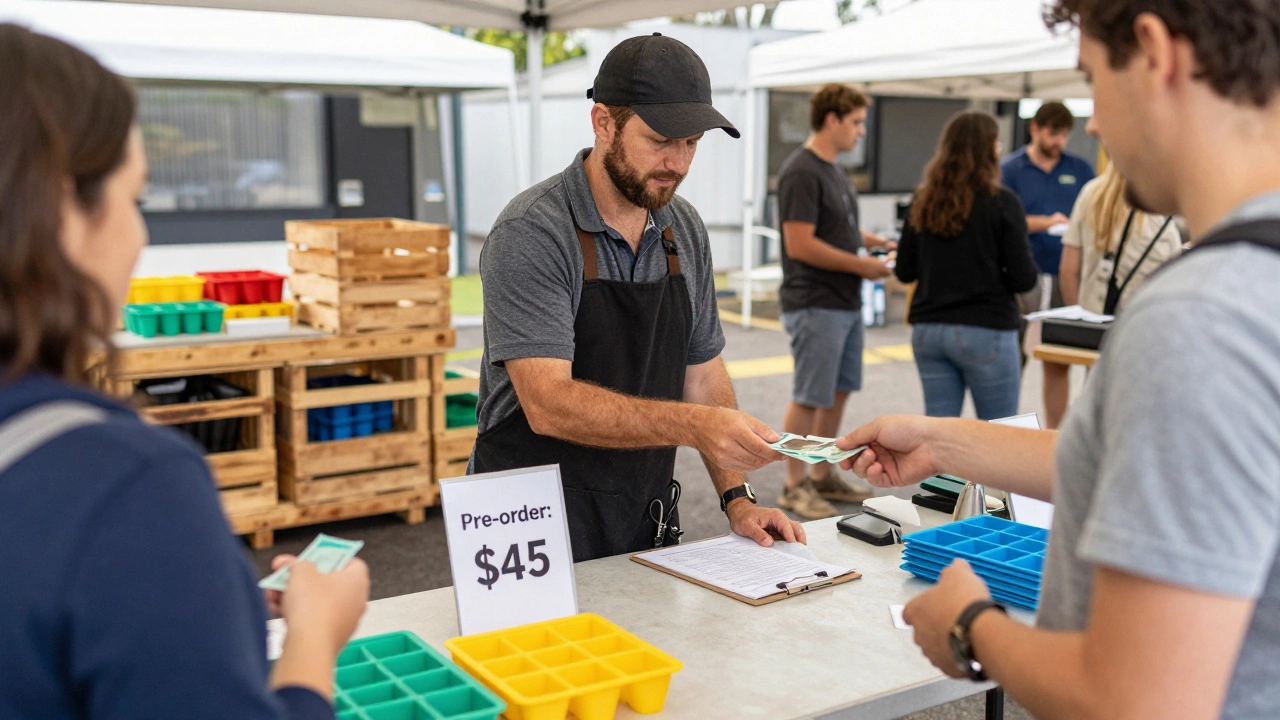
One Perth-based startup made reusable silicone food molds for home bakers. They didn’t launch a website. They didn’t run ads. They showed up at three farmers markets with a table, a sign that said "Pre-order your mold: $45," and a clipboard. They sold 117 units in two weekends. That’s how you validate demand. Not with a pitch deck. With cash.
They underestimated the cost of making things
Every new manufacturer thinks they can produce a unit for $8 and sell it for $25. That sounds great-until you factor in:
- Tooling costs (molds, dies, jigs) that can run $15,000-$50,000
- Minimum order quantities from suppliers (you have to buy 5,000 units just to get the price you quoted)
- Shipping, customs, and warehouse storage
- Quality control failures-10% defect rate? That’s $5,000 in lost inventory before you even ship
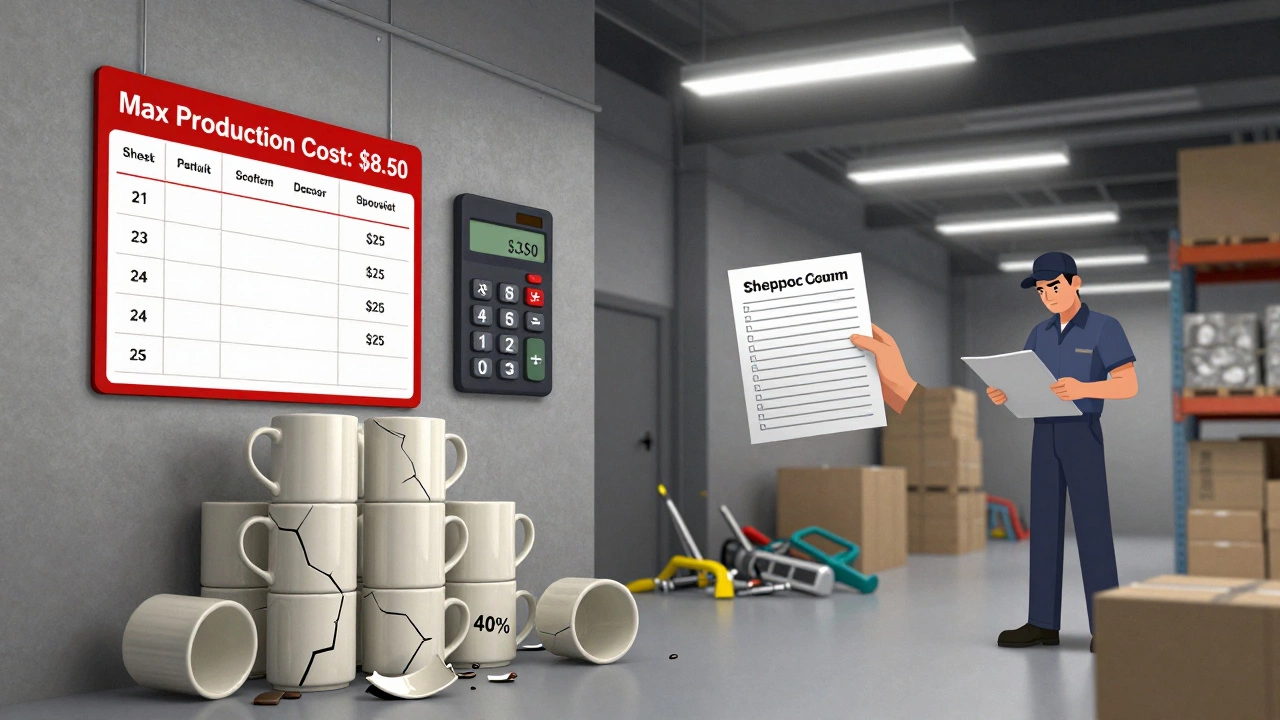
I saw a Brisbane startup that made ceramic coffee mugs. They thought they could get them made in China for $3.50 each. They ordered 3,000. When the shipment arrived, 40% had hairline cracks. They couldn’t sell them. They couldn’t return them. The supplier wouldn’t cover it. They lost $18,000. That’s not a bad supplier. That’s a bad plan.
Always run the numbers backward. Start with your target selling price. Subtract 40% for retail markup, 20% for shipping and handling, 15% for marketing, and 10% for overhead. What’s left? That’s your max production cost. If your factory quote is higher than that, you’re not ready.
They ignored cash flow like it was optional
Profit isn’t cash. Cash is king. And in manufacturing, cash disappears faster than you think.
You pay your supplier in 30 days. You wait 60 days for your first big retailer to pay you. Meanwhile, you’re paying rent, electricity, wages, and loan payments. That’s 90 days of negative cash flow before you see a single dollar back.
Most founders think they can cover this with credit cards or personal savings. They’re wrong. I’ve seen three startups in the last year collapse because they didn’t have a cash buffer. One had $150,000 in orders lined up-but no money to buy raw materials. The bank refused to lend because they had no collateral. They shut down.
If you’re in manufacturing, you need at least six months of operating expenses in the bank before you open your doors. Not revenue projections. Not future sales. Actual cash. And you need a line of credit that kicks in when you’re stuck between payments. No one talks about this. Everyone talks about scaling. But scaling without cash flow is just debt with a fancy logo.
They didn’t build a repeatable process
One-off production is art. Manufacturing is science. If your process relies on one person’s skill, you’re not a business-you’re a hobbyist with a CNC machine.
I worked with a Sydney startup that made custom metal brackets for boat owners. Their founder was a former shipwright. He could hand-bend a bracket in 12 minutes. He was proud. But when he tried to hire someone else? It took them 45 minutes. And the quality varied. He couldn’t scale. He couldn’t train. He couldn’t guarantee consistency. So his customers started leaving.
Every manufacturing process needs a documented SOP-Standard Operating Procedure. Not a 50-page manual. A one-page checklist with photos. Step 1: Clamp the metal. Step 2: Set angle to 22 degrees. Step 3: Press for 8 seconds. Step 4: Inspect for burrs. That’s it. If your team can’t follow it after one training session, you’re not ready to scale.
Companies that survive don’t have the best product. They have the most repeatable system.
They chased growth instead of stability
Startups think they need to grow fast. In manufacturing, that’s suicide.
One Melbourne company made solar-powered irrigation controllers for small farms. They got featured in a trade magazine. Orders exploded. They hired 12 new staff. Bought a bigger factory. Took on a $200,000 loan. Within four months, their defect rate jumped from 3% to 18%. Their lead time went from 5 days to 22. Customers started canceling. They couldn’t fix it. They went under.
When you’re small, your advantage is control. You know every customer. You fix every problem. You adjust every detail. Growth doesn’t help you unless your systems are bulletproof.
Wait until you have:
- Consistent quality for 6+ months
- Repeat customers making 3+ orders
- A waiting list that’s 30+ days long
Then you can think about scaling. Until then, focus on getting better-not bigger.

They didn’t plan for regulation
Manufacturing isn’t just about making stuff. It’s about compliance.
One startup in Adelaide made food-grade plastic containers. They didn’t know they needed AS/NZS 2070 certification. They sold 2,000 units. Then a customer’s child got sick from chemical leaching. The product was pulled. They were fined $45,000. Their insurer refused to cover it. They never recovered.
Every product has rules:
- Electronics? AS/NZS CISPR 11 for electromagnetic interference
- Food contact? AS/NZS 2070
- Children’s products? AS/NZS ISO 8124
- Pressure vessels? AS 1210
You can’t Google your way out of this. Talk to a compliance consultant early. Pay the $3,000 to get certified before you make your first unit. It’s not an expense. It’s insurance.
They didn’t build relationships
Manufacturing is a network game. You don’t win alone.
One Perth startup made reusable stainless steel straws. They had a great product. But they didn’t know their local metal fabricator. They didn’t have a relationship with the local logistics company. When their first shipment got stuck at customs, they had no one to call. The delay cost them $12,000 in lost sales.
The winners? They know their local suppliers. They have coffee with their freight forwarder. They ask for help. They return favors. They show up at industry events-not to pitch, but to listen.
When you’re small, your network is your safety net. Without it, one problem becomes a disaster.
What actually works
The startups that survive in manufacturing don’t have the flashiest idea. They have:
- Proof someone will pay before they build
- A clear understanding of real production costs
- At least six months of cash saved
- A documented process that anyone can follow
- Compliance locked in before launch
- A network they can rely on when things go wrong
It’s not about being brilliant. It’s about being careful. It’s not about scaling fast. It’s about staying alive long enough to get good.
What’s the #1 mistake new manufacturing startups make?
They assume demand exists without testing it. They spend money building a product before talking to real customers who would actually buy it. No amount of passion or design fixes that. Always get pre-orders or deposits before you commit to production.
Can a manufacturing startup survive without investors?
Yes-many do. In fact, startups that bootstrap tend to last longer. The key is having enough personal savings or revenue from early sales to cover at least six months of operating costs. You don’t need VC money. You need discipline, cash flow management, and a clear path to your first 100 paying customers.
How long should I wait before scaling production?
Wait until you’ve had consistent quality for at least six months, repeat customers are ordering again, and your waiting list is over 30 days long. Scaling too early is how startups collapse. Focus on reliability before volume.
Do I need to certify my product before selling?
Yes-if it’s food contact, electronics, children’s products, or anything that touches people. Australia has strict standards like AS/NZS 2070, AS/NZS CISPR 11, and AS/NZS ISO 8124. Skipping certification isn’t saving money-it’s gambling with your business. Get certified before your first unit leaves the factory.
What’s the easiest way to test demand for a manufacturing product?
Show up at local markets, trade shows, or online forums with a clear price and a way to take payment. Don’t ask "Would you buy this?" Ask "Would you pay $X for this today?" If you get 20 people willing to pay upfront, you have a real opportunity. Pre-orders are the only real proof of demand.