Plastic Origin Explorer
Select a raw material to see the industrial transformation process and the final products created from it.
Click a raw material above to begin the trace.
Key Takeaways
- The primary sources for most plastics are crude oil and natural gas.
- Chemical plants use a process called "cracking" to turn these raw materials into monomers.
- Ethylene and propylene are the most critical building blocks for common plastics.
- Bioplastics offer an alternative by using plant-based sugars instead of fossil fuels.
The Ground Zero of Plastics: Fossil Fuels
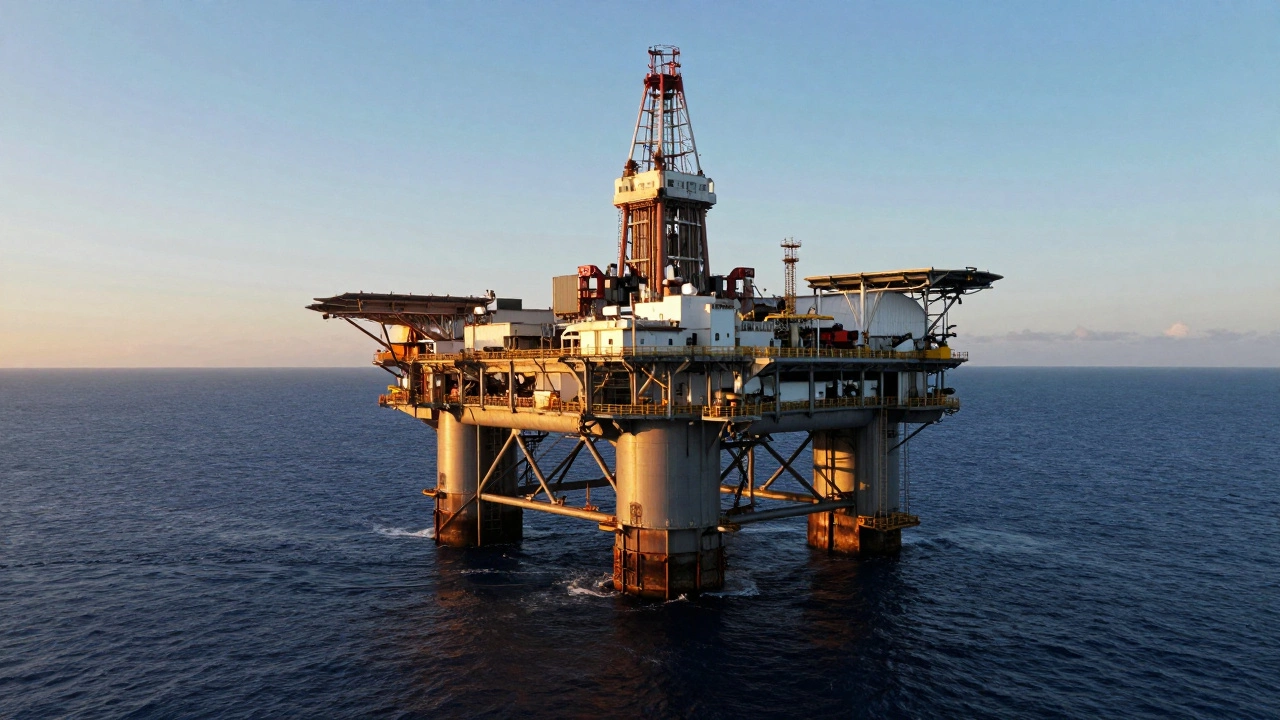
Almost every piece of plastic you see started as a fossil fuel. Specifically, we are talking about crude oil and natural gas. These aren't just for fueling your car or heating your home; they are rich in hydrocarbons, which are molecules made of hydrogen and carbon. Since plastic is essentially a long chain of these same atoms, it makes sense to start there.
When an oil company drills, they don't just get one type of oil. They get a complex mixture. Some of that mixture goes to gasoline, but a specific portion called "naphtha" is diverted to chemical plants. Naphtha is a liquid hydrocarbon that serves as the perfect starting point for making plastic raw materials. Natural gas, on the other hand, provides ethane, which is a cleaner, more direct route to producing the chemicals needed for plastic.
The Magic of Steam Cracking
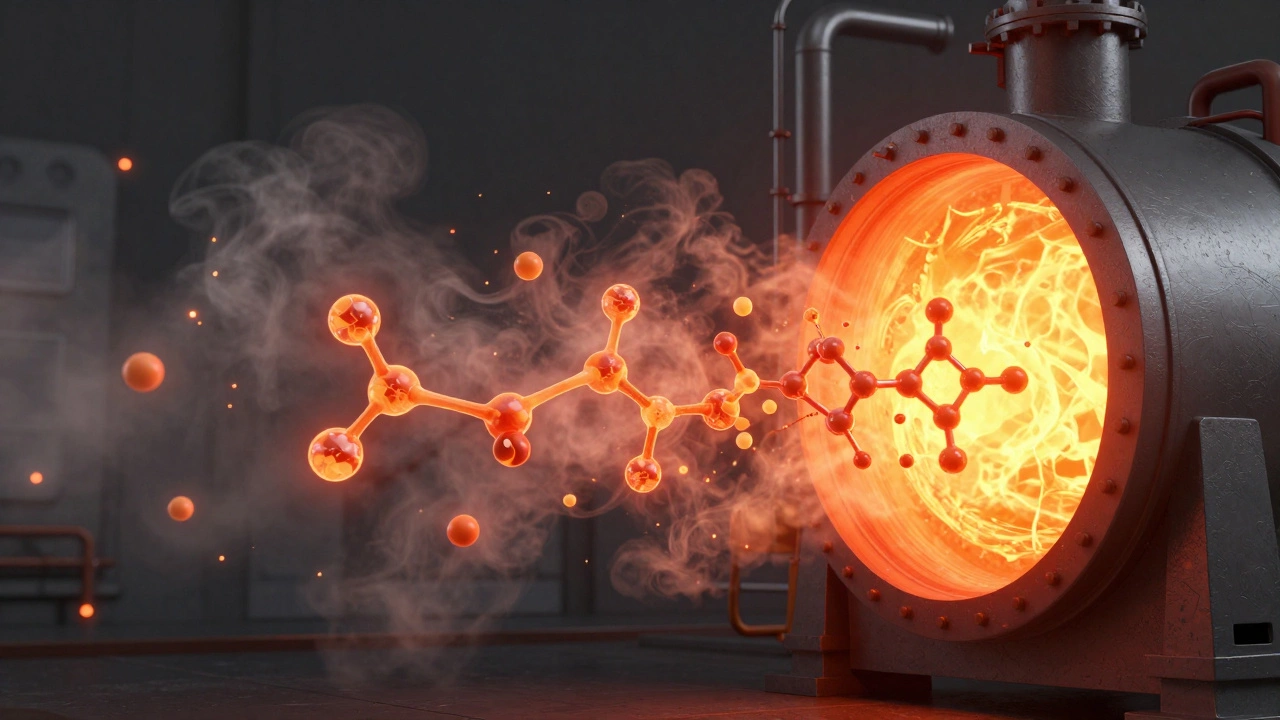
Raw oil or gas isn't plastic yet. You can't just pour crude oil into a mold and get a Lego brick. The raw materials have to go through a process called steam cracking. This happens in a massive industrial furnace where hydrocarbons are heated to extreme temperatures-often over 800 degrees Celsius-and mixed with steam.
The intense heat literally "cracks" the heavy, complex molecules into smaller, more useful ones. Think of it like breaking a long string of beads into smaller segments that you can then reorganize. This process produces the primary monomers that the industry relies on. The two biggest stars here are ethylene and propylene. These are gases that act as the basic building blocks for almost everything else.
| Raw Material | Intermediate Chemical | Final Plastic Type | Common Use Case |
|---|---|---|---|
| Natural Gas/Crude Oil | Ethylene | Polyethylene (PE) | Plastic bags, milk jugs |
| Natural Gas/Crude Oil | Propylene | Polypropylene (PP) | Bottle caps, car parts |
| Crude Oil (Naphtha) | Benzene | Polystyrene (PS) | Styrofoam, plastic cutlery |
| Crude Oil | Vinyl Chloride | Polyvinyl Chloride (PVC) | Pipes, flooring |
Polymerization: Building the Plastic Chain
Once the cracking process gives us monomers like ethylene, the next step is polymerization. If a monomer is a single bead, a polymer is the entire necklace. In a chemical reactor, these small molecules are forced to bond together in incredibly long, repeating chains.
Depending on how these chains are organized, you get different types of plastic. If the chains are straight and packed tightly, you get a rigid plastic like HDPE (High-Density Polyethylene), which is used for heavy-duty detergent bottles. If the chains are branched and messy, you get LDPE (Low-Density Polyethylene), which is the stretchy stuff used in cling wrap. The chemistry here is precise; changing the temperature or adding a catalyst can completely change the physical properties of the final material.
The Shift Toward Bio-Based Feedstocks
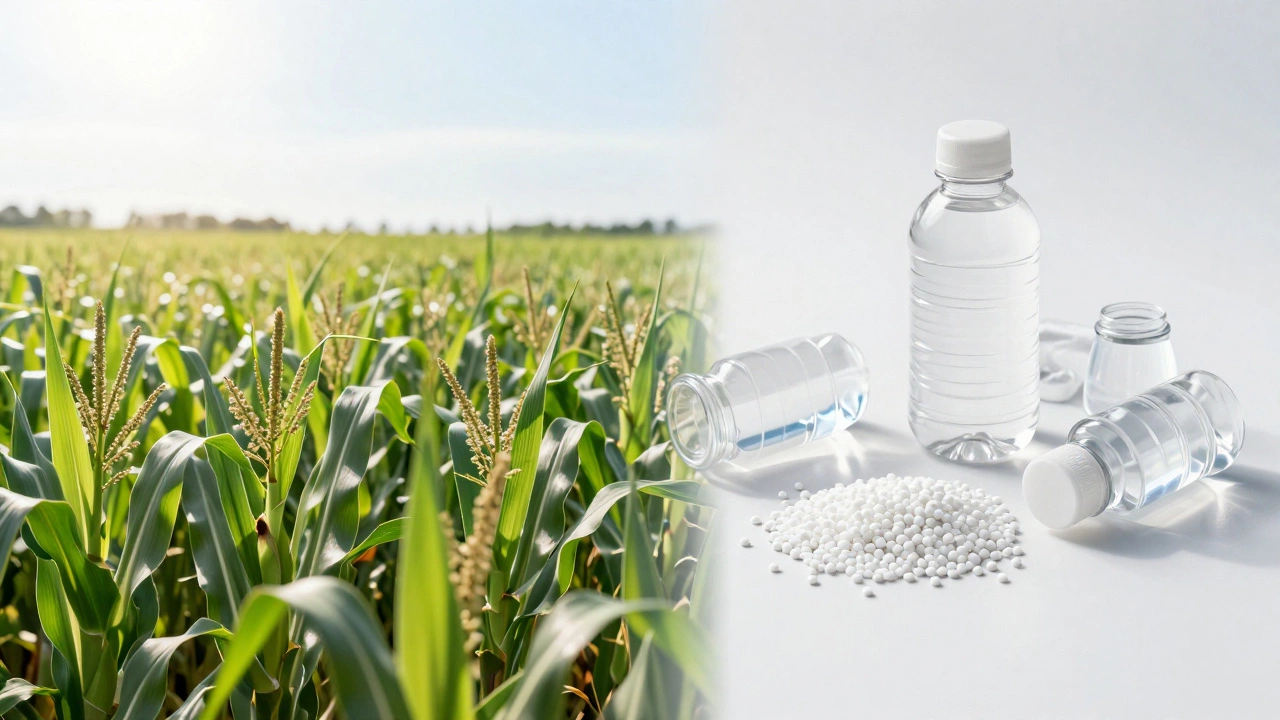
Not all plastics come from oil. There is a growing movement toward bioplastics, which use renewable biomass instead of fossil fuels. Instead of drilling for oil, companies are extracting sugars and starches from corn, sugar cane, and cellulose from wood pulp.
For example, PLA (Polylactic Acid) is made by fermenting plant sugars into lactic acid, which is then polymerized. While it looks and feels like traditional plastic, its origin is entirely biological. This reduces the carbon footprint because the plants absorb CO2 while they grow, partially offsetting the emissions produced during manufacturing. However, it's a common mistake to think all bioplastics are biodegradable; some are designed to be durable and won't break down any faster than oil-based plastics.
The Role of Refining and Chemical Plants
The journey from the ground to the store shelf involves a complex network of facilities. First, the oil refinery separates crude oil into different fractions. Then, the petrochemical plant takes those fractions and turns them into chemical precursors. Finally, the plastic manufacturer turns those chemicals into pellets.
These tiny plastic pellets, often called "nurdles," are the actual product that most plastic manufacturing companies buy. If you've ever seen tiny plastic beads on a beach, you're seeing leaked nurdles. These pellets are shipped by the ton to factories where they are melted down and injected into molds to create everything from phone cases to medical devices.
Environmental Impact and the Feedstock Dilemma
Because most plastics rely on the petroleum industry, the price of plastic is often tied to the price of oil. When oil prices spike, the cost of raw materials for plastic manufacturers goes up. This creates a huge incentive to find alternatives, but fossil fuels are currently incredibly efficient and cheap to process.
The real problem isn't just where the materials come from, but where they go. Since these long polymer chains are designed to be incredibly stable (which is why they're so useful), nature doesn't know how to break them down. The very thing that makes oil-based plastics great for a 10-year water pipe makes them terrible for a 10-minute coffee stirrer.
Is all plastic made from oil?
No, not all plastic is made from oil. While the vast majority is petroleum-based, some are made from natural gas (ethane) and an increasing number are "bioplastics" made from corn, sugar cane, or vegetable oils. However, the chemical structure of many bioplastics is nearly identical to their oil-based counterparts.
What is naphtha?
Naphtha is a flammable liquid hydrocarbon mixture that is a byproduct of refining crude oil. It is a primary feedstock for the petrochemical industry and is used in steam crackers to produce ethylene and propylene.
Can plants really be turned into plastic?
Yes. Plants contain carbohydrates and sugars. Through fermentation and chemical processing, these sugars are converted into monomers like lactic acid, which can then be polymerized into plastics like PLA (Polylactic Acid).
Why is natural gas preferred over oil for some plastics?
Natural gas, specifically ethane, provides a "cleaner" feedstock. It contains fewer impurities than crude oil naphtha, which can make the cracking process more efficient and produce a higher yield of ethylene.
What are nurdles?
Nurdles are small pre-production plastic pellets. They are the intermediate form of plastic that is shipped from chemical plants to manufacturers, who then melt them down to create finished products.