US Plastic Waste Destination Calculator
How much plastic waste do you generate? This calculator shows where U.S. plastic waste actually ends up based on current statistics.
Your Plastic Waste Breakdown
Where exported plastic waste goes:
Every year, the United States generates over 40 million tons of plastic waste. That’s more than any other country in the world. But here’s the question no one talks about: where does it all go?
Most of it doesn’t get recycled
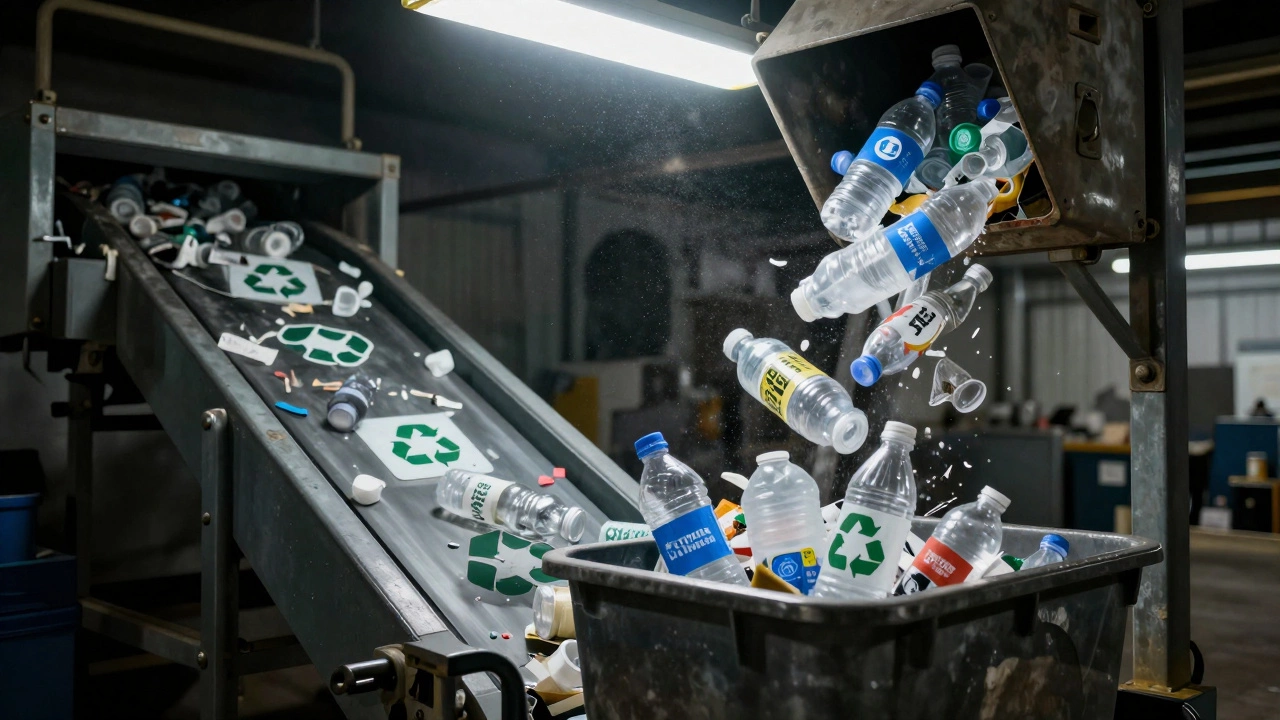
You’ve probably heard that plastic is recyclable. But the truth is, less than 6% of all plastic waste in the U.S. actually gets recycled. The rest? It ends up in landfills, incinerators, or shipped overseas. Even plastics labeled with the chasing arrows symbol often never make it to a recycling plant. Why? Because sorting plastic is expensive, messy, and often not worth the cost. Many types of plastic-like film, trays, and multi-layer packaging-can’t be processed by standard recycling machines. So when you toss a yogurt cup into the blue bin, odds are it just gets buried.
The export boom: plastic waste shipped abroad
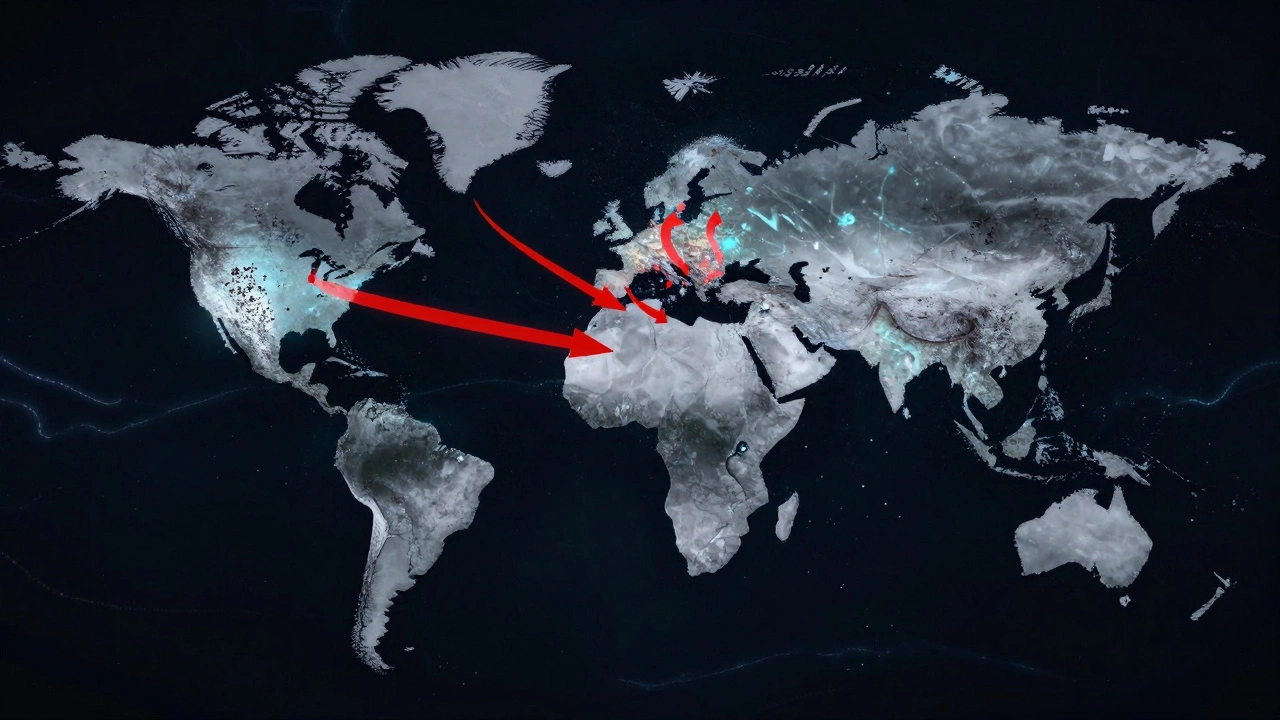
Before 2018, China took in over half of the world’s plastic waste. The U.S. shipped more than 7 million tons of plastic to China each year. It was cheap, easy, and companies made money off the deal. Then China banned most plastic imports. The U.S. didn’t stop exporting-it just found new buyers.
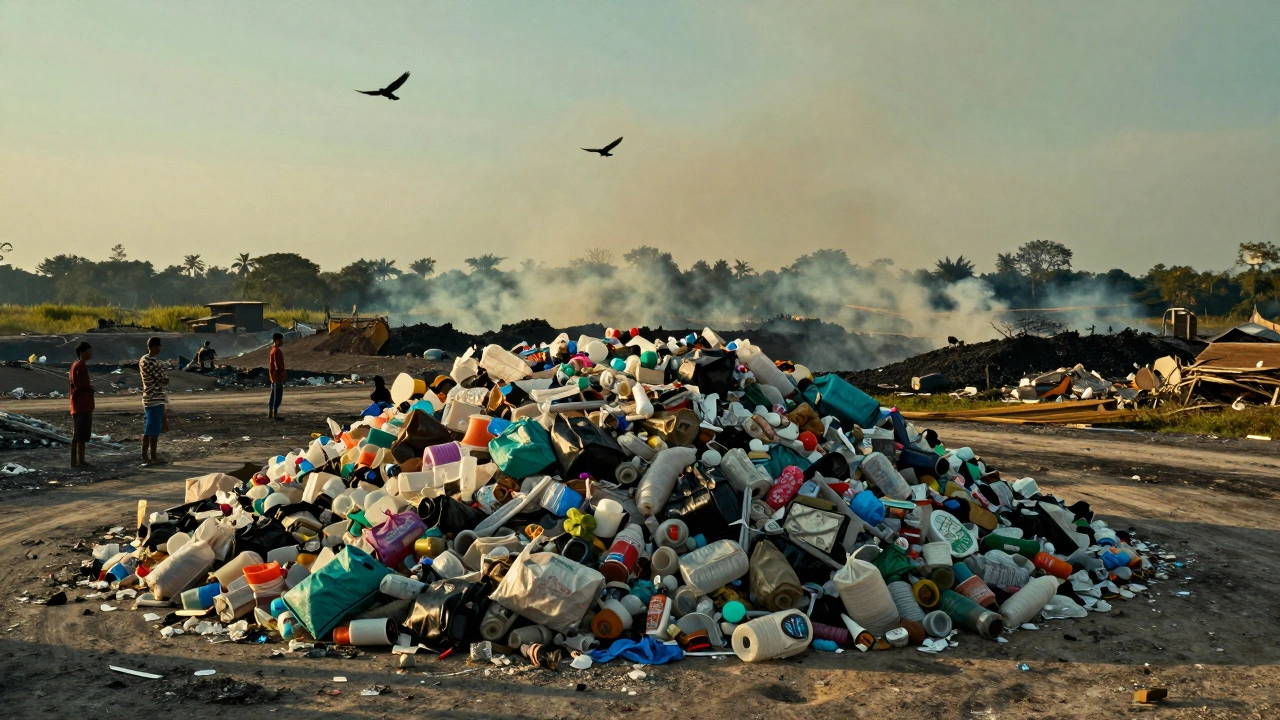
Today, the top destinations for U.S. plastic waste are Malaysia, Vietnam, Indonesia, Turkey, and Poland. In 2023 alone, the U.S. sent over 1.5 million tons of plastic abroad. Much of it was labeled as "recyclable," but many of these countries lack the infrastructure to handle it. In Malaysia, for example, plastic waste piles up in open fields near villages. Some ends up in rivers. Some gets burned in open pits, releasing toxic smoke. Local communities complain about health problems and polluted water, but the shipments keep coming.
What happens to the plastic that stays in the U.S.?
About 15 million tons of plastic waste stays in the U.S. each year. Most of it goes to landfills. Plastic doesn’t break down-it just sits there for hundreds of years. Some gets incinerated in waste-to-energy plants. That reduces volume, but it releases greenhouse gases and toxic chemicals like dioxins. A small fraction-less than 1%-is turned into new products through chemical recycling. This process breaks plastic down into its original chemicals so it can be remade. But it’s still experimental, energy-heavy, and only used by a handful of companies.
Who’s responsible for the mess?
Plastic manufacturing companies don’t make the waste themselves-but they design the packaging that creates it. Over 90% of single-use plastic in the U.S. comes from just 100 companies. These include Coca-Cola, PepsiCo, Procter & Gamble, Nestlé, and Walmart. They’ve spent decades marketing plastic as "convenient" and "recyclable," even though they knew most of it wouldn’t be. Internal documents from the 1970s show these companies funded PR campaigns to shift blame onto consumers. "The public has to be educated to recycle," one internal memo read. Meanwhile, plastic production doubled every decade since the 1950s.
The fake promise of recycling
Recycling symbols on plastic products are misleading. The numbers inside the arrows (1 through 7) don’t mean "this is recyclable." They just tell you what type of plastic it is. Only #1 (PET) and #2 (HDPE) are commonly recycled in the U.S.-and even then, only if they’re clean and shaped like bottles or jugs. Plastic bags, straws, blister packs, and takeout containers? They’re almost never accepted. Yet manufacturers keep putting those symbols on everything. It’s a marketing tool, not a guarantee.
What’s being done to fix it?
Some states are pushing back. California passed a law in 2022 requiring all plastic packaging to be recyclable or compostable by 2032. Oregon and Maine have similar rules. The federal government is also considering a national plastic reduction bill. But progress is slow. The plastics industry spends over $100 million a year lobbying against these laws. Meanwhile, communities in the U.S. and abroad continue to deal with the fallout.
Where does it all really end up?
Plastic waste doesn’t disappear. It moves. It travels across oceans. It piles up in rivers. It breaks into microplastics and ends up in the food we eat and the water we drink. A 2024 study found microplastics in 93% of bottled water tested in the U.S. Even remote Arctic ice has traces of plastic from American packaging.
So where does U.S. plastic waste end up? Not in a recycling bin. Not in a new product. Not even in a landfill that’s properly managed. It ends up in the environment. In the air. In the soil. In the bodies of fish, birds, and people.
There’s no clean solution yet. But the first step is knowing the truth: recycling isn’t saving us. Reducing plastic production is.
Does the U.S. still ship plastic waste overseas?
Yes. Even after China banned plastic imports in 2018, the U.S. continues to ship over 1.5 million tons of plastic waste abroad each year. Major destinations include Malaysia, Vietnam, Indonesia, Turkey, and Poland. Much of this waste is low-quality, contaminated, or unrecyclable, and many receiving countries lack the systems to process it safely.
Why can’t we recycle more plastic in the U.S.?
Recycling plastic is expensive and technically difficult. There are over 100 types of plastic, and most can’t be mixed. Sorting them requires advanced machinery that many U.S. facilities don’t have. Contaminated plastic (like food residue or mixed materials) often gets rejected. Only #1 and #2 plastics (bottles and jugs) are reliably recycled. The rest often ends up in landfills or incinerators.
Which companies produce the most plastic waste in the U.S.?
Ten companies are responsible for over 90% of single-use plastic packaging in the U.S. These include Coca-Cola, PepsiCo, Procter & Gamble, Nestlé, Unilever, Walmart, Amazon, Johnson & Johnson, Kellogg’s, and Danone. These companies design packaging that’s hard to recycle, yet continue to push recycling as the solution-even though internal documents show they knew decades ago that recycling wouldn’t work at scale.
Is chemical recycling a real solution?
Chemical recycling breaks plastic down into its original chemicals so it can be remade into new plastic. While promising in theory, it’s still rare, energy-intensive, and costly. Only a few dozen plants exist in the U.S., and most are experimental. Environmental groups warn it’s often used as a greenwashing tactic by plastic manufacturers to justify continued production. It doesn’t solve the root problem: too much plastic being made in the first place.
What can be done to reduce U.S. plastic waste?
The most effective solution is to reduce plastic production. This means banning unnecessary single-use plastics, requiring manufacturers to design reusable packaging, and holding companies accountable for the waste they create. Some states are already doing this-California, Oregon, and Maine have passed laws forcing producers to pay for recycling or phase out non-recyclable packaging. Consumers can help by choosing package-free options and supporting brands that use refill systems. But real change requires policy, not just personal choices.