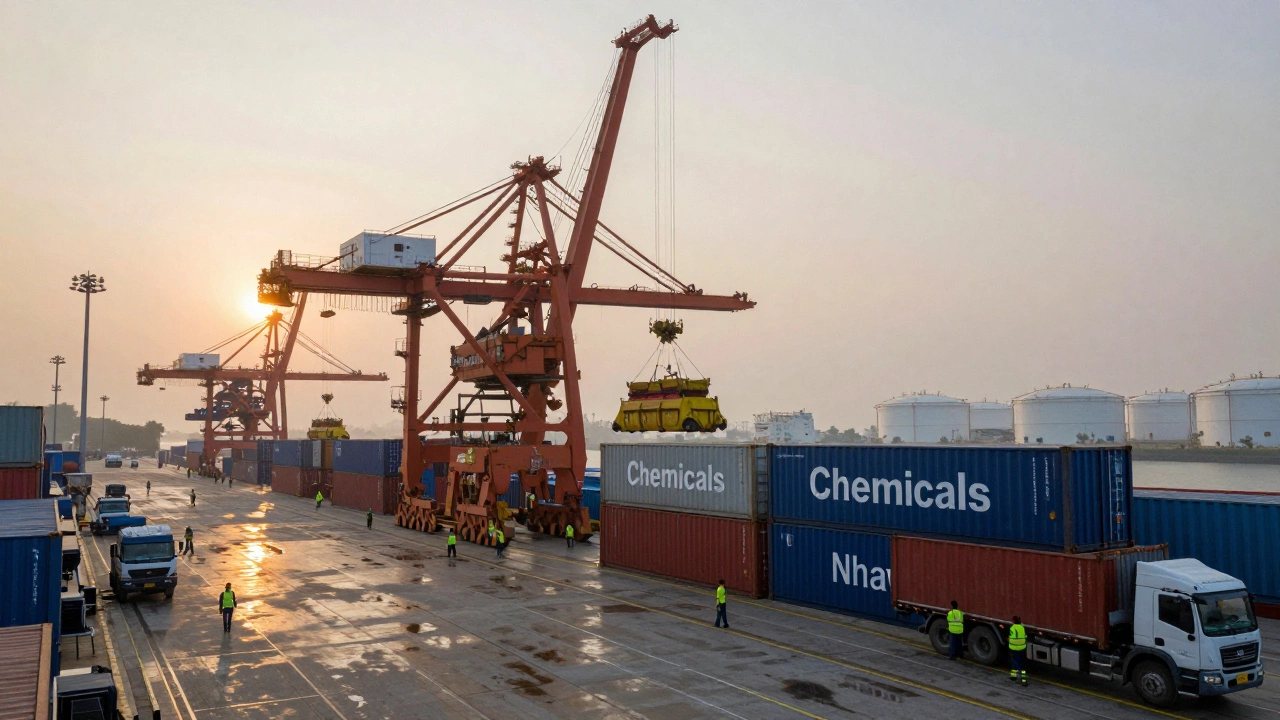
India doesn’t make enough of the chemicals it needs. Every year, the country imports over $40 billion worth of industrial and specialty chemicals. That’s not because Indian manufacturers can’t produce them-it’s because some chemicals are too complex, too costly, or too risky to make locally. If you’re running a factory, a pharma plant, or even a small textile dyeing unit, you’re likely relying on imported chemicals every single day.
What Chemicals Are Most Commonly Imported?
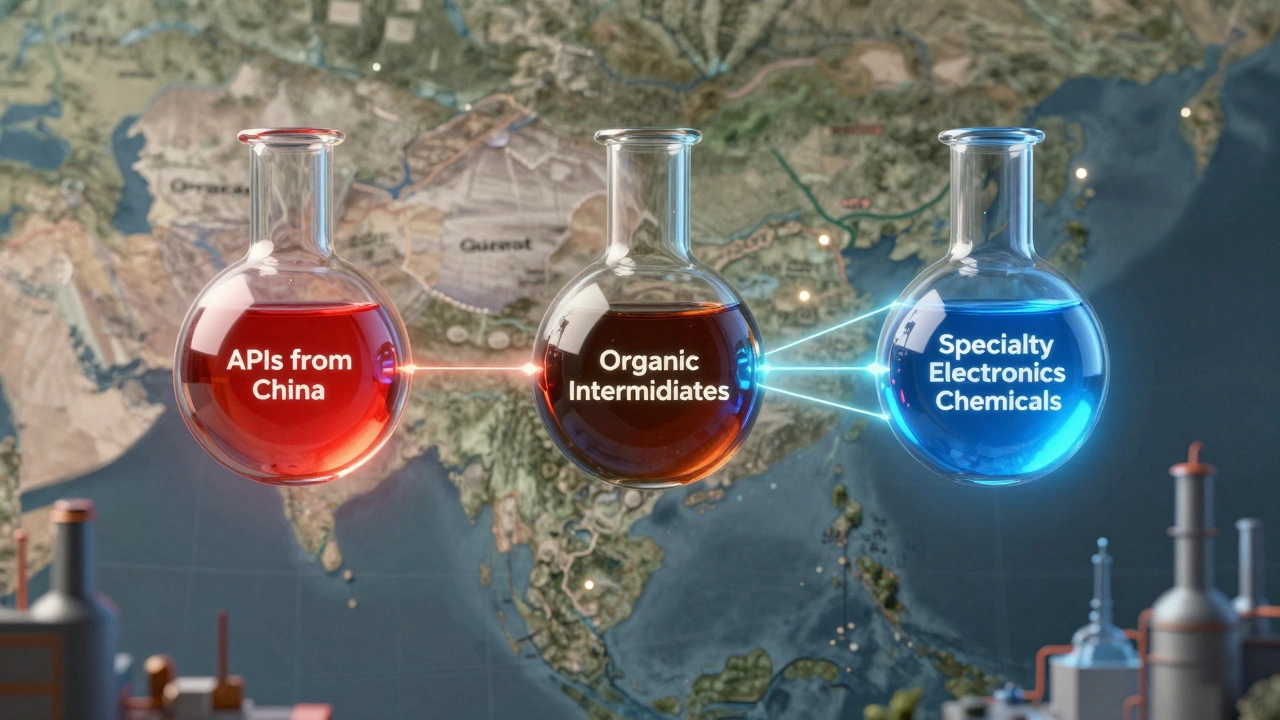
The top imported chemicals fall into three main buckets: raw materials for pharma, intermediates for dyes and paints, and specialty compounds for electronics and agriculture.
- Active Pharmaceutical Ingredients (APIs): Over 70% of India’s APIs come from China. This includes common ones like Paracetamol, Doxycycline, and Ciprofloxacin. Even though India is the world’s largest supplier of generic drugs, it still needs the building blocks from abroad.
- Organic Intermediates: Chemicals like Aniline, Phenol, and Benzene are imported in bulk. These are used to make dyes, plastics, and rubber. Companies in Surat, Ludhiana, and Tirupur use them daily for textile printing.
- Specialty Chemicals: This includes photoresists for semiconductor manufacturing, catalysts for petrochemical refining, and high-purity solvents for electronics cleaning. These aren’t just bulk goods-they’re precision materials with strict quality standards.
Why not make these at home? For APIs, it’s about scale and cost. Chinese plants produce them at a fraction of the price due to decades of investment and lower environmental compliance costs. For specialty chemicals, the problem is technical expertise. Few Indian labs can replicate the exact purity levels required by global electronics brands.
Why Can’t India Make These Chemicals Itself?
It’s not a lack of ambition. India has strong chemical plants in Gujarat, Maharashtra, and Tamil Nadu. But there are three big roadblocks.
First: Environmental Rules. Making chemicals like Benzene or Chlorine releases toxic byproducts. Indian factories now face strict pollution controls under the Central Pollution Control Board. Building a plant that meets these standards costs 3-4 times more than in China or South Korea. Many small players can’t afford it.
Second: Energy Costs. Chemical production needs constant heat, pressure, and electricity. India’s industrial electricity rates are among the highest in Asia. In Gujarat, where most chemical plants are, power costs 7-9 rupees per unit. In China, it’s under 4 rupees. That alone makes local production uncompetitive.
Third: Supply Chain Gaps. Even if you make a chemical in India, you need reliable access to pure raw materials. For example, making high-purity Ethylene Glycol for polyester requires ultra-pure Ethylene. Most of that comes from the Middle East. Getting it to a small Indian plant in a timely way is harder than just buying the finished chemical from Singapore or Germany.
Who Are the Main Suppliers?
China dominates the list, but it’s not the only player.
- China: Supplies 55% of India’s chemical imports-mostly APIs, dyes, and basic organics. Their scale is unmatched.
- Germany: Leads in specialty chemicals. Companies like BASF and Evonik export high-purity catalysts and additives for pharma and electronics.
- United States: Sends over $2 billion worth of specialty polymers, agrochemicals, and electronic-grade solvents. These are often used by Apple’s Indian suppliers.
- Singapore and South Korea: Major hubs for re-exporting refined chemicals. Many Indian importers buy from them because logistics are faster and quality control is tighter.
- Japan: Provides high-end photoresists and fluorinated compounds used in semiconductor manufacturing.
India’s top import ports for chemicals are Nhava Sheva (Navi Mumbai), Mundra, and Chennai. These ports handle over 80% of the country’s chemical cargo. If your factory is in Punjab or Odisha, the chemicals likely passed through one of these three.
What’s Being Done to Reduce Imports?
The Indian government knows this dependency is risky. After the pandemic and the China-India border tensions, the push to make chemicals locally got serious.
The Production Linked Incentive (PLI) Scheme for Bulk Drugs and APIs offers up to 20% reimbursement on production costs for companies that make APIs in India. Over 60 companies have applied. Some, like Aurobindo and Divi’s Labs, are already expanding their facilities.
There’s also the Chemical Parks Initiative. The government is building 12 dedicated chemical industrial parks with shared infrastructure-gas pipelines, wastewater treatment, and centralized power. The first one, in Dahej, Gujarat, is already operational. It’s designed to cut costs for small and medium producers.
But progress is slow. Building a chemical plant takes 3-5 years. Licensing alone can take 18 months. And even with incentives, most Indian firms still can’t match Chinese prices on bulk chemicals.
What This Means for Businesses
If you’re a small manufacturer in India, here’s what you need to know:
- Don’t assume local is cheaper. For many chemicals, imported ones are still 30-50% cheaper-even after shipping and customs.
- Build relationships with trusted importers. Don’t buy from random Alibaba sellers. Use registered distributors with proper import licenses and certificates of analysis.
- Watch for tariffs. The government has slapped anti-dumping duties on some Chinese chemicals like Terephthalic Acid and Acetic Acid. Prices can jump overnight.
- Plan ahead. Lead times for specialty chemicals can be 6-8 weeks. If your production line runs on a specific solvent, keep a buffer stock.
Some smart manufacturers are switching to alternatives. For example, instead of importing expensive German catalysts, some textile units are testing locally made enzyme-based dyes. It’s not perfect, but it reduces dependency.
The Future: Can India Become Self-Reliant?
India won’t stop importing chemicals anytime soon. But the goal isn’t to make everything-it’s to make more of what matters.
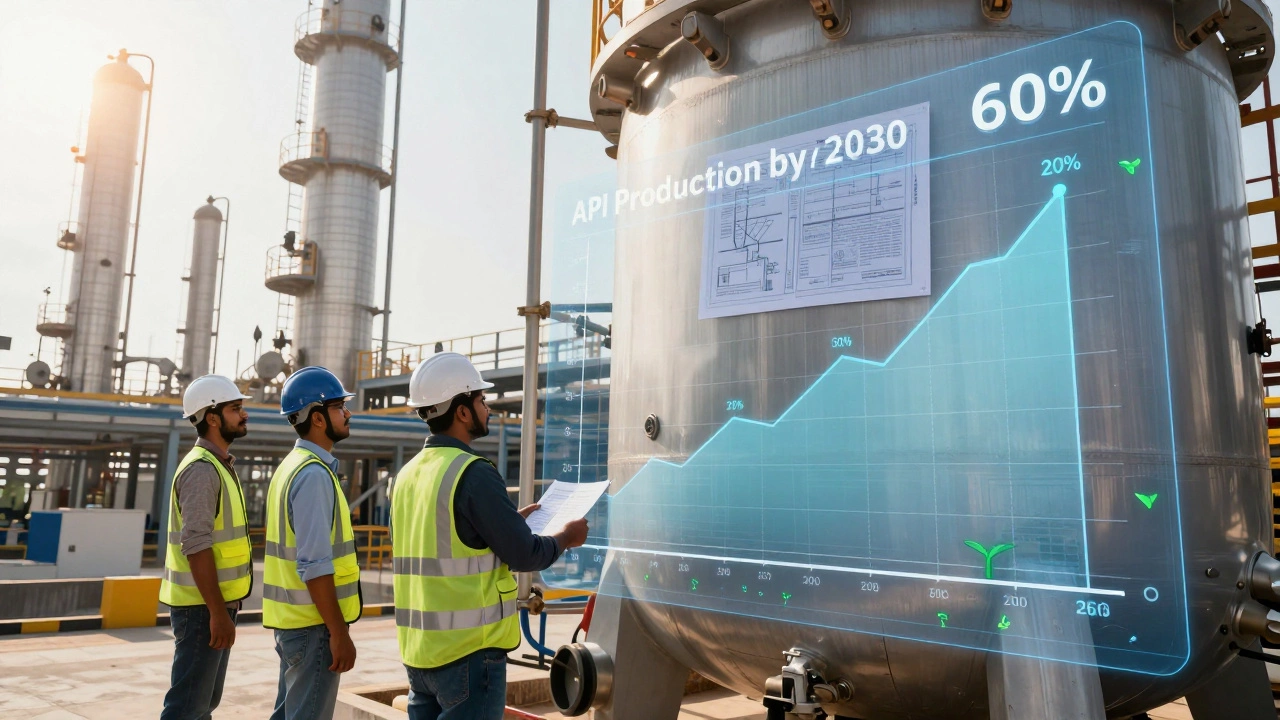
By 2030, India aims to produce 60% of its own APIs and 40% of key organic intermediates. That’s ambitious, but possible. The real win won’t be replacing China-it’ll be becoming the go-to source for high-quality, ethical, and traceable chemicals in Southeast Asia and Africa.
For now, if you’re running a business that uses chemicals, understand your supply chain. Know where your inputs come from. Track price trends. Build backup options. The days of assuming chemicals will always be cheap and easy to get are over.
Frequently Asked Questions
What are the top chemicals imported by India from China?
The top chemicals imported from China include Active Pharmaceutical Ingredients (APIs) like Paracetamol and Ciprofloxacin, organic intermediates such as Aniline and Phenol, and dyes used in textiles. These account for over 55% of India’s total chemical imports from China.
Why does India import chemicals instead of producing them locally?
India imports because producing certain chemicals locally is too expensive due to high energy costs, strict environmental regulations, and lack of infrastructure for ultra-pure materials. Chinese manufacturers benefit from lower operational costs and decades of scale.
Which Indian states import the most chemicals?
Gujarat, Maharashtra, and Tamil Nadu are the top importers. Gujarat leads because of its port infrastructure (Mundra, Dahej), concentration of pharma and textile industries, and existing chemical parks. Maharashtra follows due to Mumbai’s port and Mumbai-Pune industrial belt.
Are there any government schemes to boost local chemical production?
Yes. The Production Linked Incentive (PLI) scheme for bulk drugs and APIs offers up to 20% financial support on production costs. The government is also setting up 12 dedicated chemical industrial parks with shared utilities to reduce costs for small manufacturers.
How can small manufacturers reduce dependency on imports?
Small manufacturers can switch to locally available alternatives, like enzyme-based dyes instead of synthetic ones. They can also form cooperatives to bulk-buy imported chemicals, negotiate better rates with registered importers, and maintain a 4-6 week safety stock to avoid supply shocks.