Chemical Production Cost Estimator
This calculator estimates production costs based on the article's data about China's dominance, India's growth, and U.S. challenges. Adjust parameters to see how scale, integration, and raw material access impact costs.
Production Parameters
Cost Factors
Production Cost Estimate
When you hear the word chemical industry, what comes to mind? Big factories, smokestacks, or maybe dangerous spills? The truth is, the global chemical industry is one of the most complex, high-tech, and economically powerful sectors on the planet. It feeds everything from your phone’s touchscreen to the medicine in your cabinet, the fertilizer on your farm, and the plastic in your water bottle. And when it comes to who’s #1, the answer isn’t what most people expect.
The Real Leader: China’s Chemical Dominance
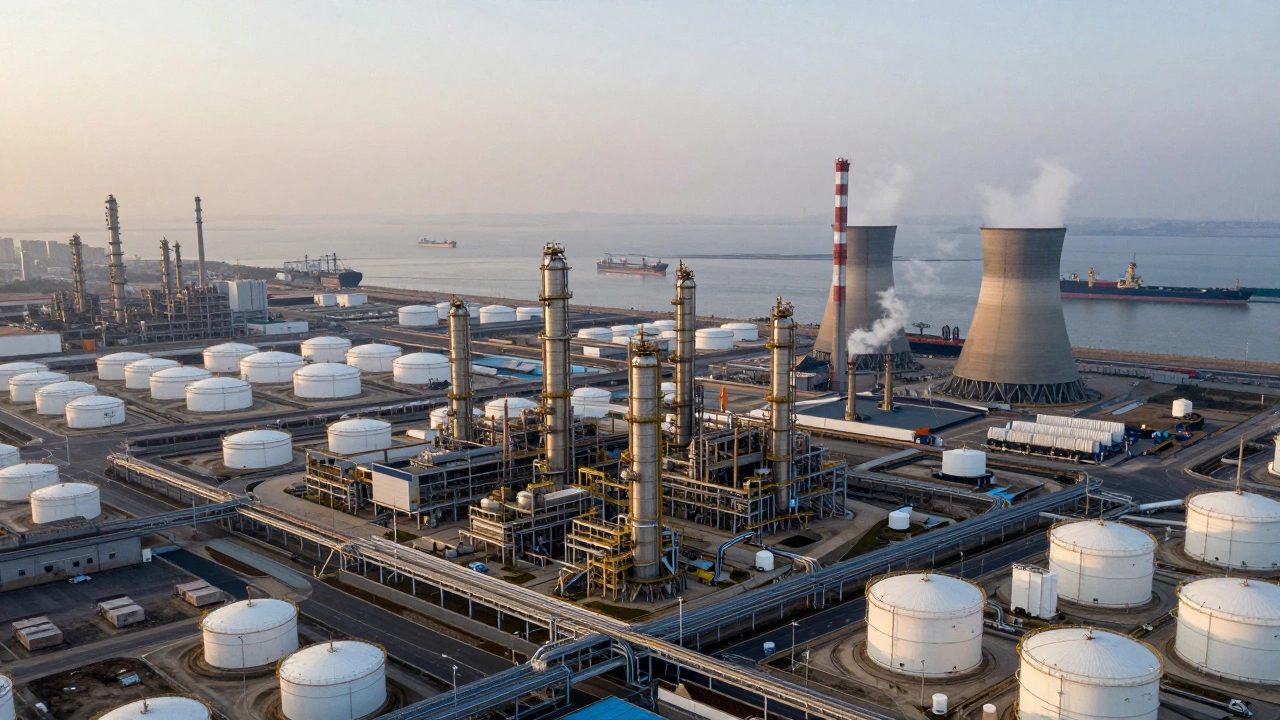
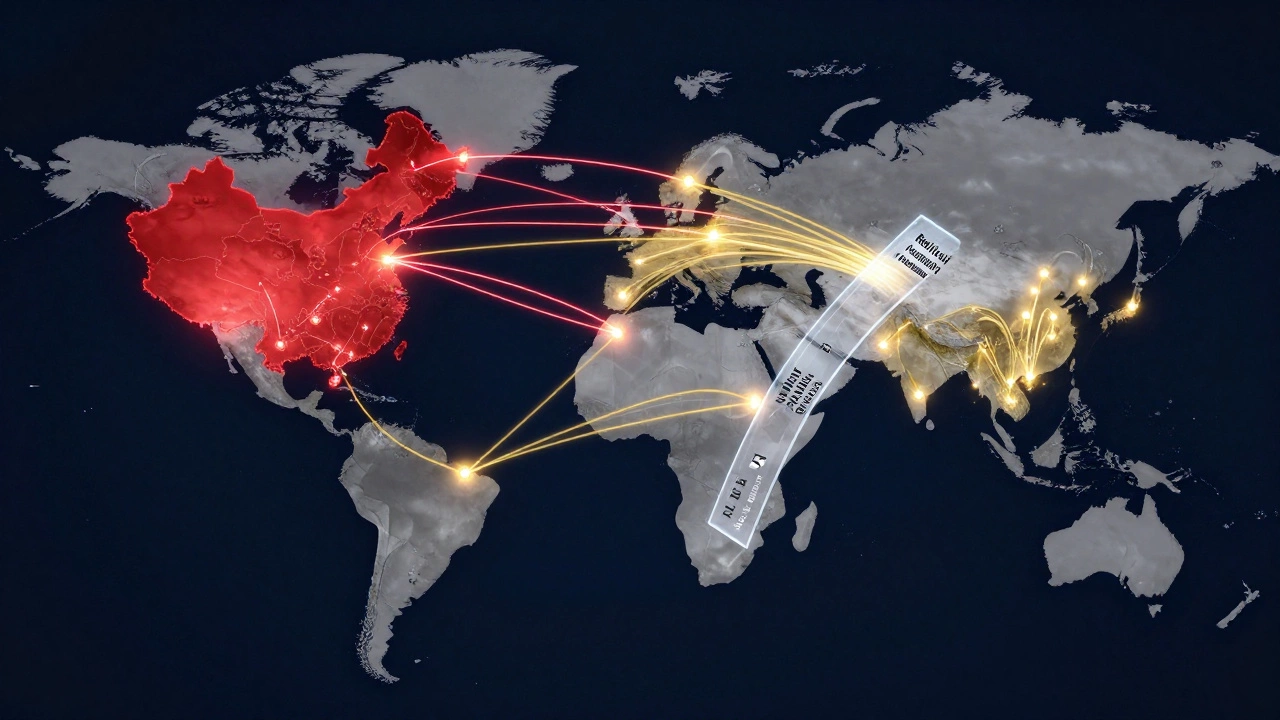
China is the undisputed #1 in the global chemical industry. In 2024, China produced over 40% of the world’s chemical output, worth more than $1.6 trillion. That’s more than the next three countries combined. Its chemical plants churn out everything from basic petrochemicals like ethylene and propylene to high-end specialty chemicals used in electronics and pharmaceuticals. The country doesn’t just make chemicals-it controls the supply chains, owns the raw material imports, and dominates global exports.
China’s advantage isn’t luck. It’s strategy. Since the early 2000s, the government poured billions into building massive chemical clusters along the eastern coast-places like Nanjing, Shanghai, and Tianjin. These aren’t scattered factories. They’re integrated industrial zones where refineries, petrochemical plants, and downstream manufacturers operate side by side. This cuts transport costs, reduces waste, and speeds up production. By 2025, China will have over 120 chemical industrial parks larger than 10 square kilometers. No other country comes close.
Why the U.S. and Europe Are Falling Behind
The United States used to lead. In the 1990s, American chemical companies like Dow, DuPont, and BASF’s U.S. division controlled nearly a third of global output. But today, the U.S. accounts for just 12% of global production. Why? Rising energy costs, stricter environmental rules, and aging infrastructure. Many U.S. plants were built in the 1960s and 70s. Retrofitting them to meet modern efficiency and emissions standards costs more than building new ones in China or the Middle East.
Europe is in a similar spot. Germany, the Netherlands, and France still produce high-quality specialty chemicals, but their overall output has shrunk. The EU’s carbon border tax (CBAM) and heavy regulations on synthetic chemicals have pushed production overseas. Companies like Evonik and BASF have shifted billions in investment to China and Saudi Arabia. Europe now focuses on niche, high-margin products-think biodegradable polymers or pharmaceutical intermediates-but it no longer leads in volume.
India’s Rise: The Hidden Contender
Now, let’s talk about India. You might have heard claims that India is the next chemical powerhouse. And while it’s not #1, it’s the fastest-growing major player. In 2024, India ranked 6th globally in chemical production, up from 9th just five years ago. Its chemical industry is now worth over $180 billion and is growing at 8% annually-faster than China’s 4% and the U.S.’s 1.5%.
India’s strength lies in pharma-grade chemicals and generic drug intermediates. Over 70% of the active pharmaceutical ingredients (APIs) used in generic medicines worldwide come from India. Companies like Dr. Reddy’s, Sun Pharma, and Aurobindo Pharma are global suppliers. India also dominates in dyes, pigments, and agrochemicals. Its chemical exports hit $62 billion in 2024, with major buyers in the U.S., Europe, and Southeast Asia.
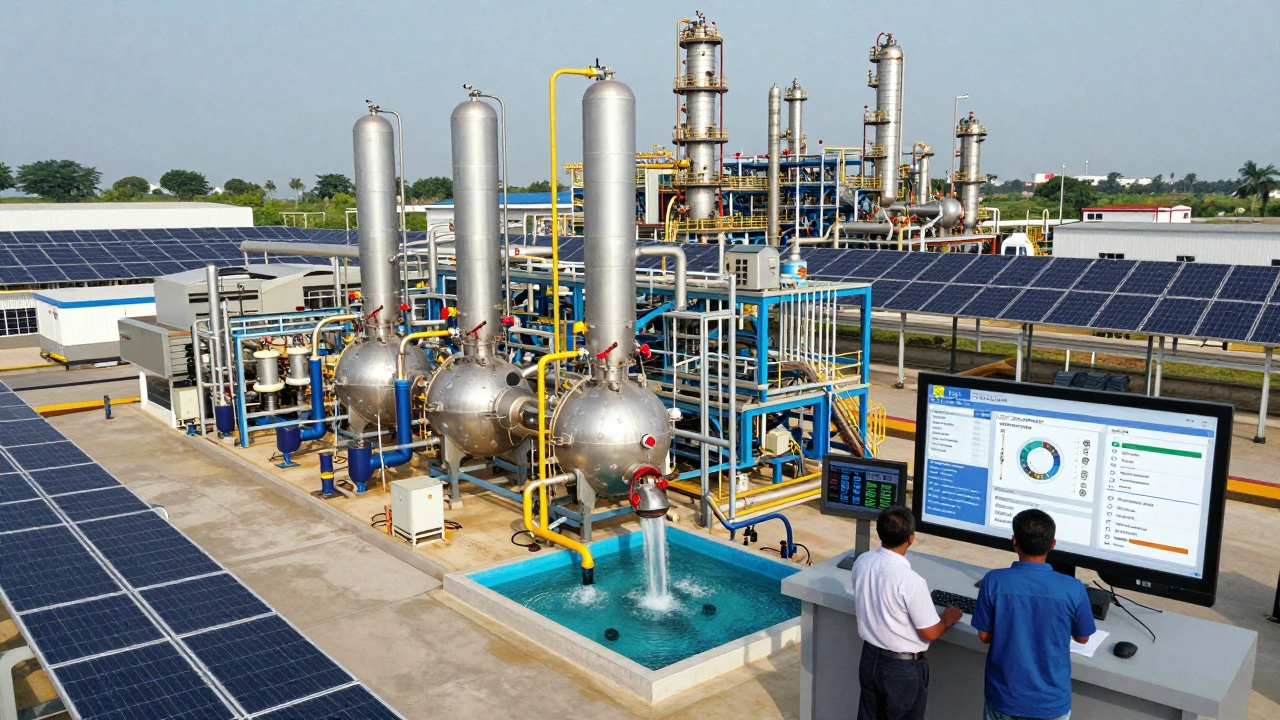
The government’s Production Linked Incentive (PLI) scheme for specialty chemicals has been a game-changer. Since 2021, it has attracted over $12 billion in private investment. New plants in Gujarat, Maharashtra, and Andhra Pradesh are using modern continuous-flow reactors and AI-driven process controls-technology that’s years ahead of many older Western plants.
What Makes a Country #1 in Chemicals?
Being the top chemical producer isn’t just about size. It’s about five key factors:
- Scale of production: Can you make millions of tons of basic chemicals annually? China does.
- Integration: Do your refineries, crackers, and downstream plants work together? China’s coastal clusters do.
- Raw material access: Do you control oil, gas, salt, or limestone supplies? China imports oil but owns the refining and processing.
- Export reach: Are your chemicals sold in over 150 countries? China’s exports go to every major market.
- Innovation: Are you developing new materials? China now files more chemical patents than the U.S. and EU combined.
India scores high on innovation in pharma chemicals and export reach, but it still lags in scale and integration. Most Indian chemical plants are standalone. Few have the vertical integration China has built over decades.
Where India Can Catch Up
India has three big advantages that could push it into the top 3 by 2030:
- Low-cost labor and growing skilled workforce: India trains over 100,000 chemical engineers every year-more than the U.S. and Germany combined.
- Strategic location: Its ports connect easily to Africa, the Middle East, and Southeast Asia-fast-growing markets for chemicals.
- Government focus: The PLI scheme isn’t just about money. It’s about forcing companies to upgrade. Older, polluting plants are being phased out. New ones must meet global environmental standards.
One example: Reliance Industries’ new petrochemical complex in Jamnagar. It’s the largest single-site chemical plant in the world, capable of producing 15 million tons of polymers a year. It uses zero flaring and recycles 95% of its water. That’s not just big-it’s world-class.
The Future: Who’s Next?
China won’t lose its #1 spot anytime soon. But India is building the foundation to challenge the top three. Saudi Arabia is investing heavily in green hydrogen-based chemicals. Indonesia is becoming a key player in palm-oil-derived surfactants. Vietnam is growing fast in textile chemicals.
But none of them have India’s combination of scale, talent, and policy focus. By 2030, India could be the world’s third-largest chemical producer-behind China and the U.S., but ahead of Germany and Japan.
Why This Matters for Global Supply Chains
When the pandemic hit, global chemical supply chains broke. Shortages of solvents, packaging resins, and pharmaceutical ingredients hit every industry. Countries that relied on China for chemicals scrambled to find alternatives. That’s when India stepped in. By 2022, U.S. imports of Indian pharma chemicals jumped 47%.
Today, companies like Pfizer, Merck, and Unilever are diversifying their supplier base. They’re not just buying from China anymore. They’re sourcing from India, Indonesia, and Poland. This shift isn’t temporary. It’s structural. And India is the only developing country with the capacity to handle this demand at scale.
Final Thought: It’s Not About Being #1-It’s About Being Reliable
Being the top chemical producer doesn’t mean you’re the best. It means you’re the biggest. But reliability, quality, and sustainability are becoming more important than volume. China produces more-but India produces more of what the world needs right now: safe, affordable, and ethically made chemicals for medicine, food, and clean energy.
The real question isn’t who’s #1. It’s who you can trust when your supply chain depends on it. And in 2025, that’s a question India is answering better than most.
Is India the largest chemical producer in the world?
No, India is not the largest chemical producer. China holds that position, accounting for over 40% of global chemical output in 2024. India ranks 6th globally, but it’s the fastest-growing major chemical producer, especially in pharmaceutical intermediates and agrochemicals.
Why is China ahead of India in the chemical industry?
China leads because of massive government investment in integrated chemical clusters, control over raw material processing, and decades of scale. Its coastal industrial zones produce chemicals at lower costs and higher volumes. India’s plants are often smaller and less connected, limiting efficiency. China also leads in patents and export volume.
What makes India’s chemical industry unique?
India’s strength is in specialty chemicals for pharmaceuticals. It supplies over 70% of the world’s generic drug ingredients. Its chemical exports are growing fast, and new government incentives are pushing companies to adopt modern, cleaner technologies. Unlike China, India’s growth is driven by private companies and export demand, not state-led expansion.
Can India overtake China in the chemical industry?
It’s unlikely India will overtake China in total output before 2040. China’s scale is too large. But India can become the top supplier for pharma and agrochemicals and could be the third-largest chemical producer by 2030, surpassing Germany and Japan. Its focus on quality, sustainability, and niche markets gives it a different path to leadership.
Which Indian company is the biggest chemical manufacturer?
Reliance Industries is India’s largest chemical manufacturer, with its Jamnagar complex being the world’s largest single-site petrochemical plant. Other major players include Aurobindo Pharma, Sun Pharma, and Tata Chemicals, each dominating in pharmaceuticals, dyes, and industrial chemicals respectively.
Are Indian chemical products safe and environmentally friendly?
Many Indian chemical producers now meet global standards like REACH (EU) and FDA (U.S.). New plants under the PLI scheme must use zero-flaring, closed-loop water systems, and AI-based emissions monitoring. While older plants still exist, the industry is rapidly modernizing. India is now exporting to the EU and U.S. without restrictions on most chemical categories.