Cotton Export Share Calculator
How Much of India's Exports Is Cotton?
India's cotton exports account for over 60% of total textile exports according to 2025 data.
Enter a total export value to see the cotton share.
When you think of Indian textiles, you might picture colorful saris, handwoven khadi, or intricate zari work. But behind the beauty lies a massive global trade engine. India doesn’t just make fabric - it ships it everywhere. And the number one fabric exported from India isn’t silk, isn’t linen, and isn’t some rare handloom weave. It’s cotton.
Cotton Rules India’s Export Market
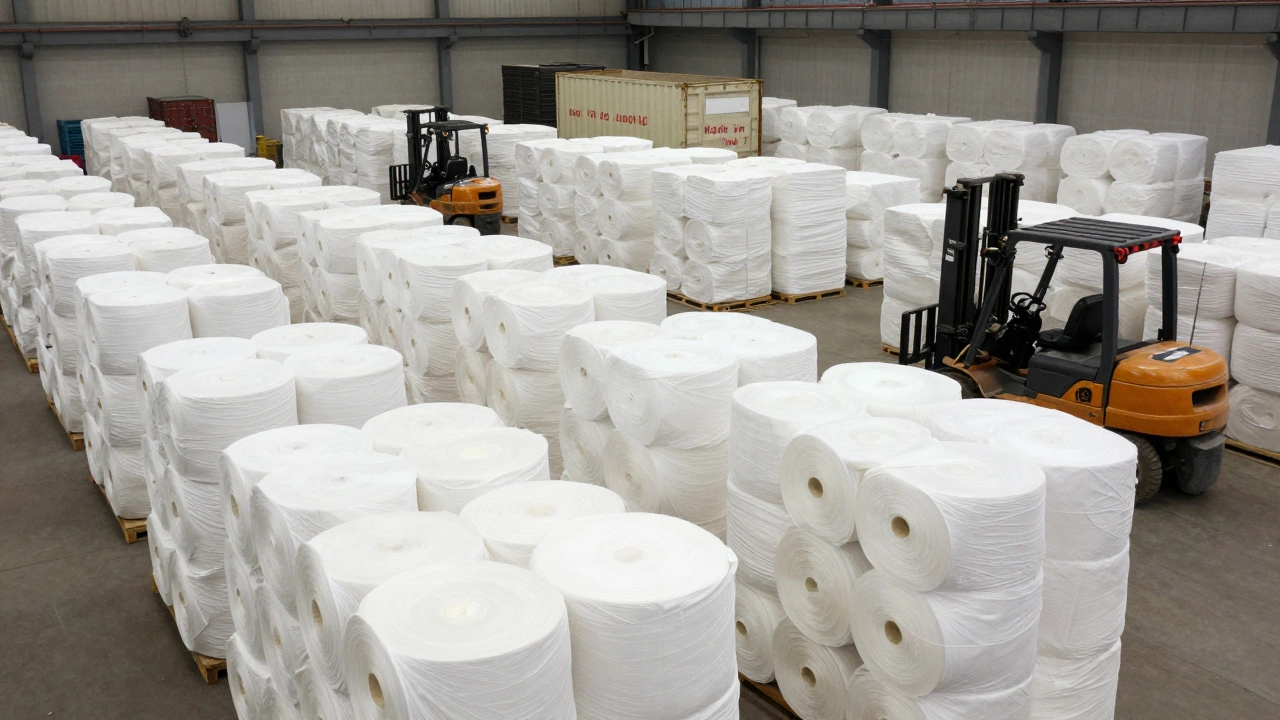
Cotton fabric accounts for over 60% of India’s total textile exports. In 2025, India shipped more than $14 billion worth of cotton textiles to markets around the world. That’s more than silk, wool, synthetic fibers, and blended fabrics combined. Why? Because cotton is simple, reliable, and everywhere in India.
India grows about 25% of the world’s cotton. The states of Gujarat, Maharashtra, Telangana, and Andhra Pradesh are the heavy lifters here. Farmers grow it, mills spin it, and factories turn it into yardage - plain white, dyed, printed, or woven. From there, it gets packed into containers and heads overseas.
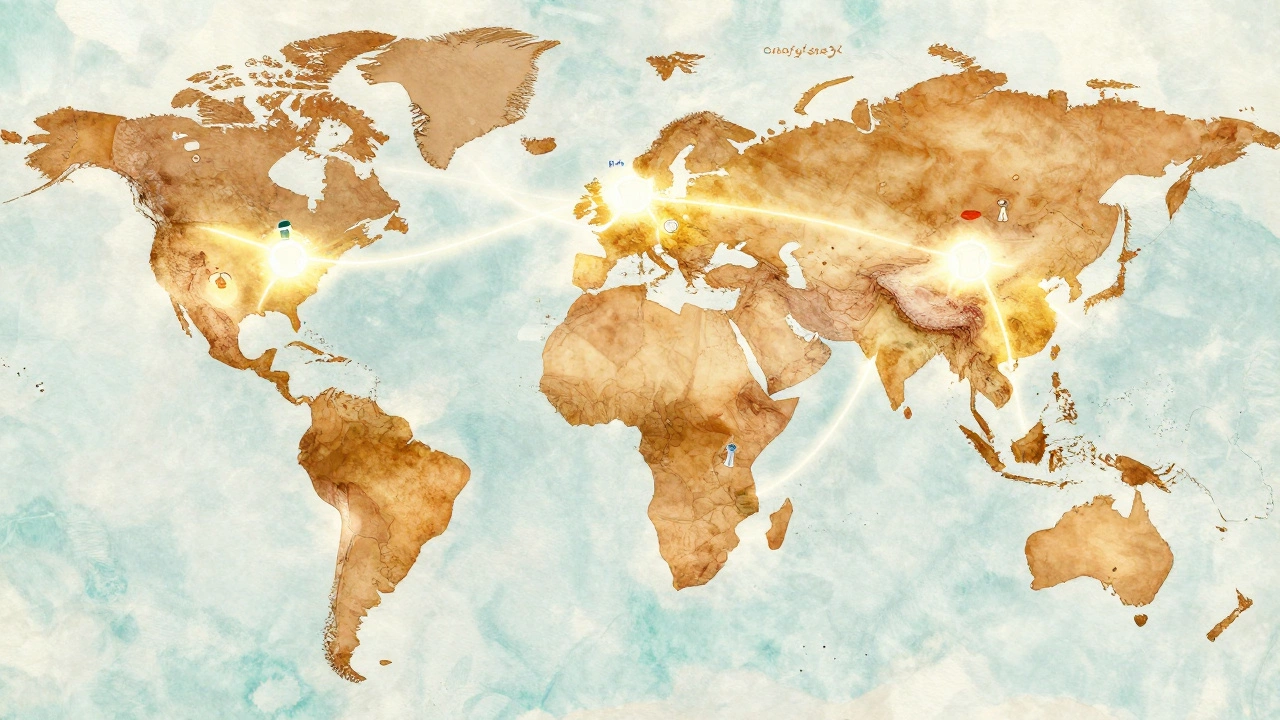
Major buyers? The United States, Bangladesh, Vietnam, the United Arab Emirates, and Germany. These countries don’t just buy raw cotton - they buy finished cotton fabric: t-shirts, bed sheets, towels, denim, and more. Bangladesh alone imports over $2 billion worth of Indian cotton fabric every year to make its own clothing. Vietnam uses it for sportswear. The U.S. gets it for home textiles.
Why Cotton, Not Silk or Synthetic?
You might wonder: India has world-class silk from Karnataka and Assam. It also makes tons of polyester and nylon. So why does cotton dominate?
First, cost. Cotton is cheaper to produce than silk. It doesn’t require sericulture, delicate labor, or long rearing cycles. Second, versatility. Cotton works for everything - from high-end fashion to basic underwear. Third, demand. Global buyers know cotton. It’s breathable, washable, and biodegradable. In a world pushing for sustainable fashion, cotton has a natural edge.
Synthetic fabrics like polyester are growing fast, but they’re still behind. In 2025, synthetic textile exports from India totaled just under $5 billion - less than half of cotton’s numbers. Silk exports? Only about $400 million. The gap isn’t close.
How India Turns Cotton Into Global Goods
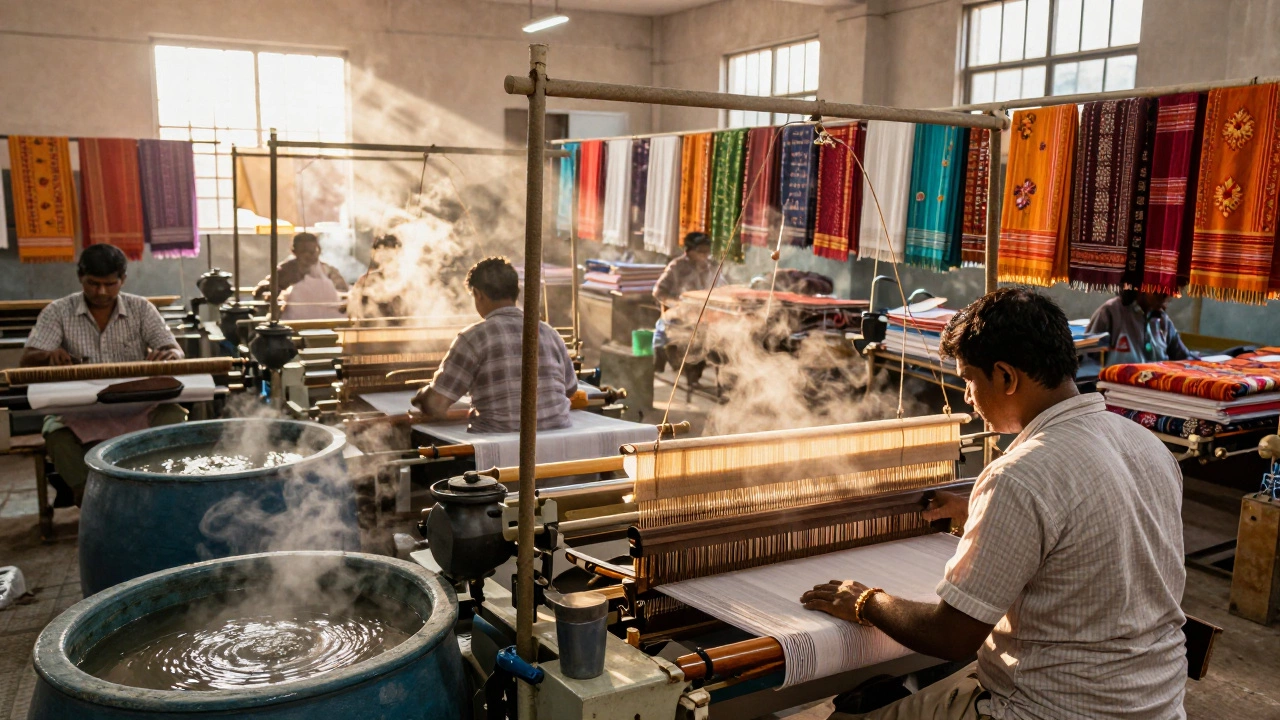
It’s not enough to grow cotton. You have to process it. India has over 1,800 textile mills, most of them small or medium-sized. These mills spin cotton into yarn, weave it into fabric, and print or dye it. Many of these mills are clustered in places like Surat, Tiruppur, and Ahmedabad.
Tiruppur, in Tamil Nadu, is known as the “Knitwear Capital of India.” It alone exports over $3 billion in cotton knitwear each year - mostly t-shirts and sportswear. Surat handles the printing and dyeing. Ahmedabad is big on weaving and finishing. Each city plays a role in turning raw fiber into export-ready fabric.
What’s surprising? Most of these factories don’t make branded clothes. They make fabric for global brands. Think of it like this: you buy a H&M t-shirt. It might be stitched in Bangladesh, but the cotton fabric came from a mill in Gujarat.
What Else Gets Exported? (And Why It Matters)
Cotton leads, but it’s not alone. India exports other fabrics too, and each has its niche:
- Handloom cotton - exported to Europe and the U.S. for eco-conscious brands. Think organic, unbleached, naturally dyed.
- Denim - India is the world’s second-largest denim exporter after China. Most denim fabric comes from Gujarat and Maharashtra.
- Silk - mostly to Japan, Italy, and the U.S. for luxury scarves and dresses. But volume is tiny compared to cotton.
- Blended fabrics - cotton-polyester mixes are rising fast. They’re cheaper than pure cotton and hold prints better. Now make up about 18% of textile exports.
Here’s the key takeaway: cotton is the backbone. Everything else rides on it. Even synthetic exports often start with a cotton base. And when global brands talk about “sustainable sourcing,” they’re often talking about Indian cotton.
Challenges in the Cotton Export Game
It’s not all smooth sailing. Indian cotton exporters face real problems:
- Price volatility - Global cotton prices swing with weather, U.S. farm policy, and Chinese demand.
- Competition from China - China still leads in total textile exports, but India is catching up fast in cotton fabric.
- Logistics delays - Port congestion and slow customs clearance can cost exporters weeks.
- Water use - Cotton farming uses a lot of water. Some buyers now demand certified sustainable cotton (like BCI or organic).
Still, India’s advantage is clear: scale, low labor costs, and decades of experience. While Bangladesh and Vietnam focus on stitching, India controls the fabric supply. That’s power.
The Future of Indian Fabric Exports
By 2030, India aims to double its textile exports to $100 billion. Cotton will still be the engine. New policies are helping: the Production Linked Incentive (PLI) scheme gives cash rewards to exporters who invest in modern machinery. More mills are switching to solar power and water recycling.
Young designers are also pushing Indian cotton into global fashion. Brands like Fabindia, Anokhi, and even international labels like Patagonia now source cotton from Indian cooperatives. The message? Indian cotton isn’t just cheap - it’s high-quality and ethical.
If you’re looking at textile manufacturing in India, don’t get distracted by the flashy silks or intricate embroidery. The real story is in the plain, white, 100% cotton fabric - quietly filling shipping containers, heading to every corner of the globe.
Is cotton the only fabric India exports?
No, India exports many fabrics - including silk, synthetic blends, denim, and handloom textiles. But cotton makes up over 60% of total textile exports by value. Other fabrics are important, but they’re much smaller in volume and revenue.
Which countries buy the most cotton fabric from India?
The top buyers are Bangladesh, the United States, Vietnam, the United Arab Emirates, and Germany. Bangladesh imports the most - mainly to make clothing. The U.S. and Europe buy for home textiles like sheets and towels. The UAE serves as a re-export hub for the Middle East and Africa.
How much cotton does India produce each year?
India produces about 6 million metric tons of cotton annually, making it the second-largest producer in the world after China. Most of this cotton is processed domestically into fabric for export. Only about 15% is exported as raw cotton.
Why isn’t silk exported more than cotton?
Silk is expensive to produce. It requires mulberry trees, silkworm rearing, and skilled labor. India’s silk output is limited to a few regions and can’t match cotton’s scale. While silk exports are high-value, they’re low-volume. Cotton wins on volume, cost, and global demand.
Is Indian cotton sustainable?
Traditional cotton farming in India uses a lot of water and pesticides. But many exporters now use certified sustainable cotton - like BCI (Better Cotton Initiative) or organic cotton. Over 12% of India’s cotton exports in 2025 were from certified sustainable sources, and that number is growing fast.