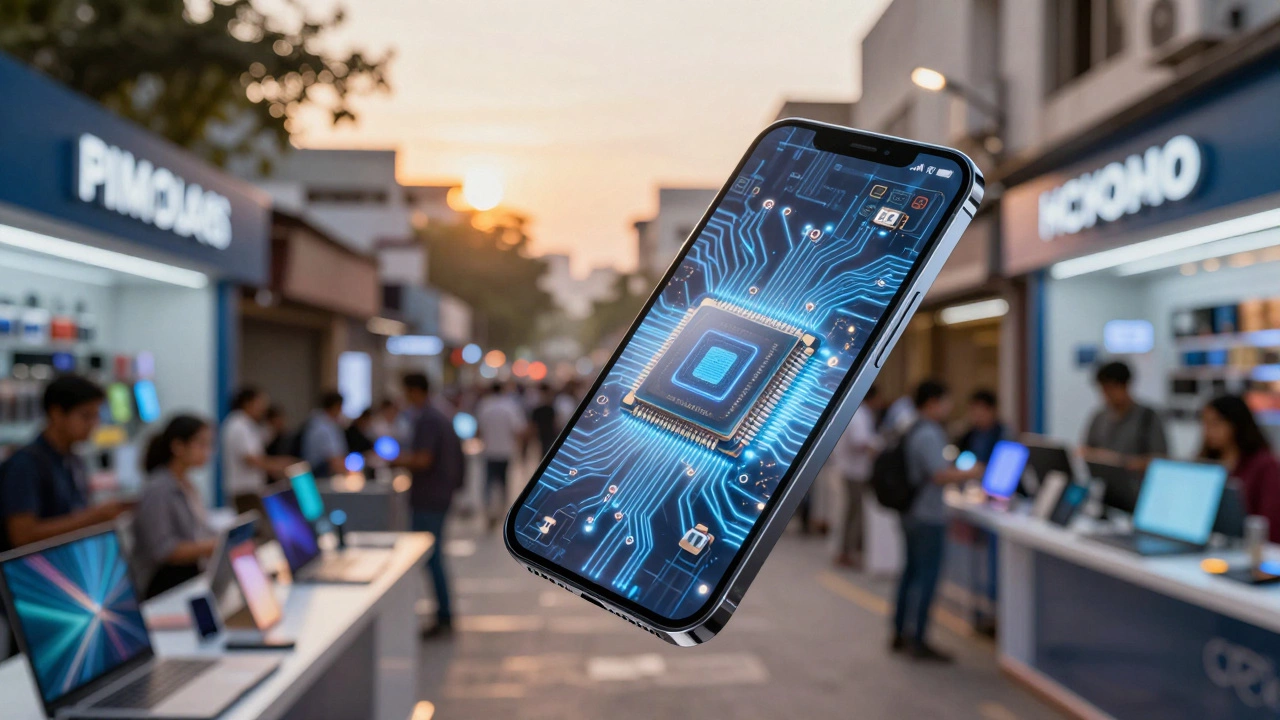
You walk into an electronics store in Mumbai or Bengaluru. Every smartphone, laptop, and television you see has a brain inside it. That brain is a semiconductor chip. Yet, despite India being home to 1.4 billion people and a booming digital economy, we import almost every single silicon chip used in our devices. This paradox isn't about a lack of desire. It is about the sheer magnitude of physical, financial, and technical hurdles standing between design and production.
The Physics of Impossibility
To understand why Semiconductor Manufacturingthe process of creating integrated circuits on silicon wafers using advanced lithography and etching techniques is so difficult, you first have to appreciate what is actually happening on a factory floor. We aren't talking about assembling parts like putting together a car engine. You are manipulating atoms.
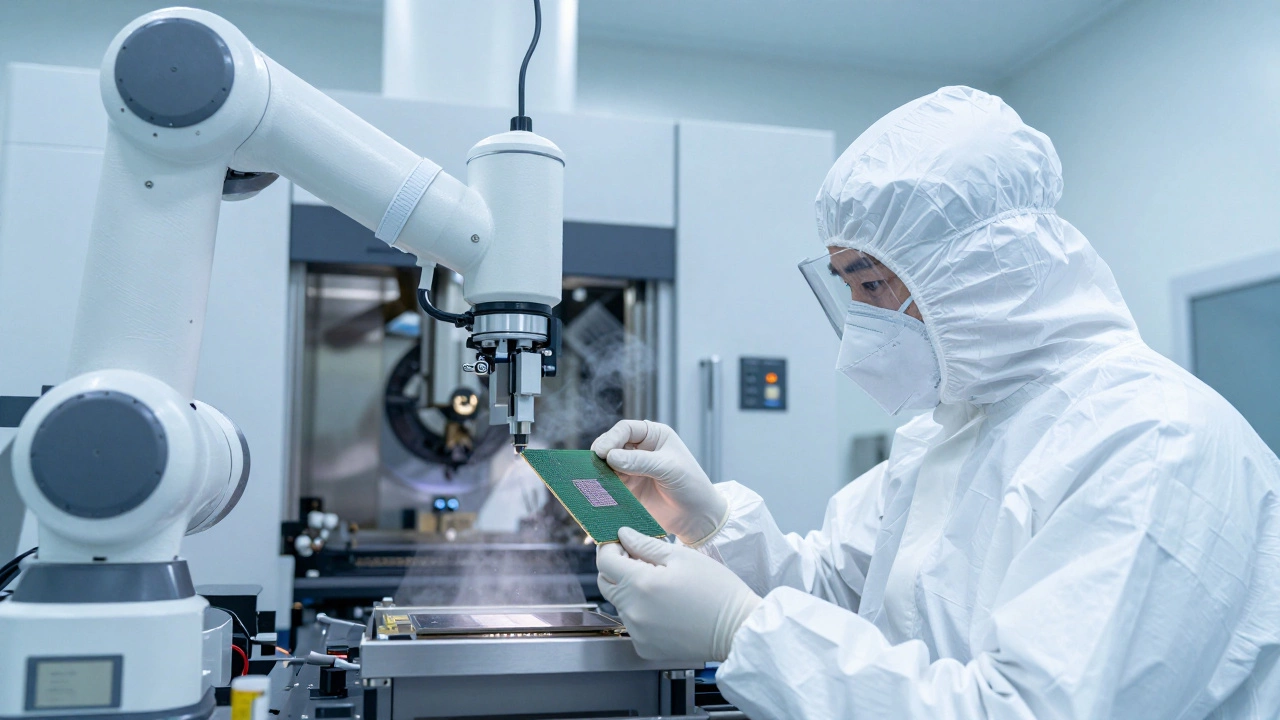
A modern processor contains billions of transistors packed onto a space smaller than your fingernail. The distance between these microscopic switches is measured in nanometers. In 2026, leading-edge technology sits around the 2-nanometer node. Trying to manufacture something at this scale requires more than just heavy machinery; it requires absolute environmental control. One dust particle can ruin a whole batch. The factories, known as Clean Roomsspecialized environments with strict controls over air filtration and temperature to prevent contamination, have air cleaner than an operating theater.
This isn't just cleaning. It involves maintaining positive pressure, specialized clothing, and automated robotics that never touch the product directly. If the humidity shifts by even a fraction, the chemistry changes, and the circuit fails. For a country where power outages were once a daily occurrence in industrial zones, promising stability for 24/7 operation was historically a non-starter.
The Capital Wall
Lets talk about the money, because cost is arguably the biggest blocker. Building a single state-of-the-art fabrication plant, or "fab," costs upwards of $10 billion USD. That figure is just for the land and the building. You also need the tools. The most critical piece of equipment is the Extreme Ultraviolet (EUV) lithography machine.
There is only one company in the world that makes these, ASMLa Dutch multinational corporation that manufactures high-tech lithography machines for the semiconductor industry. A single machine costs around $350 million. A full fab needs dozens of them. If you are a private Indian company thinking of investing, you aren't just risking a few crores. You are betting an entire corporate fortune on infrastructure that takes years to pay off.
| Component | Estimated Cost (USD) | Complexity |
|---|---|---|
| Fab Construction | $1 Billion+ | High |
| Lithography Tools | $100 Million per unit | Critical |
| Chemicals & Utilities | $200 Million/Year | Ongoing |
| R&D Staff | $50 Million/Year | Vital |
Without significant government backing, this is simply too risky for the private sector alone. While China managed to mobilize its entire economy to subsidize this push, India faces budget constraints that require a smarter, more gradual approach.
Missing Supply Chain Links
You cannot build a computer chip without a supply chain that supports it. It's not just about the silicon. You need ultra-pure gases, specific photo-resists, and polishing pads. Most of these chemicals come from established players in Europe, the US, and Japan. If you try to start making chips today, your logistics chain is fragile.
In the past decade, the global trend moved toward specialization. Countries like South Korea and Taiwan focused entirely on memory or processing. They built an entire ecosystem around it. Universities taught specialized courses in materials science just for this industry. Engineers worked there for three generations. India's education system, while strong in coding and software engineering, lacked deep hardware specializations for decades. The gap between knowing the theory and running the machine is massive.
Talent Gap vs. Software Strength
India dominates software development globally. But writing the code that runs on a chip is different from building the chip itself. We have millions of graduates who can optimize algorithms, but fewer who understand plasma etching or ion implantation.
When you look at the National Education Policyframework intended to transform Indian higher education including engineering sectors, there has been a push to update curriculums. However, universities need expensive labs to teach these concepts. Training someone to run a multi-million dollar machine takes time. Even with subsidies, you can't fast-track talent creation. It takes roughly five to seven years from university graduation to becoming an expert operator in a fab environment.
Geopolitics and Export Controls
We also have to talk about politics. In the current era, semiconductors are strategic assets. The world is watching closely. Western export controls restrict access to advanced tools and technology. When the United States limits sales of certain equipment to China, it creates a ripple effect.
For India, accessing the best technology is conditional. Suppliers want assurance that their tech won't leak to adversaries. This creates bureaucracy. Getting approval for importing high-end machinery involves layers of clearance that delay project timelines. Delays cost money in this sector. If your competitor is six months ahead, you might lose the market window entirely.
What Is Being Done Now?
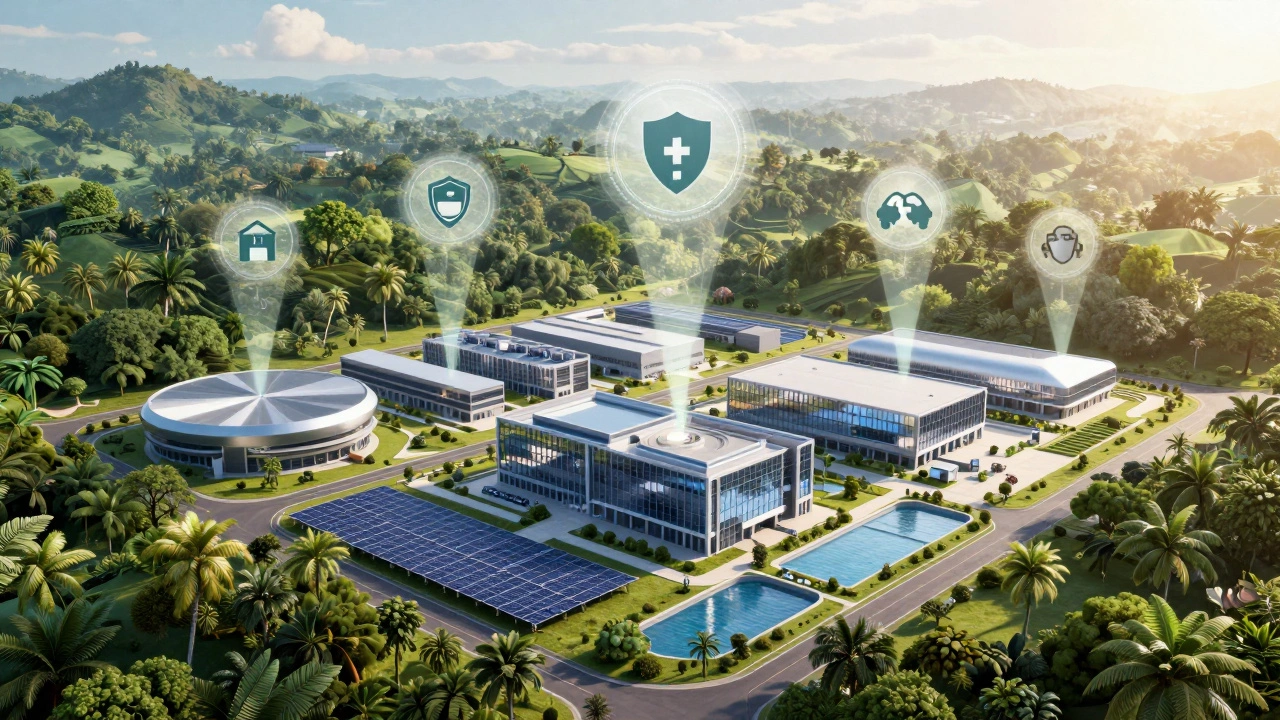
It is not all negative. By 2026, we are seeing movement. The Ministry of Electronics and Information Technology has rolled out the Scheme for Promotion of Semiconductors. This includes financial incentives for setting up design hubs and fabrication units.
Major conglomerates are stepping in. Tata Electronics announced plans for a $2.5 billion facility in Assam. They plan to build logic chips. Another firm is planning a compound semiconductor plant in Tamil Nadu. These moves are significant because they shift us from assembly to manufacturing. Assembly puts chips into boards; manufacturing creates the chips themselves.
Also, the focus has shifted slightly. Instead of chasing the bleeding edge (2nm), India is targeting 65nm or 28nm nodes initially. These are mature technologies sufficient for power management, auto electronics, and defense hardware. This is a pragmatic move. You master the basics before attempting the complex. It avoids direct competition with TSMC or Samsung immediately while building domestic capability.
Energy Consumption Issues
Another hidden barrier is energy. A chip fab consumes as much electricity as a small city. In states where grid reliability has improved, the cost remains high compared to neighbors. If your competitors have cheaper power, your margins suffer. Furthermore, the water requirement is immense. Silicon purification needs ultra-pure water. Regions with water stress cannot easily host these facilities without causing local ecological imbalance. Location selection becomes a puzzle involving power grids, water sources, and transport hubs.
Strategic Path Forward
Solving this requires patience. The path forward involves clustering. Just like the automotive industry clusters in Pune or Hyderabad, chip manufacturing needs hubs. When everything is in one area, suppliers follow. Logistics become efficient. Skilled labor pools form.
We also need to leverage our strengths. Design houses in India are already global leaders. If you can design the chip locally and then ship the silicon wafers to a domestic fab, you save on shipping costs and boost security. The ultimate goal isn't necessarily to make the most advanced AI chip overnight. It is to secure the baseline technology needed for defense, medical devices, and consumer electronics.
We are moving from consumers to creators. It will take a generation to see maturity levels match Taiwan or Singapore. But the foundational blocks are finally being laid, supported by policy and private capital. The question is no longer if, but how fast we can close the gap.
Is India completely dependent on imports for chips right now?
Yes, currently India imports nearly 100% of its semiconductor needs. Most domestic facilities focus on assembly and testing rather than the actual manufacturing of the silicon wafer.
How much does the government offer in subsidies for fabs?
Under the latest schemes, the central government provides up to Rs 1.2 lakh crore support for setting up semiconductor fabrication units. This covers a percentage of project costs to lower initial risk.
Can India produce 5G chips locally soon?
Design capabilities exist, but local manufacturing of advanced 5G radio frequency chips is targeted for later stages. Initial plants will likely focus on older nodes suitable for IoT and automotive sensors.
Which cities are developing semiconductor parks?
Key locations include Baramati in Maharashtra, Dharavi in Uttar Pradesh, and Visakhapatnam in Andhra Pradesh. These sites were selected for their infrastructure readiness and proximity to ports.
Why do chip makers prefer Taiwan over India?
Taiwan has a mature ecosystem with reliable power, specialized engineering colleges, and decades of accumulated expertise. New entrants face the steep learning curve of establishing similar stability.