India Chemical Import Dependency Analyzer
Select a chemical category to analyze India's strategic dependence and the primary sources of these materials.
Petrochemicals
APIs & Intermediates
Specialty Chemicals
Inorganic Chemicals
Petrochemicals & Feedstocks
India relies heavily on imports for the "DNA" of the plastic industry. Without these building blocks, domestic production of packaging and construction materials would collapse.
- Key Examples: Ethylene, Propylene
- Primary Sources: Middle East (Saudi Arabia, UAE), USA
- Primary Use: Plastics, Polymers, Packaging
APIs & Pharmaceutical Intermediates
Despite being the "Pharmacy of the World," India's core drug molecules often originate elsewhere, creating a critical vulnerability in healthcare security.
- Key Examples: Bulk drug intermediates (Paracetamol, Ibuprofen)
- Primary Sources: China (Jiangsu, Zhejiang provinces)
- Primary Use: Finished pharmaceutical tablets and medicine
Specialty Chemicals
These are precision chemicals where the gap isn't just about factory capacity, but intellectual property (IP) and advanced synthesis capabilities.
- Key Examples: Photo-resists, High-performance catalysts, Monomers
- Primary Sources: Germany, Japan
- Primary Use: Silicon chips (electronics), Aerospace, Automotive
Inorganic Chemicals
Essential industrial components used across various heavy industries and catalyst production.
- Key Examples: Rare Earth elements, specific catalysts
- Primary Sources: China
- Primary Use: Industrial catalysts, metallurgy
Quick Takeaways on Indian Chemical Imports
- Petrochemicals lead the volume of imports, especially feedstocks like ethylene and propylene.
- India relies heavily on China and the Middle East for raw materials.
- High-value Specialty Chemicals for electronics and advanced pharma are still largely imported.
- Government initiatives like PLI are trying to shift this from 'import-heavy' to 'make-in-India'.
The Heavyweights: Petrochemicals and Feedstocks
When people ask which chemical is mostly imported, the answer usually starts with Petrochemicals is a group of chemical products derived from petroleum and natural gas. India consumes far more than it produces in terms of primary building blocks. For example, Ethylene and a colorless gas used primarily to create plastics are imported in massive quantities. Why? Because these are the DNA of the plastic industry. Without them, you can't make the packaging for your snacks or the pipes in your home.
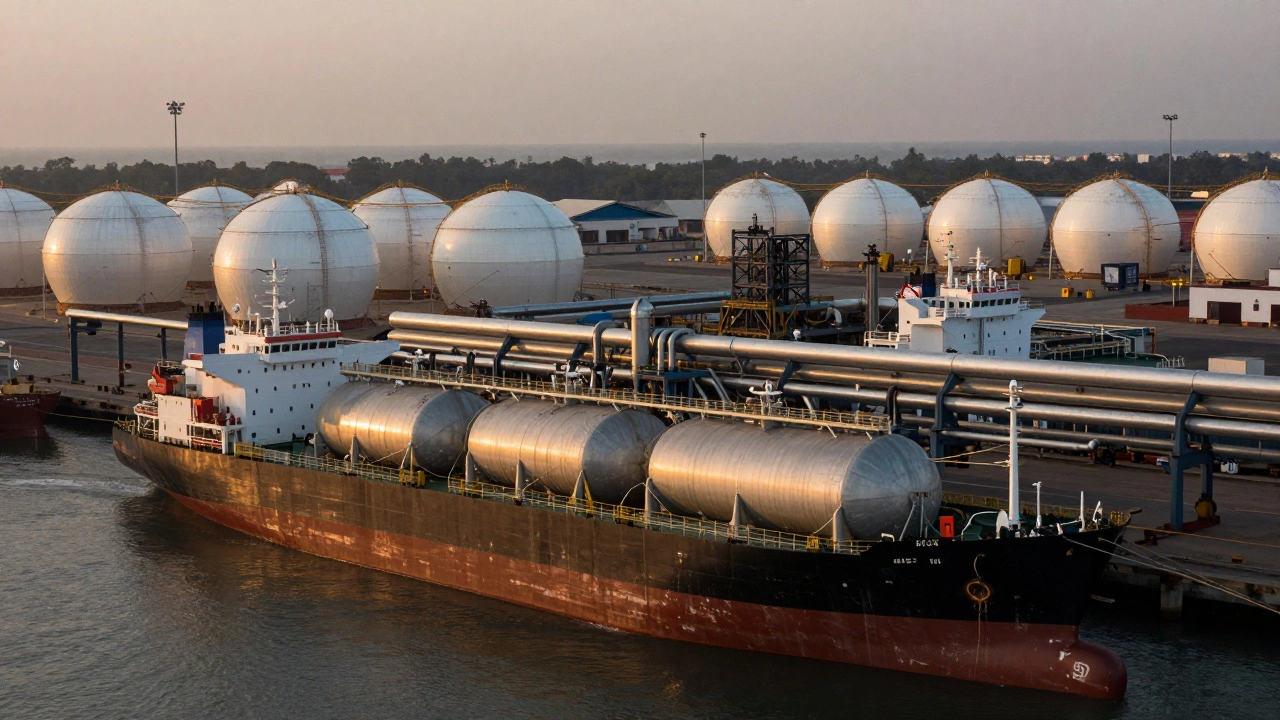
The reliance on Propylene is another pain point. Most of these chemicals arrive via massive tankers from Saudi Arabia or the UAE. The problem is that these aren't just random chemicals; they are essential feedstocks. If there is a shipping delay in the Suez Canal, thousands of Indian factories suddenly find their raw material bins empty. This creates a volatile pricing environment where chemical imports India fluctuate based on global crude oil prices rather than local demand.
The Pharma Paradox: APIs and Intermediates
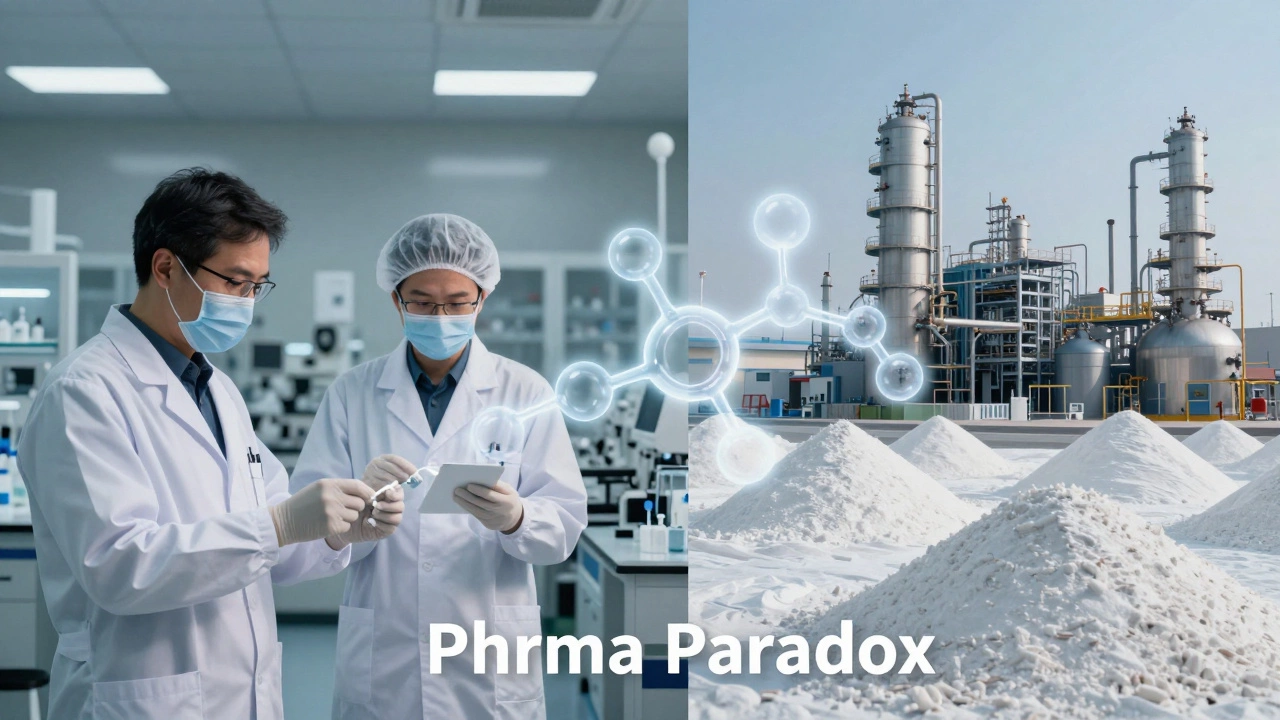
India is often called the "Pharmacy of the World," but that's a bit of a stretch when you look at the ingredients. A huge portion of Active Pharmaceutical Ingredients (APIs) is the biologically active component of a drug product that produces the intended pharmacological effect is imported. For years, India has been heavily dependent on China for things like Paracetamol or Ibuprofen intermediates.
Imagine a factory in Hyderabad making millions of tablets. They have the expertise to formulate the pill, but the core chemical molecule-the API-often arrives as a powder from a plant in Jiangsu or Zhejiang. This creates a strategic vulnerability. To fix this, the government introduced the Production Linked Incentive (PLI) scheme, which basically pays companies to build the factories that make these molecules domestically. However, the transition is slow because building a high-grade chemical plant takes years, not months.
| Category | Primary Examples | Main Source | Primary Use |
|---|---|---|---|
| Petrochemicals | Ethylene, Propylene | Middle East, USA | Plastics, Polymers |
| APIs | Bulk drug intermediates | China | Pharmaceuticals |
| Specialty Chemicals | Photo-resists, Catalysts | Germany, Japan | Electronics, Auto |
| Inorganic Chemicals | Certain Rare Earths | China | Industrial Catalysts |
Specialty Chemicals: The High-Value Gap
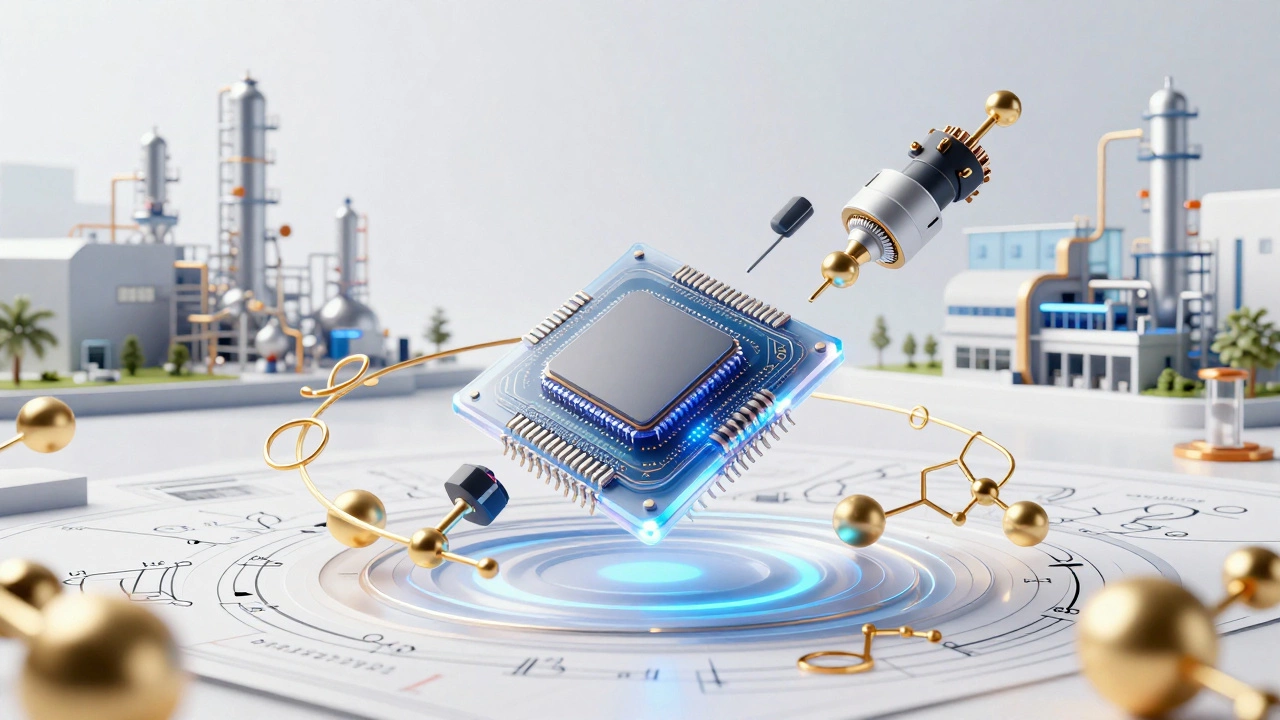
While petrochemicals win on volume, Specialty Chemicals win on value. These are the "small volume, high price" chemicals. Think of the ultra-pure chemicals used to etch a silicon chip or the specialized catalysts used in a car's exhaust system. India simply doesn't have the infrastructure for this level of precision chemistry yet.
Most of these come from Germany or Japan. For instance, when an Indian company wants to produce a high-performance adhesive for aerospace, they often have to import the specific Monomers or catalysts required. These aren't commodities you buy by the ton; they are highly engineered substances. This is where the real technological gap lies. It's not about having a factory; it's about having the intellectual property (IP) and the precise temperature control systems to synthesize a molecule that only exists in a few labs worldwide.
Why India Imports Instead of Manufacturing
You might wonder why a country with so many engineers doesn't just make everything. It comes down to three things: scale, feedstock, and environment. First, the Cracker plants needed to turn oil into ethylene are incredibly expensive. It's often cheaper to buy the chemical from a giant plant in Texas or Saudi Arabia than to build a local one that might not run at full capacity.
Then there's the feedstock issue. India imports crude oil, and the refineries produce a certain mix of products. If the market needs more propylene but the refinery is churning out naphtha, the only option is to import the specific chemical needed. Finally, the environmental regulations for "dirty" chemical synthesis are tightening. Building a new chlorinated solvent plant in India now involves massive hurdles in waste management and pollution control, making it more attractive to just import the chemical from a region where those plants are already established.
The Shift Toward Self-Reliance
The tide is turning. The "China Plus One" strategy is a real thing. Global companies are terrified of relying solely on one country for their chemicals, and India is stepping in. We are seeing a surge in Agrochemicals manufacturing, where India is becoming more of an exporter than an importer. By focusing on the mid-stream of the value chain, Indian companies are slowly replacing imports with local versions.
But the road is bumpy. To stop importing the "most" chemicals, India needs better Infrastructure. We need ports that can handle liquid chemicals more efficiently and a power grid that doesn't flicker, as a power cut in a chemical reactor can ruin a batch worth millions of dollars. The goal isn't to stop importing entirely-that's impossible-but to stop importing the basics and start importing the truly rare stuff.
Which country does India import the most chemicals from?
China remains the dominant source for APIs and specialty intermediates, while the Middle Eastern nations (like Saudi Arabia and UAE) provide the bulk of petrochemical feedstocks. The USA and Germany are key for high-end specialty chemicals and machinery used in chemical production.
Why is India dependent on China for APIs?
China has an enormous advantage in scale and lower production costs for basic chemical intermediates. They have integrated chemical parks where the raw material is produced right next to the API plant, reducing transport costs and time. India is currently building similar integrated parks to bridge this gap.
What is the difference between a bulk chemical and a specialty chemical?
Bulk chemicals, like ethylene or sulfuric acid, are produced in massive quantities and sold as commodities with prices set by the global market. Specialty chemicals are produced in smaller batches for specific functions (like a specific dye or a pharmaceutical catalyst) and are sold based on their performance rather than their weight.
How does the PLI scheme help reduce chemical imports?
The Production Linked Incentive (PLI) scheme provides financial incentives to companies that manufacture key chemicals domestically. By offsetting the initial high cost of setting up a plant, the government encourages companies to produce APIs and critical chemicals in India instead of importing them.
Will India ever stop importing petrochemicals?
Unlikely. Petrochemicals are tied to the availability of raw oil and gas. Unless India discovers massive new reserves of natural gas or oil, it will always need to import the raw hydrocarbons that are converted into chemicals.
Next Steps for Industry Players
If you're in the manufacturing business, stop looking at the "cheapest" import option and start looking at the "stablest" one. Diversifying your suppliers away from a single country is the best way to avoid the shocks of the last few years. For those looking to invest, the opportunity lies in the intermediates-the chemicals that sit between the raw feedstock and the final product. That's where the biggest import gap is, and that's where the most growth will happen over the next decade.