India Textile Industry Insight Tool
Explore Key Metrics
Click on a card to view detailed insights about India's performance in specific sectors.
Cotton Production
#1Silk Production
#1Total Exports
#2Apparel Exports
#3MMF Output
#4Identify Industry Challenges
Select the factors that you believe are holding back India's rise to number one globally.
Analysis Result
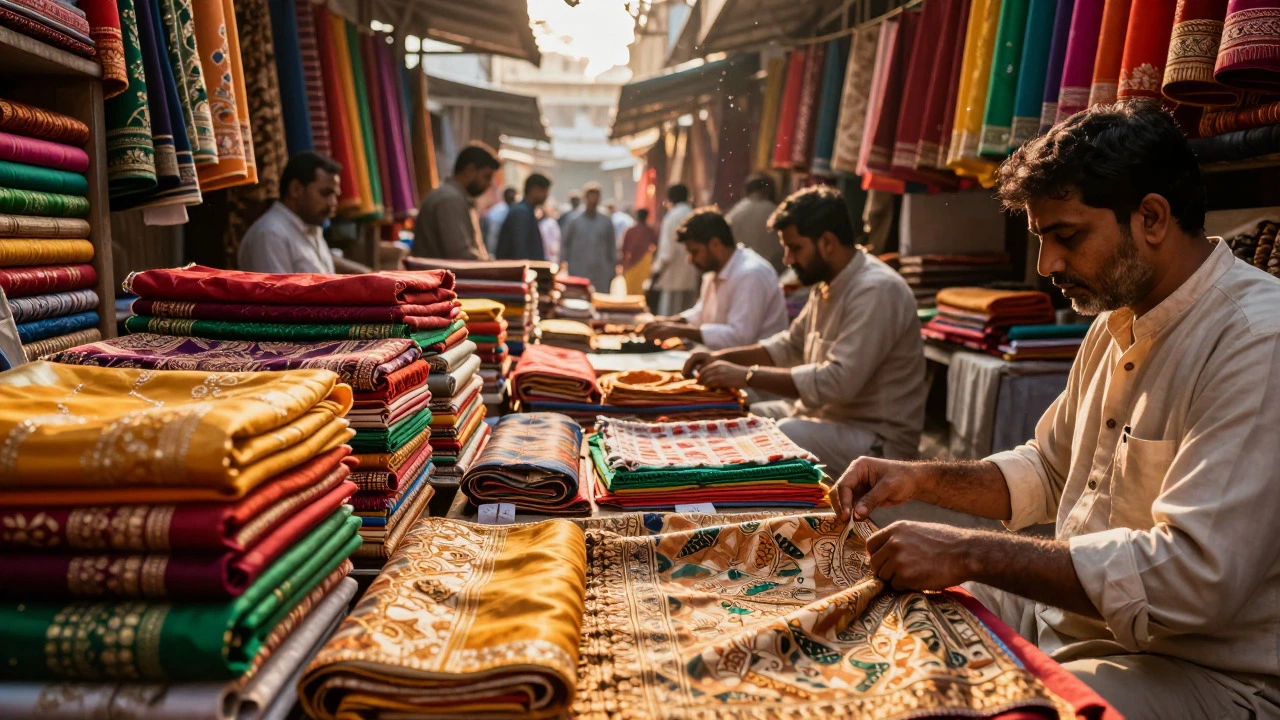
Imagine walking through the bustling markets of Surat or the historic looms of Varanasi. You see hands moving with precision, machines humming day and night, producing fabrics that end up on racks from New York to London. This is the heartbeat of India's textile industry, a sector that employs over 45 million people and contributes significantly to the nation's GDP. But when it comes to the global leaderboard, where does India actually stand? Is it the undisputed king of textiles, or is there still a long way to go?
The short answer is complex. India is not number one in total textile exports-that title belongs to China. However, India holds a very strong position as the world’s largest producer of cotton and ranks second globally in overall textile exports. Understanding this distinction is crucial for anyone looking at the Indian market, whether you are an investor, a business owner, or a student of economics.
Where Does India Stand Globally?
To get a clear picture, we need to look at specific metrics rather than just a single "rank." The textile industry is vast, covering everything from raw fiber to finished garments. Let’s break down India’s performance across key areas.
| Metric | India's Rank | Key Competitor | Context |
|---|---|---|---|
| Total Textile Exports | 2nd | China (1st) | India exported approx $48 billion in FY2024-25. |
| Cotton Production | 1st | Brazil (2nd) | India produces ~25% of the world's cotton. |
| Silk Production | 1st | China (2nd) | Leader in both mulberry and non-mulberry silk. |
| Apparel Exports | 3rd | Bangladesh/Vietnam (rising) | Behind China and Bangladesh in ready-made garments. |
| Man-Made Fiber (MMF) Output | 4th | China/Turkey | Growing rapidly but lagging behind synthetic leaders. |
As you can see, India dominates in natural fibers like cotton and silk. This is no accident. The country’s climate and agricultural practices have made it a powerhouse in raw material production. However, when it comes to converting these raw materials into high-value finished goods-like branded sportswear or technical textiles-the competition gets tougher. Countries like Vietnam and Bangladesh have aggressively targeted the garment export market, often undercutting Indian prices due to lower labor costs and specialized infrastructure.
The Cotton Advantage: Why India Leads in Raw Materials
Let’s talk about why India is number one in cotton. It’s not just about having the right weather; it’s about scale and diversity. India grows three main types of cotton: desi (short-staple), hybrid (long-staple), and Bt cotton (genetically modified for pest resistance). This variety allows Indian mills to produce everything from coarse hessian bags to luxurious bed linens.
In the 2024-2025 season, India produced approximately 37 million bales of cotton. To put that in perspective, that’s enough fabric to wrap around the Earth multiple times. This abundance gives Indian manufacturers a significant cost advantage in the early stages of production. When global cotton prices spike, Indian exporters can still maintain margins because they control the supply chain from the farm gate.
However, there’s a catch. While India produces the best cotton, it doesn’t always capture the highest value. Much of the raw cotton is sold internationally to countries with more advanced spinning and weaving technologies. This is a classic example of being a commodity leader but not a value-added leader. For instance, while India sells raw cotton to China, China processes it into high-end fabrics and re-exports them at a premium. Closing this gap is a major focus for Indian policymakers.
Challenges Holding Back India’s Rise to Number One
If India has the raw materials and the skilled workforce, why isn’t it the top exporter? Several structural issues are slowing down progress.
- Fragmented Industry Structure: About 90% of the textile sector consists of small and medium enterprises (SMEs). While this creates jobs, it makes it hard to achieve economies of scale. A small unit in Tirupur might struggle to invest in the latest automated cutting machines compared to a large factory in Guangdong, China.
- Infrastructure Gaps: Logistics costs in India are higher than in many competing nations. Moving goods from inland factories to ports can be slow and expensive due to road congestion and inefficient rail links. In contrast, countries like Vietnam have invested heavily in port infrastructure to facilitate quick exports.
- Power and Energy Costs: Textile manufacturing is energy-intensive. Unreliable power supply and higher electricity tariffs in some states increase operational costs. Solar energy adoption is growing, but it hasn’t yet fully offset traditional energy expenses.
- Lack of Design Innovation: Indian manufacturers excel at execution but sometimes lag in design innovation. Many brands still rely on foreign designs or copy trends rather than creating original collections that command higher prices in Western markets.
These aren’t insurmountable problems, but they require coordinated effort. The government has launched initiatives like the Production Linked Incentive (PLI) Scheme to boost investment in man-made fibers and technical textiles. This scheme offers financial incentives to companies that increase their production capacity, aiming to shift the focus from low-cost labor to high-tech manufacturing.
The Role of Technology and Automation
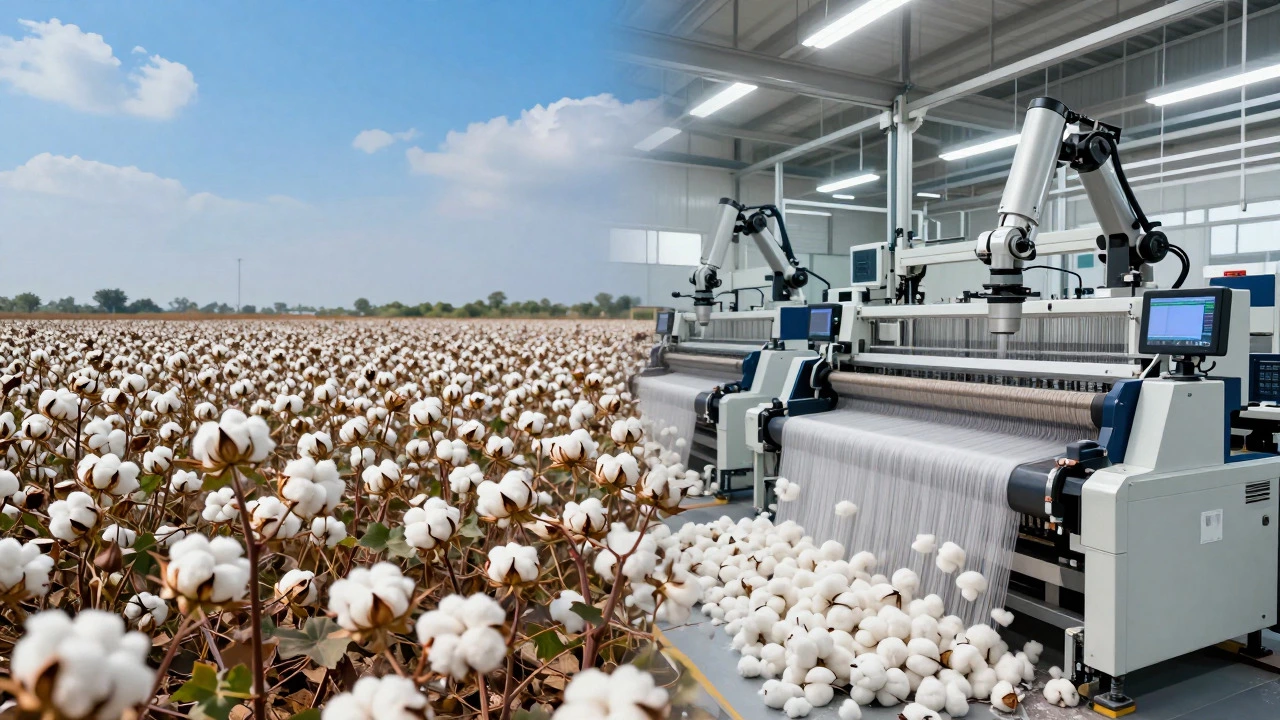
You might think that automation reduces jobs, but in the textile industry, it’s a survival strategy. Modern consumers demand faster turnaround times and smaller batch sizes. Traditional methods simply can’t keep up. That’s why leading Indian manufacturers are investing in digital printing, automated looms, and AI-driven quality control systems.
For example, digital textile printing allows for intricate patterns without the need for costly screen setups. This technology enables small businesses to offer customized products quickly, which is exactly what e-commerce brands are looking for. Companies adopting these technologies are seeing a 20-30% reduction in waste and a significant improvement in delivery times.
Furthermore, sustainability is becoming a huge driver of technological change. European buyers, who account for a large chunk of India’s textile exports, are increasingly demanding eco-friendly products. This means using less water, reducing chemical usage, and ensuring fair labor practices. Indian firms that invest in sustainable tech now will have a competitive edge in the next decade.
Future Outlook: Can India Overtake China?
Overtaking China completely in the near future is unlikely. China’s ecosystem is deeply entrenched, with massive scale and integrated supply chains. However, India is well-positioned to become the preferred alternative for Western brands seeking to diversify away from China-a trend known as "China Plus One."
Several factors support this optimism:
- Demographic Dividend: India has a young, growing workforce willing to work in manufacturing. As other countries age, India’s labor pool remains robust.
- Free Trade Agreements: Recent trade deals with countries like the UK and ongoing negotiations with the EU could reduce tariffs on Indian textiles, making them more competitive in key markets.
- Rising Domestic Demand: With a growing middle class, India’s internal consumption of textiles is skyrocketing. This domestic market provides a stable base for manufacturers, reducing reliance on volatile export markets.
By 2030, experts predict that India’s share in global textile exports could rise from the current 4-5% to nearly 10%. This wouldn’t make India number one overall, but it would solidify its position as a top-tier global player, especially in cotton-based products and home textiles.
What Should Businesses Do?
If you’re considering entering the Indian textile market, here’s what you need to know. First, don’t just look at price. Look at reliability and quality consistency. Second, consider partnering with local SMEs that are upgrading their technology. They often offer better flexibility than large conglomerates. Finally, pay attention to sustainability certifications. Buyers in Europe and North America are increasingly filtering suppliers based on environmental credentials.
The journey to becoming the undisputed leader is ongoing. But with its unique strengths in cotton, skilled labor, and improving policy support, India is steadily climbing the ranks. The question isn’t whether India will remain relevant-it already is. The real question is how fast it can evolve from a volume player to a value creator.
Is India the largest textile manufacturer in the world?
No, China is currently the largest textile manufacturer and exporter globally. India ranks second in total textile exports. However, India is the world's largest producer of cotton and silk, giving it a strong foundation in raw materials.
Which country exports the most clothing?
China leads in overall clothing exports, followed closely by Bangladesh and Vietnam. India typically ranks third or fourth in ready-made garment exports, though it is gaining ground in niche segments like denim and knitwear.
Why is India not number one in textile exports despite having cheap labor?
While labor costs are lower, India faces challenges in infrastructure, logistics, and fragmented industry structure. Competitors like Vietnam and Bangladesh have invested heavily in efficient supply chains and trade agreements, allowing them to compete effectively on price and delivery speed.
What is the growth rate of India's textile industry?
The Indian textile industry is projected to grow at a CAGR of 7-9% between 2024 and 2030. This growth is driven by rising domestic consumption, increased exports, and government incentives under schemes like PLI.
How does India compare to Bangladesh in textile manufacturing?
Bangladesh is highly specialized in ready-made garments, particularly for major global brands, and often has lower labor costs. India has a more diversified industry, including yarn, fabric, and home textiles, and is stronger in natural fiber processing. Bangladesh focuses on volume and low cost, while India is trying to move up the value chain.