Car Safety Priority Evaluator
Don't be fooled by marketing. Use this tool to see how different safety features actually impact your protection level. Select the features the car you are considering has:
1. Structural Safety (Passive)
2. Supplementary & Active Safety
Safety Score
Verdict:
Select features to see the analysis.
Key Takeaways
- Bharat NCAP is now the gold standard for local testing, replacing reliance solely on overseas data.
- Structural integrity (the shell) matters more than the number of airbags.
- The Tata Safari and Mahindra XUV700 consistently lead the pack in adult occupant protection.
- Active safety features like AEB are becoming as critical as passive safety like crumple zones.
Decoding the Safety Ratings
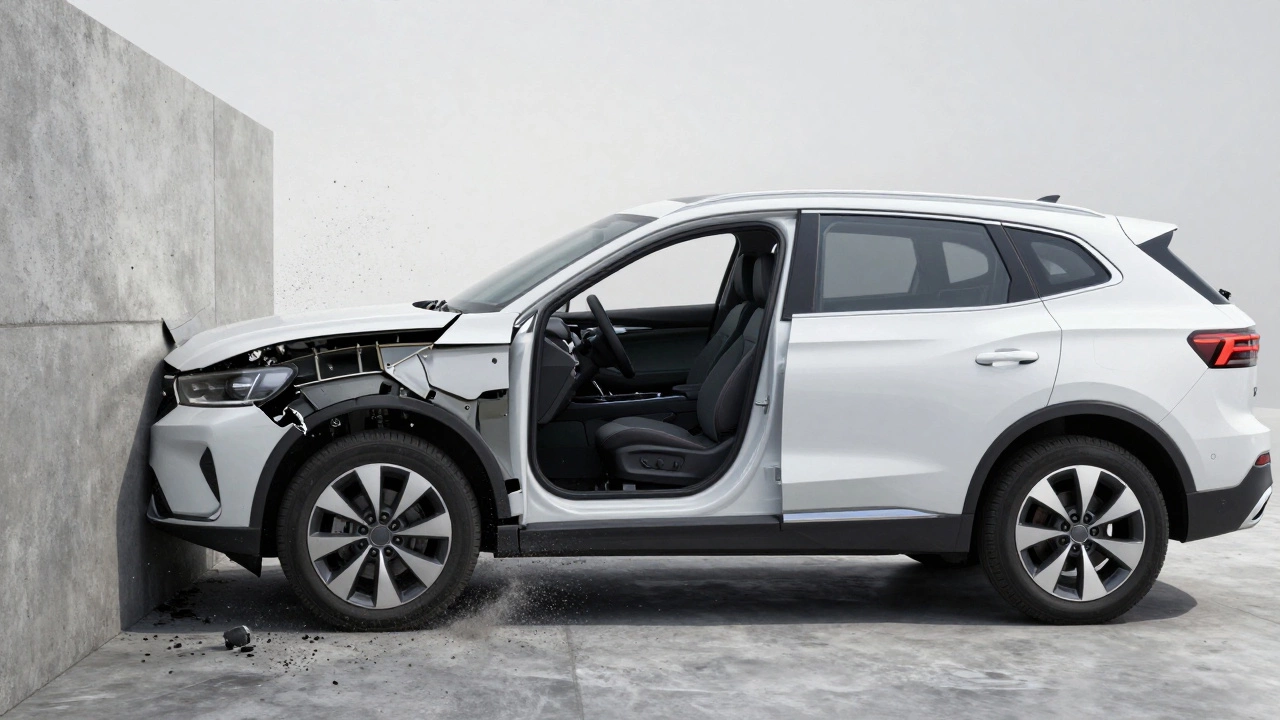
To find the safest car, we have to look at who is doing the testing. For years, Indians relied on Global NCAP is an international agency that provides independent crash test ratings for vehicles globally. However, the game changed with the introduction of Bharat NCAP is India's own government-backed car assessment program launched to test vehicles under local conditions. Why does this matter? Because a car tested in Europe might not be the same car sold in Delhi. Bharat NCAP ensures that the exact model rolling off the factory floor in Pune or Chennai is the one getting smashed into a wall at 64 km/h. When a car gets a 5-star rating, it means the shell didn't collapse and the passengers didn't suffer critical injuries in the simulated crash.
The Heavyweights: Tata and Mahindra
If you're hunting for the absolute top spot, you'll likely find yourself choosing between two homegrown giants. Tata Motors has pivoted its entire brand identity around safety. Models like the Tata Safari and Tata Nexon have set benchmarks by focusing on high-strength steel in the passenger cell. On the other side, Mahindra & Mahindra focuses on ruggedness and weight. The Mahindra XUV700 isn't just a luxury cruiser; it's built like a tank. In recent tests, it has shown incredible stability, preventing the steering column from pushing back into the driver's chest during a frontal offset collision. These two brands have forced other manufacturers to stop selling "tin-can" cars in the Indian market.
Airbags vs. Structure: The Great Debate
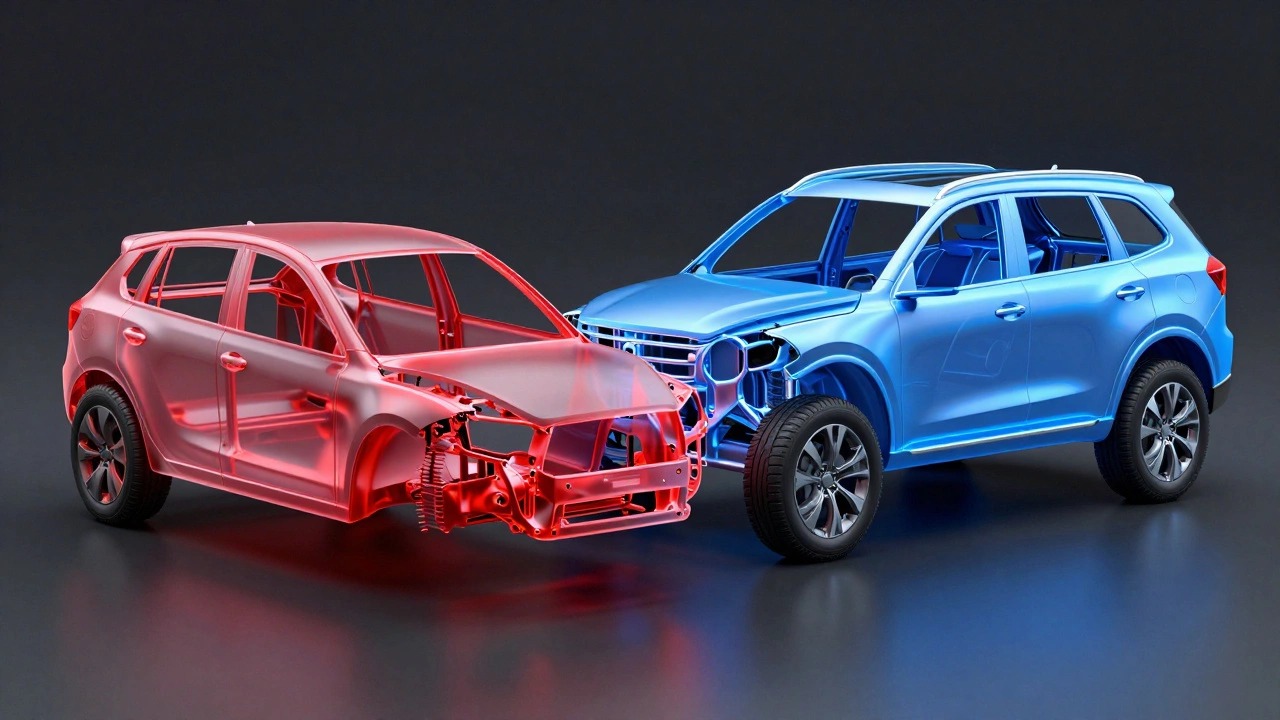
You'll often see ads screaming "6 Airbags as Standard!" But here is the secret: airbags are useless if the car's frame buckles. Imagine a soda can-if you crush it, the sides fold. That's what happens to a poorly built car. A safe car acts more like a sturdy box; it uses Crumple Zones is areas of a vehicle designed to deform and absorb energy during a collision to soak up the impact before it reaches the people inside. If a car has 6 airbags but a 2-star structural rating, you're still in danger. However, a car with 2 airbags and a 5-star structural shell is significantly safer. The safest car in India will always be the one that balances a rigid passenger cabin with a flexible front end.
| Feature | Structural Safety (Passive) | Electronic Safety (Active) |
|---|---|---|
| Primary Goal | Surviving the crash | Preventing the crash |
| Key Examples | High-strength steel, Crumple zones | ESC, Autonomous Braking |
| Impact | Reduces fatality risk | Reduces accident frequency |
| Reliability | Constant (Physical) | Variable (Sensor-based) |
Active Safety: The New Frontier
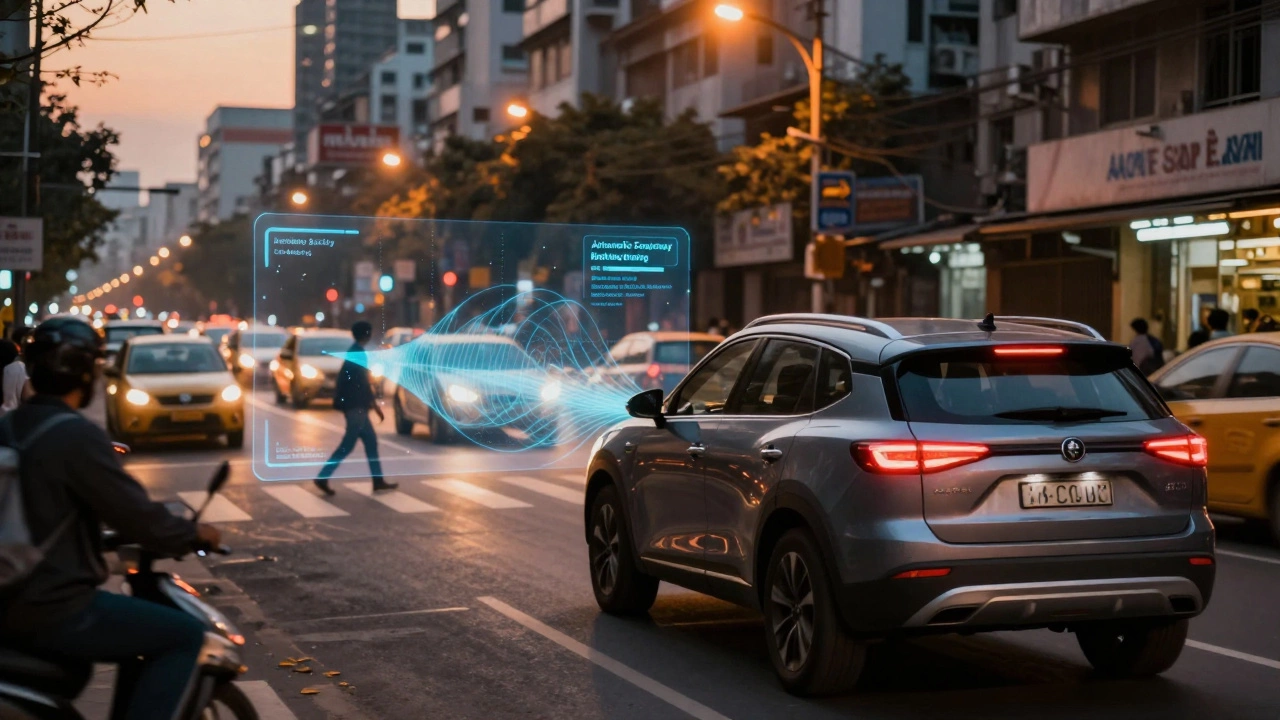
While we talk a lot about surviving a crash, the real "no. 1" safety experience comes from never crashing in the first place. This is where ADAS is Advanced Driver Assistance Systems that use radar and cameras to automate safety tasks comes into play. Features like Automatic Emergency Braking (AEB) can detect a pedestrian stepping into the road and slam the brakes before the driver even reacts. Lane Keep Assist prevents you from drifting off a highway during a moment of fatigue. When you combine a 5-star Bharat NCAP shell with a full suite of ADAS, you get a vehicle that is objectively safer than a "strong" car without electronics.
Common Safety Pitfalls to Avoid
Don't get fooled by "Safety Packages." Some brands sell a base model with basic safety and then offer a "Safety Pack" for an extra 2 lakhs. Ask yourself: why is the basic structure not safe unless I pay more? While adding an extra airbag is fine, you cannot "upgrade" the steel in the chassis after the car is built. Another trap is the "Heavy Car = Safe Car" myth. While mass can help in a collision between two vehicles, too much weight without proper engineering just means more kinetic energy during a crash, which can actually make the impact more violent if the crumple zones aren't tuned correctly.
The Verdict: Which one should you buy?
If you want the absolute highest level of protection available in India right now, look toward the Tata Safari or the Mahindra XUV700. They represent the pinnacle of Automobile Manufacturing in India, combining high-grade materials with rigorous testing. However, if you are in a tighter budget, the Tata Nexon continues to be a gold standard for compact SUVs, proving that safety doesn't always require a massive vehicle. Ultimately, the safest car is the one that matches your driving environment. A heavy SUV is great for highways, but a nimble, 5-star rated hatchback might be safer for the chaotic, stop-and-go traffic of Mumbai or Bangalore where quick reflexes and visibility are more important than sheer bulk.
Does more airbags always mean a safer car?
No. Airbags are supplementary restraints. Their job is to prevent you from hitting the dashboard or steering wheel. If the car's structural frame (the A-pillar or B-pillar) collapses during a crash, airbags cannot protect you from the crushing force of the metal. A strong chassis is the primary safety feature; airbags are secondary.
What is the difference between Global NCAP and Bharat NCAP?
Global NCAP is an international body that tests cars from around the world. Bharat NCAP is India's own agency. The main difference is that Bharat NCAP uses local testing facilities and ensures the vehicles tested are exactly the specifications sold in the Indian market, eliminating the gap where a global model is safe but the local version is "stripped down."
Are electric cars safer than petrol cars in India?
Electric vehicles (EVs) often have a safety advantage in terms of structure because they don't have a large engine block in the front. This allows engineers to create larger, more effective crumple zones. However, they introduce a new risk: battery fires. This is why EV safety focuses heavily on battery enclosure strength and thermal management.
Which safety feature is most important for Indian city driving?
In crowded cities, Electronic Stability Control (ESC) and a good set of 360-degree cameras are vital. ESC prevents the car from skidding during sudden swerves to avoid potholes or pedestrians, while cameras reduce blind spots in tight lanes.
Should I trust a 5-star rating from five years ago?
A 5-star rating is a great sign, but testing protocols evolve. For example, newer tests place more emphasis on side-impact collisions and pedestrian safety. A car that got 5 stars in 2018 might only get 4 stars under 2026's stricter Bharat NCAP protocols. Always check for the most recent test reports.
Next Steps for Buyers
Before you sign the papers for your next car, do these three things: First, go to the official Bharat NCAP or Global NCAP website and look for the "Crash Test Report" for your specific model-don't just trust the 5-star sticker on the window. Second, check if the safety features are "standard" or "optional"; if the safety is optional, be wary. Finally, test the ADAS features in a safe environment to see if the alerts are helpful or just annoying beeps that you'll end up turning off.