Textile Factory Startup Cost Estimator
Total Initial Capital Required
₹ 0
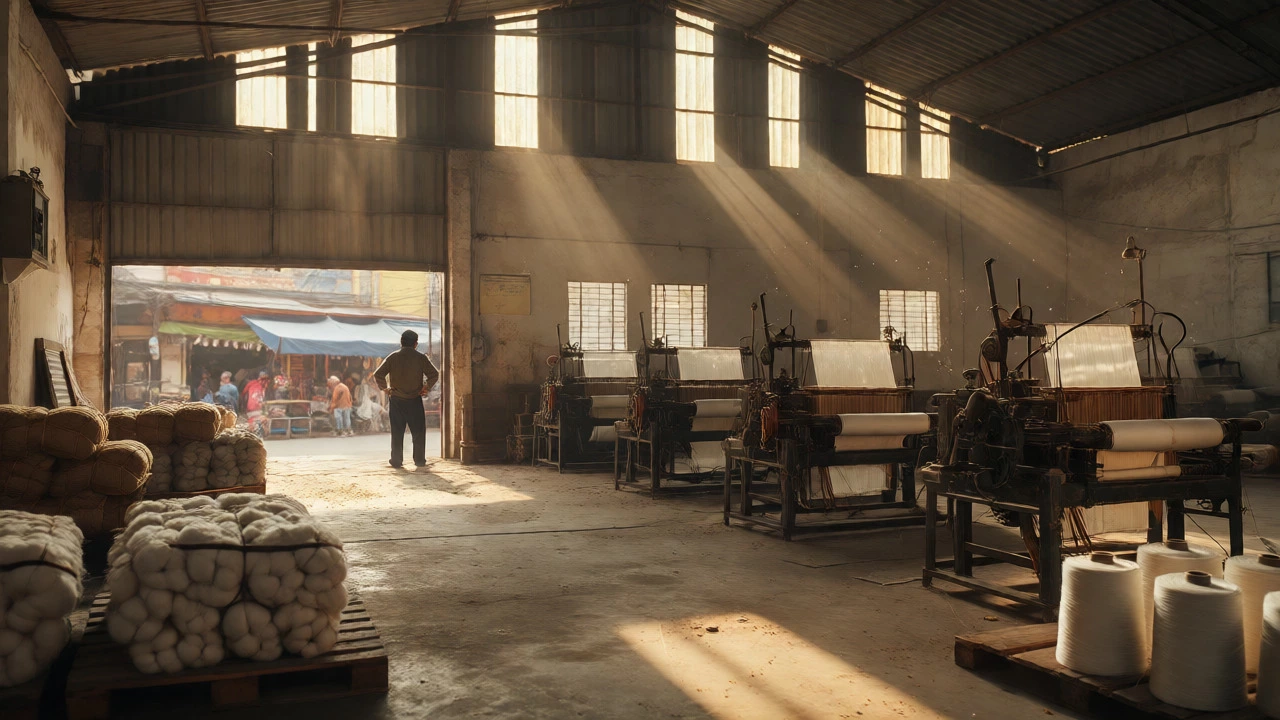
*After applying eligible subsidiesYou’ve seen the headlines about India becoming a global manufacturing hub, and maybe you’re thinking, "Can I actually afford to start a small textile unit here?" It’s a fair question. The answer isn’t a single number; it’s a range that swings wildly based on where you set up shop and what exactly you plan to weave or stitch. But let’s cut through the noise: for a standard small-scale textile manufacturing unit producing basic garments or fabrics, you are looking at an initial investment between ₹15 Lakhs and ₹75 Lakhs ($18,000 to $90,000 USD). This covers everything from leasing a shed to buying semi-automatic machines.
Why such a huge gap? Because "small factory" is vague. Are you hand-weaving premium khadi in Varanasi with zero heavy machinery but high labor costs? Or are you running ten automatic power looms in Surat with minimal staff but massive capital outlay? Your location, product type, and level of automation dictate your bill. Let’s break down the real numbers so you don’t get blindsided by hidden costs.
The Core Investment Buckets
To understand the cost, you need to split your budget into four non-negotiable categories: Land/Shed, Machinery, Raw Materials, and Compliance. Most first-time entrepreneurs underestimate the last two, assuming they can buy materials later. You can’t. In India, cash flow kills more startups than lack of orders.
| Cost Component | Low-End (Handloom/Manual) | Mid-Range (Semi-Auto) | High-End (Auto/Full Unit) |
|---|---|---|---|
| Land & Shed Lease (Annual) | ₹1-3 Lakhs | ₹3-8 Lakhs | ₹8-15 Lakhs |
| Machinery & Equipment | ₹2-5 Lakhs | ₹10-25 Lakhs | ₹40-60 Lakhs |
| Raw Material Stock (Initial) | ₹2-4 Lakhs | ₹5-10 Lakhs | ₹15-25 Lakhs |
| Licensing & Compliance | ₹50k-1 Lakh | ₹1-2 Lakhs | ₹2-4 Lakhs |
| Total Initial Estimate | ₹5-13 Lakhs | ₹19-45 Lakhs | ₹65-104 Lakhs |
Location Matters More Than You Think
Where you put your factory changes the math instantly. If you set up in Tier-1 cities like Mumbai or Bangalore, expect land leases to eat 30% of your annual budget before you even switch on a machine. In contrast, setting up in textile hubs like Surat (Gujarat), Tirupur (Tamil Nadu), or Ludhiana (Punjab) offers cheaper industrial sheds and better supply chain access.
In Surat, for example, a small industrial shed might cost ₹15-25 per square foot per month. In Noida, near Delhi, that same space could be ₹40-60. Why does this matter? Because logistics. Being close to yarn suppliers or dyeing units saves you transport costs. A ₹5,000 monthly saving on rent might look small, but if you save another ₹10,000 on transport because your supplier is next door, you’re suddenly profitable six months earlier.
Machinery: Manual vs. Automated
This is where most people blow their budget. Do you really need a fully automated knitting machine? For a startup, probably not. Machinery is a depreciating asset. Start with semi-automatic setups that allow you to scale labor instead of capital.
- Power Looms: A new Indian-made power loom costs between ₹1.5 Lakhs and ₹3 Lakhs. Used ones go for ₹80k-₹1.2 Lakhs. For a small unit, three used looms are enough to test the market.
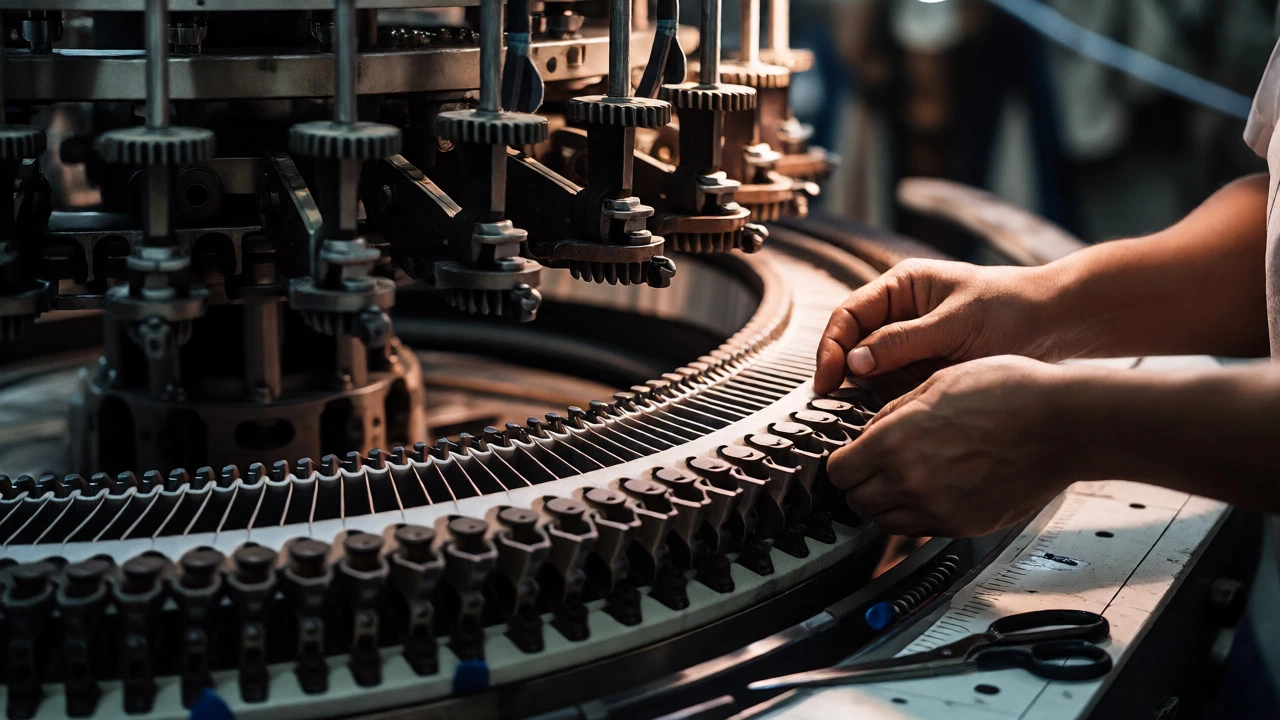
- Knitting Machines: Circular knitting machines range from ₹2.5 Lakhs (manual) to ₹8 Lakhs (computerized). If you’re making T-shirts, you need these.
- Cutting & Stitching: Industrial sewing machines cost ₹15k-₹40k each. You’ll need at least 10-15 for a viable stitching unit, plus cutting tables and overlockers.
Pro tip: Don’t buy brand-new unless you have export contracts lined up. Buy refurbished machines from established players in Coimbatore or Ahmedabad. They often come with a 6-month warranty and cost 40% less.
Compliance and Hidden Costs
India loves paperwork. You cannot just open doors and start weaving. You need registrations. Here’s the checklist that trips up beginners:
- Udyam Registration: Free, but mandatory for MSME benefits. Takes 2 days.
- GST Registration: Mandatory if turnover exceeds ₹40 Lakhs (goods). Cost: ~₹1,000-₹2,000 for professional help.
- Pollution Control Board (PCB): If you do dyeing or washing, you need consent to operate. This can cost ₹50k-₹1.5 Lakhs depending on state norms and waste treatment plant installation.
- Factory License: Required if you employ >10 workers with power. Application fees vary by state but budget ₹10k-₹25k.
Also, factor in electricity deposits. Industrial connections require a security deposit equal to 3-6 months of estimated usage. For a small unit using 10 HP motors, that’s easily ₹50,000 upfront.
Working Capital: The Silent Killer
Your machine sits idle if you don’t have cotton. Cotton prices fluctuate. In October 2026, raw cotton hovers around ₹60-70 per kg. If you plan to produce 1,000 kgs of fabric a month, you need ₹60,000-₹70,000 in raw material alone, every month. Plus, clients rarely pay upfront. They pay after delivery, sometimes 30-60 days later. You need 3 months of working capital to survive payment delays.
Calculate this: Monthly OpEx (Electricity + Wages + Rent) = X. Multiply X by 3. That’s your safety net. If you skip this, one delayed payment from a buyer can bankrupt you.

Government Schemes That Reduce Costs
You don’t have to bear the full burden. The Government of India actively subsidizes small manufacturers. Look into:
- PMEGP (Prime Minister’s Employment Generation Programme): Offers subsidies up to 35% on project cost for new ventures. Max loan eligible is ₹50 Lakhs.
- CLCSS (Credit Linked Capital Subsidy Scheme): Provides 15% subsidy on institutional finance availed for technological upgradation. This means if you buy a machine worth ₹10 Lakhs via bank loan, you get ₹1.5 Lakhs back as a grant.
- State-Specific Policies: Gujarat and Tamil Nadu offer additional power tariff concessions for textile units. Check your local state industrial department website.
Applying for these takes time. Start the process before you buy machinery. If you buy first, you might miss the subsidy window.
Real-World Scenario: A 5-Loom Unit in Surat
Let’s make this concrete. Imagine you want to start a small saree weaving unit in Surat.
- Shed: 1,000 sq ft rented at ₹15/sq ft = ₹15,000/month. Deposit: ₹1.5 Lakhs.
- Machines: 5 used power looms @ ₹1 Lakh each = ₹5 Lakhs.
- Accessories: Bobbins, shuttles, warping tools = ₹50,000.
- Raw Material: Silk/Cotton mix stock = ₹2 Lakhs.
- Staff: 5 weavers @ ₹12,000/month = ₹60,000/month. First month salary prepaid.
- Legal/Misc: GST, Udyam, PCB = ₹50,000.
Total Initial Cash Outlay: ~₹9.6 Lakhs. Not bad, right? But wait. You also need to account for marketing samples, travel to buyers, and unexpected repairs. Add a 20% buffer. So, realistically, you need ₹12 Lakhs in hand to start comfortably.
Troubleshooting Common Budget Overruns
Why do budgets explode? Usually, it’s scope creep. You planned for weaving but realized you need a small dyeing vat. Dyeing adds chemical costs, effluent treatment plants (ETP), and higher water bills. An ETP for a small unit costs ₹3-5 Lakhs. That’s a game-changer. If you can’t afford it, outsource dyeing. It increases per-unit cost but lowers capex.
Another trap: Hiring too many permanent staff early. Use contract labor for peak seasons. Keep only skilled supervisors on payroll. Labor laws in India favor employees, making layoffs difficult. Flexibility is your friend.
Is it cheaper to build or rent a factory shed in India?
For small factories, renting is almost always cheaper initially. Building requires land purchase (expensive in hubs) plus construction costs (₹1,500-₹2,000 per sq ft). Renting allows you to preserve capital for machinery and working funds. Only consider building if you have long-term stability (>10 years) and excess liquidity.
What is the average cost of a power loom in India?
A new semi-automatic power loom costs between ₹1.5 Lakhs and ₹3 Lakhs depending on width and features. Used models typically sell for ₹80,000 to ₹1.2 Lakhs. Fully automatic jacquard looms can cost ₹5 Lakhs to ₹8 Lakhs.
Do I need pollution control clearance for a small textile unit?
Yes, if you engage in dyeing, printing, or washing. Pure weaving without wet processing may fall under 'Green Category' with simplified compliance, but you still need registration with the State Pollution Control Board. Dry cleaning units have lower requirements than wet processing units.
How much working capital is required for a small garment factory?
Plan for 3 months of operating expenses. This includes raw material purchases, wages, electricity, and rent. Since B2B buyers often delay payments by 30-60 days, having 3 months’ cushion prevents cash flow crises. For a mid-sized unit, this could range from ₹5 Lakhs to ₹15 Lakhs.
Which Indian states offer the best subsidies for textile manufacturing?
Gujarat, Tamil Nadu, Maharashtra, and Uttar Pradesh currently offer the most attractive incentives. These include power tariff rebates, stamp duty exemptions, and capital subsidies up to 25%. Always check the latest policy documents on the respective state industrial development corporation websites for current year updates.