Economic Resilience: How Manufacturing Builds Stronger Communities and Businesses
When we talk about economic resilience, the ability of an economy to withstand shocks, adapt, and recover quickly. Also known as economic robustness, it’s not just about stock markets or GDP numbers—it’s about whether your neighbor can keep their job, whether a small factory can keep running during a supply chain crash, and whether a startup in Gujarat can turn scrap plastic into something people actually need. Real economic resilience isn’t built by subsidies alone. It’s built by factories that hire locally, by small manufacturers who can pivot fast, and by policies that actually help people make things—instead of just paying them not to fail.
Manufacturing economy, a system where value is created by transforming raw materials into finished goods. Also known as industrial production, it’s the backbone of resilience because it creates high-paying jobs that don’t disappear overnight. Unlike service jobs that can be outsourced or automated away, manufacturing jobs are tied to physical infrastructure, local skills, and supply chains that stay put. When India exports $25 billion in electronics or ships furniture overseas, it’s not just selling products—it’s locking in income, skills, and stability for entire regions. And when a small manufacturer in Tamil Nadu starts making medical devices instead of plastic toys during a pandemic? That’s economic resilience in action. This isn’t theory. It’s what happens when small scale manufacturing, local businesses that produce goods in small batches, often with minimal capital. Also known as micro-manufacturing, it’s the quiet hero of economic resilience. These aren’t big factories with thousand-worker shifts. They’re workshops with five people, using machines bought secondhand, making things like packaging, household goods, or auto parts. They don’t need billion-dollar loans. They use what they have. They barter. They sell before they produce. And when the big players stumble, they’re the ones who keep the local economy breathing. Government manufacturing schemes matter—but only if they actually reach these small players. Too many programs fund big names while ignoring the real engines: the guy who turns recycled plastic into buckets, the woman who assembles LED lights from home, the team that repairs and reuses electronics instead of throwing them away.
What you’ll find below isn’t a list of abstract ideas. It’s a collection of real stories—how a startup in Pune funded its factory with no money, how Indian pharma companies supply 40% of America’s generic drugs, how a single city like Bengaluru became a global electronics hub, and why China still leads manufacturing not because of size, but because of how deeply its system is woven into daily life. These aren’t just facts. They’re blueprints. For every entrepreneur wondering if they can start something real, for every policymaker asking how to create lasting jobs, for every community wondering if they can survive the next crisis—this is the evidence. Economic resilience isn’t a buzzword. It’s made in workshops, factories, and homes across India. And you’re about to see how.
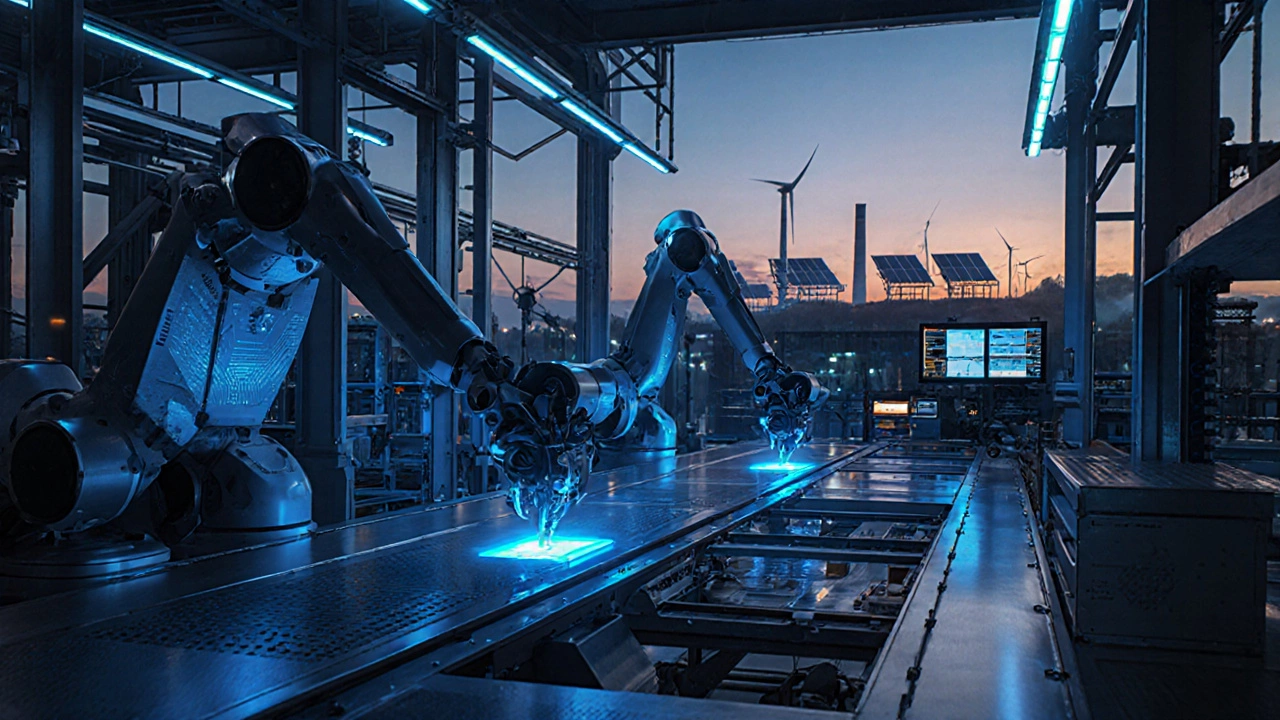
Can the US economy succeed without a big manufacturing base?
Can the US economy thrive without a large manufacturing base? The answer isn't yes or no-it's about rebuilding a smarter, more resilient industrial core that supports innovation, security, and middle-class jobs.