Indian Textile Hub Finder
Select your product type and market focus to find the best sourcing city in India.
Recommended Hub:
Primary Specialty:
Key Strengths:
Target Market:
When people ask about the biggest textile hub in India, the answer isn’t always straightforward because it depends on what you mean by "biggest." Are we talking about raw cotton production? Silk weaving? Or finished garment exports?
If you are looking for the undisputed king of modern, high-volume garment manufacturing and exports, the title belongs to Tirupur, a city in Tamil Nadu often called the Knitwear Capital of India. While other cities like Surat or Ludhiana dominate specific niches, Tirupur is the engine room that powers India’s position as a global supplier of t-shirts, sweatshirts, and innerwear.
The Crown Jewel: Tirupur and the Power of Clustering
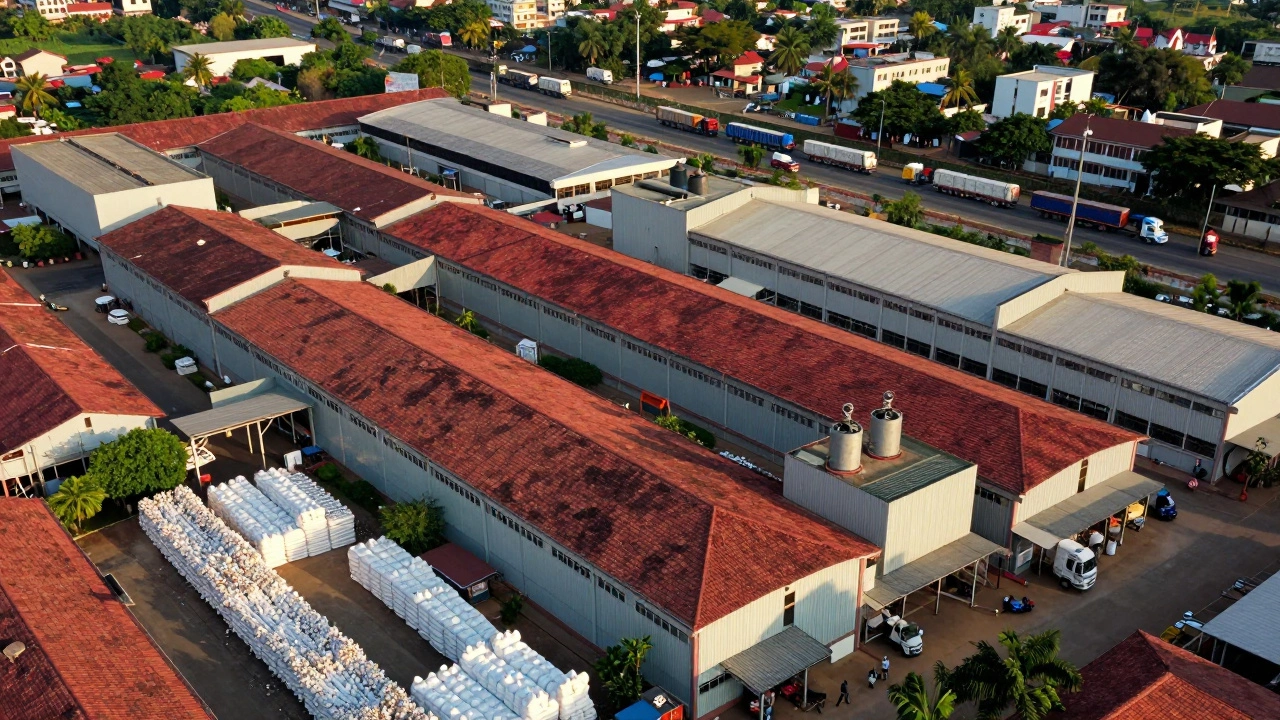
Tirupur didn’t become the number one textile city by accident. It built its reputation on something economists call an "industrial cluster." In simple terms, every single step required to make a pair of jeans or a cotton t-shirt happens within a 50-kilometer radius of the city center.
You don’t just find factories here. You have yarn spinning units, knitting mills, dyeing plants, printing facilities, cutting rooms, and finishing units all packed tightly together. This proximity cuts down logistics costs significantly. A manufacturer in Tirupur can get their fabric dyed and printed in hours, not days. For global buyers who need fast turnaround times, this efficiency is priceless.
The city contributes roughly 60% of India’s total knitwear exports. That is a massive share. When you buy a branded hoodie from a major international retailer, there is a very high chance it was cut, sewn, and packaged in Tirupur before being shipped overseas.
The Challengers: Who Else Makes the List?
While Tirupur leads in knitwear, calling it the "No. 1" requires acknowledging the heavyweights in other categories. India’s textile landscape is diverse, and different cities hold the crown for different fabrics.
| City | Primary Specialty | Key Strengths | Target Market |
|---|---|---|---|
| Tirupur | Cotton Knitwear (T-shirts, Innerwear) | Integrated supply chain, export focus, quality control | Global brands, USA, EU markets |
| Surat | Synthetic Fabrics & Silk | High-speed looms, low cost, sheer volume | Domestic market, budget fashion |
| Ludhiana | Woolen & Winter Wear | Heavy machinery, hosiery expertise | Northern India, cold climate regions |
| Coimbatore | Power Loom & Blended Fabrics | Textile machinery manufacturing, robust infrastructure | Both domestic and export |
Surat: The Synthetic Giant
If Tirupur is the king of cotton, Surat is the emperor of synthetics. Located in Gujarat, Surat produces over 70% of India’s synthetic man-made fibers (MMF). If you are looking for sarees, georgette, or polyester blends, Surat is the place. Its scale is enormous, but it focuses more on fabric production rather than finished garments for export compared to Tirupur.
Ludhiana: The Winter Wear Hub
In the north, Ludhiana dominates the woolen sector. Known for its hosiery industry, Ludhiana supplies most of the winter wear in India, including socks, gloves, and sweaters. It has a strong industrial base but is less integrated into the global fast-fashion supply chain than Tirupur.
Why Tirupur Wins the "No. 1" Title Today
Several factors cement Tirupur’s status as the top textile city in the current economic climate:
- Export Dominance: With billions of dollars in annual exports, Tirupur is deeply connected to global supply chains. It meets strict compliance standards set by Western retailers regarding labor and environmental practices.
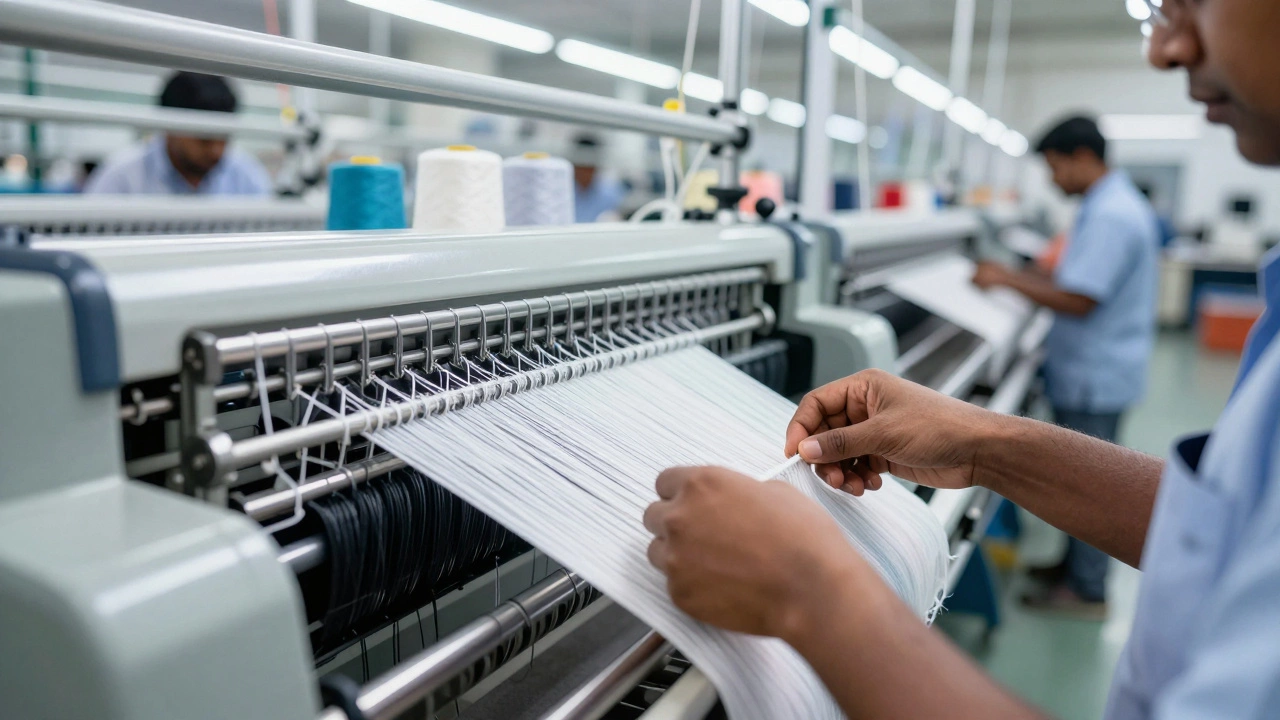
- Vertical Integration: As mentioned earlier, the ability to handle everything from raw yarn to final packaging under one roof reduces lead times. In an era where speed-to-market is critical, this is a huge advantage.
- Skill Density: Generations of workers in Tirupur specialize in knitting and garment making. The local workforce possesses a level of craftsmanship and operational knowledge that cannot be easily replicated elsewhere.
- Government Support: The Tamil Nadu government has actively supported the sector with infrastructure upgrades, common effluent treatment plants (CETPs), and skill development programs.
Challenges Facing the Industry in 2026
No industrial hub is without its problems. Tirupur faces significant hurdles that could impact its "No. 1" status if not managed correctly.
Environmental Regulations: The textile dyeing process is water-intensive and polluting. Over the years, Tirupur has faced scrutiny from environmental agencies. The implementation of Common Effluent Treatment Plants (CETPs) has helped, but maintaining compliance while keeping costs low remains a tightrope walk.
Labor Costs: As wages rise in Tamil Nadu, some manufacturers are looking at cheaper alternatives in states like Odisha or even neighboring countries like Bangladesh and Vietnam. To stay competitive, Tirupur must move up the value chain-focusing on higher-quality, branded products rather than just cheap bulk orders.
Raw Material Volatility: Cotton prices fluctuate wildly based on weather conditions and global demand. Since Tirupur relies heavily on cotton, these price swings directly affect profit margins.

How to Choose the Right Textile Partner
If you are a buyer or a business owner looking to source textiles, understanding these distinctions helps you make better decisions.
- Define Your Product: Need cotton t-shirts for export? Go to Tirupur. Need synthetic sarees for the domestic market? Look at Surat. Need winter wear? Check Ludhiana.
- Check Compliance: For international sales, ensure your supplier has valid certifications (like ISO, OEKO-TEX, or BCI). Tirupur’s larger players usually have these in place.
- Visit the Cluster: Don’t rely solely on online quotes. Visiting the factory allows you to assess their machinery, working conditions, and actual capacity.
- Consider Logistics: Calculate shipping costs. Sourcing from South India might mean longer transit times to Northern Europe compared to sourcing from ports in Mumbai or Chennai, but the quality consistency often offsets this.
The Future of Indian Textiles
The narrative is shifting slightly. While Tirupur remains the leader in knitwear, the government is pushing for diversification. New hubs are emerging in Eastern India, such as Bokaro and Asansol in Jharkhand, aiming to replicate the Tirupur model. These regions offer lower land and labor costs, which could attract some investment away from the saturated markets of the south.
However, building an ecosystem takes decades. The trust, relationships, and logistical networks established in Tirupur over the last 30 years give it a moat that is hard to cross. For now, and likely for the next decade, Tirupur retains its crown as the No. 1 textile city for manufactured garments.
Is Tirupur only known for cotton?
Primarily, yes. Tirupur specializes in cotton knitwear. However, many units now work with cotton-polyester blends and organic cotton to meet diverse customer demands. For pure synthetic fabrics, Surat is the preferred destination.
Which city is best for buying wholesale textiles?
It depends on the product. For wholesale fabric rolls, Surat and Coimbatore are excellent choices. For finished garments like t-shirts and underwear, Tirupur is the best source. For traditional handlooms, Varanasi (silk) and Kanchipuram (sarees) are top picks.
Why is Tirupur called the Manchester of India?
This nickname comes from its historical role as a major textile manufacturing hub, similar to Manchester, UK, during the Industrial Revolution. While Manchester focused on woven fabrics, Tirupur evolved to dominate the knitwear segment globally.
What are the main challenges for small businesses in Tirupur?
Small businesses often struggle with access to credit, meeting stringent international compliance standards, and competing with larger integrated units that benefit from economies of scale. Environmental regulations also add to the operational cost burden.
Can I visit textile factories in Tirupur as a foreign buyer?
Yes, absolutely. Most major exporters welcome visits from international buyers. It is recommended to schedule visits through trade associations like the Tirupur Exporters Association (TEA) to ensure smooth coordination and verify credentials.