Small Scale Manufacturing Classification Tool
Enter your business details below to determine your likely classification category.
Classification Result
You walk into a workshop. It’s not a sprawling factory with conveyor belts stretching for miles. Instead, you see a handful of machines, maybe ten workers, and a focus on quality over sheer volume. You might ask yourself: what is this actually called? Is it just "small business"? Or is there a specific technical term that defines this mode of production?
The short answer is that small scale manufacturing goes by several names depending on where you are, the legal framework in your country, and the historical context of the industry. In some places, it’s called "cottage industry." In others, it’s referred to as "job work," "micro-enterprise," or simply "light engineering." Understanding these terms isn't just about semantics; it helps you identify the right regulations, funding sources, and market positioning for your business.
The Core Definition: What Makes It "Small"?
To understand the terminology, we first need to define what qualifies as small scale manufacturing. There is no single global standard. The definition shifts based on investment limits, workforce size, and annual turnover.
In many developing economies, including India, the classification has evolved significantly. Historically, definitions were rigid-based strictly on the cost of plant and machinery. Today, most governments have moved toward composite criteria that include both investment and turnover. For example, in India, the Micro, Small and Medium Enterprises (MSME) Development Act categorizes businesses based on how much money they invest in equipment and how much revenue they generate annually. A "micro" unit might have an investment under $10,000 and turnover under $50,000, while a "small" unit could go up to $1 million in investment and $5 million in turnover.
In the United States, the Small Business Administration (SBA) uses different metrics, often tied to the North American Industry Classification System (NAICS). Here, a small manufacturer might be defined by having fewer than 500 employees, regardless of revenue. This difference in definition is crucial because it dictates which government grants, tax breaks, and procurement contracts you are eligible for.
Why does the definition of small scale manufacturing vary so much?
Definitions vary because economic structures differ by country. Developing nations often use investment limits to protect local artisans from large corporate competition, while developed nations may focus on employee count to support labor markets and innovation ecosystems.
Cottage Industry: The Historical Term
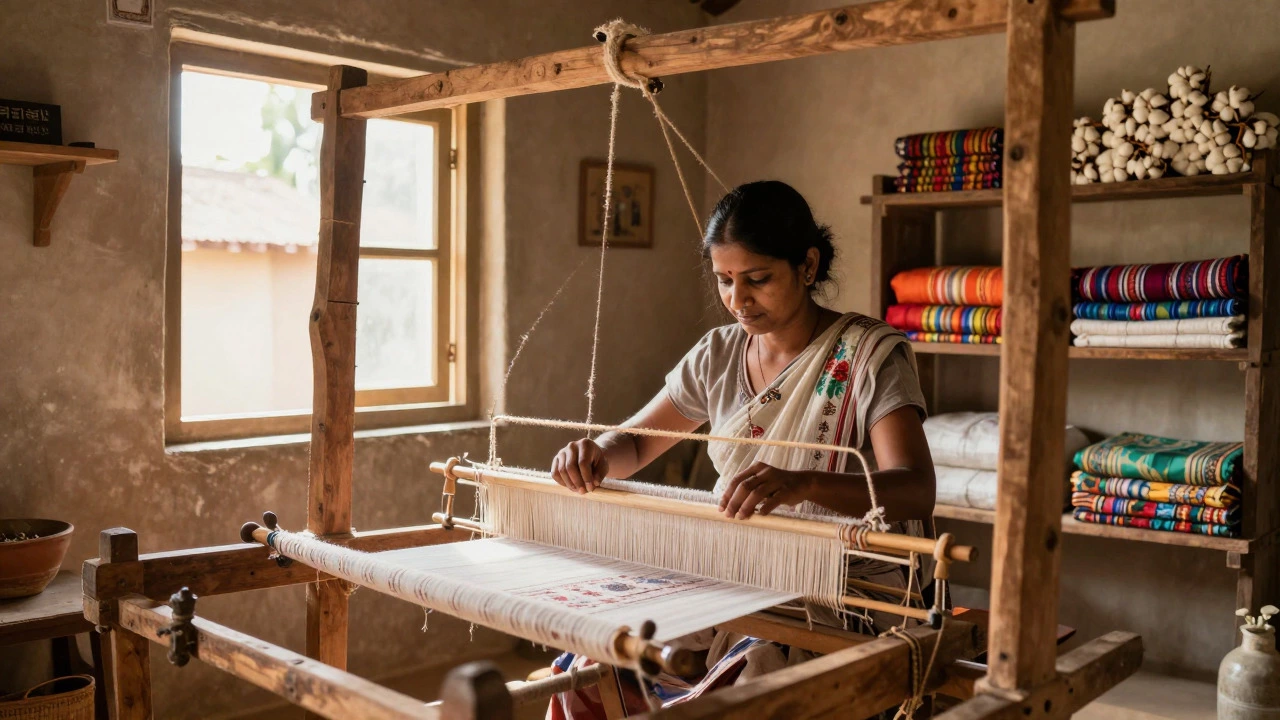
If you hear someone use the phrase "cottage industry," they are likely referring to the oldest form of small scale manufacturing. This term originates from the pre-industrial era when goods were produced in people's homes rather than in factories. Think of hand-woven textiles, pottery, or handmade jewelry crafted by individuals or families using simple tools.
Cottage Industry is a business where goods are produced in homes rather than factories, often relying on traditional skills and manual labor. While the romantic image involves a grandmother knitting sweaters, modern cottage industries can be quite sophisticated. They might involve small-scale food processing, artisanal brewing, or custom woodworking.The key characteristic of a cottage industry is the low barrier to entry. You don’t need millions in capital. You need skill, raw materials, and a way to sell your product. However, the term sometimes carries a stigma of being "unorganized" or lacking formal business practices. Many entrepreneurs try to distance themselves from this label, preferring terms like "artisanal" or "boutique manufacturing" to signal higher quality and professionalism.
Job Work: The Support Role
Another common term, especially in South Asia and parts of Europe, is "job work." This refers to a specific type of small scale manufacturing arrangement. In this model, a larger company provides the raw materials and specifications, and the small manufacturer processes them for a fee.
For example, a large automobile manufacturer might outsource the production of specific bolts or wiring harnesses to smaller workshops. These workshops don’t own the brand or sell the final car; they perform a specific manufacturing task. This is often called "contract manufacturing" or "subcontracting" in Western contexts.
Job work is vital for the supply chain. It allows large corporations to remain agile without investing in heavy infrastructure for every component. For the small manufacturer, it offers steady income but less control over pricing and branding. If you are starting out, understanding whether you are a standalone manufacturer or a job worker changes your entire operational strategy.
Micro-Enterprise vs. Small Enterprise
In formal business language, you will frequently encounter the terms "micro-enterprise" and "small enterprise." These are not just synonyms; they represent distinct tiers within the small scale manufacturing spectrum.
A Micro-enterprise is the smallest category of business, typically involving self-employed individuals or very small teams with minimal capital investment. This might be a single person running a CNC machine shop from a garage. As the business grows, hiring more staff and buying more expensive equipment, it graduates to a "small enterprise."
This distinction matters for financing. Banks and investors view micro-enterprises as high-risk due to their fragility. They often rely on personal savings or informal lending. Small enterprises, however, have enough structure to qualify for formal bank loans, government subsidies, and venture capital. Knowing which bucket you fall into helps you access the right financial resources.
| Term | Typical Workforce | Capital Investment | Primary Focus |
|---|---|---|---|
| Cottage Industry | 1-10 | Very Low | Artisanal, Home-based |
| Micro-enterprise | 1-10 | Low | Niche products, Local market |
| Small Enterprise | 10-100 | Medium | Regional distribution, Standardized goods |
| Job Work Unit | Varies | Variable | Contract fulfillment for larger firms |
Light Engineering and Precision Manufacturing
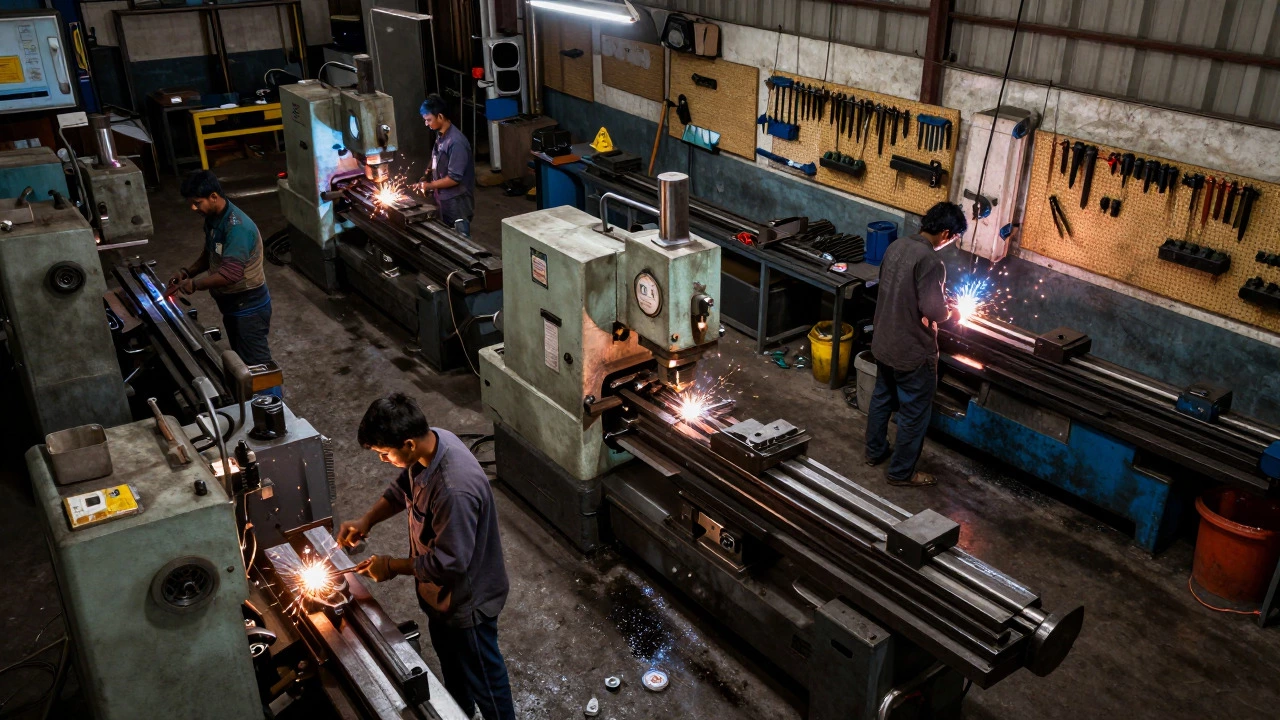
In industrial contexts, you might hear the term "light engineering." This doesn't refer to the weight of the products, but rather the nature of the manufacturing process. Light engineering involves the production of components, tools, and machinery that are not heavily reliant on massive steel mills or chemical plants.
Examples include making plastic molds, assembling electronic circuits, or producing precision metal parts. These operations require skilled technicians and specialized equipment like lathes, milling machines, and 3D printers, but they don't require the enormous footprint of heavy industry. This sector is often the backbone of small scale manufacturing in urban areas, supporting larger industries by providing essential spare parts and custom components.
Why the Name Matters for Your Business
So, why should you care about what your business is called? Because the name determines your regulatory environment. If you register as a "cottage industry," you might be exempt from certain environmental clearances or labor laws that apply to "factories." Conversely, if you want to bid for government contracts, you might need to be registered as an MSME (Micro, Small, and Medium Enterprise) to qualify for set-asides.
In Australia, for instance, the term "small business" has specific thresholds for tax purposes, such as the instant asset write-off scheme. If you misclassify your business, you could end up paying more taxes or missing out on critical deductions. Similarly, in the EU, the definition of a small enterprise affects compliance with GDPR and other consumer protection laws.
Choosing the right terminology also impacts your brand perception. Calling yourself a "manufacturer" suggests scale and reliability. Calling yourself an "artisan" suggests uniqueness and craftsmanship. Both are valid, but they attract different customers. A B2B client looking for consistent bulk orders might prefer a "small enterprise" over a "cottage industry" because they perceive lower risk.

The Rise of Distributed Manufacturing
A newer term entering the lexicon is "distributed manufacturing." This refers to small scale production units that are geographically dispersed but connected digitally. Thanks to technologies like cloud computing and IoT (Internet of Things), small workshops can now coordinate with each other to fulfill large orders. One shop might handle casting, another machining, and another assembly.
This model challenges the traditional notion of the centralized factory. It brings the benefits of small scale manufacturing-agility, customization, and lower overhead-to compete with mass production. If you are entering this space, you aren't just a "small manufacturer"; you are part of a networked ecosystem. This perspective opens up new opportunities for collaboration and scaling without the need for massive capital expenditure.
Common Pitfalls in Classification
One mistake many entrepreneurs make is staying in the "micro" category too long. While it offers simplicity, it can limit growth. Without formalizing your business as a small enterprise, you may struggle to hire professional management, secure larger loans, or enter international markets. Another pitfall is underestimating the compliance burden. Even small manufacturers must adhere to safety standards, quality controls, and environmental regulations. Ignoring these because "you're just a small shop" can lead to costly fines or shutdowns.
Additionally, confusing "job work" with independent manufacturing can trap you in a low-margin cycle. If you only do job work, you are at the mercy of your clients' pricing power. To break free, you need to develop your own brand, design capabilities, and direct sales channels. This transition requires shifting your mindset from a service provider to a product creator.
Final Thoughts on Terminology
There is no single correct answer to "what is small scale manufacturing called." It depends on your location, your size, and your business model. Whether you call it cottage industry, micro-enterprise, job work, or light engineering, the core principles remain the same: efficiency, quality, and adaptability. By understanding these terms, you can navigate the regulatory landscape, access better financing, and position your brand effectively in the market. Choose the label that best reflects your current stage and future ambitions, and ensure your legal registration matches your operational reality.
Is small scale manufacturing profitable?
Yes, small scale manufacturing can be highly profitable, especially in niche markets. Lower overhead costs and the ability to customize products allow for higher margins compared to mass production. Success depends on efficient operations and strong customer relationships.
What is the difference between a factory and a workshop?
A factory typically implies large-scale, automated production with hundreds of employees. A workshop is smaller, often relying on skilled manual labor and flexible machinery to produce smaller batches or custom items.
Do I need a license to start a cottage industry?
Requirements vary by location. In many places, cottage industries have simplified licensing processes. However, you still need basic business registrations, health and safety permits, and possibly environmental clearances depending on the materials used.
Can a small manufacturer export goods?
Absolutely. Many small manufacturers successfully export by focusing on unique, high-quality products. You will need to comply with international trade regulations, obtain an exporter code, and manage logistics, but digital platforms have made this more accessible than ever.
How does technology impact small scale manufacturing?
Technology levels the playing field. Tools like CAD software, 3D printing, and ERP systems allow small manufacturers to achieve precision and efficiency previously reserved for large factories. Digital marketing also enables them to reach global customers directly.