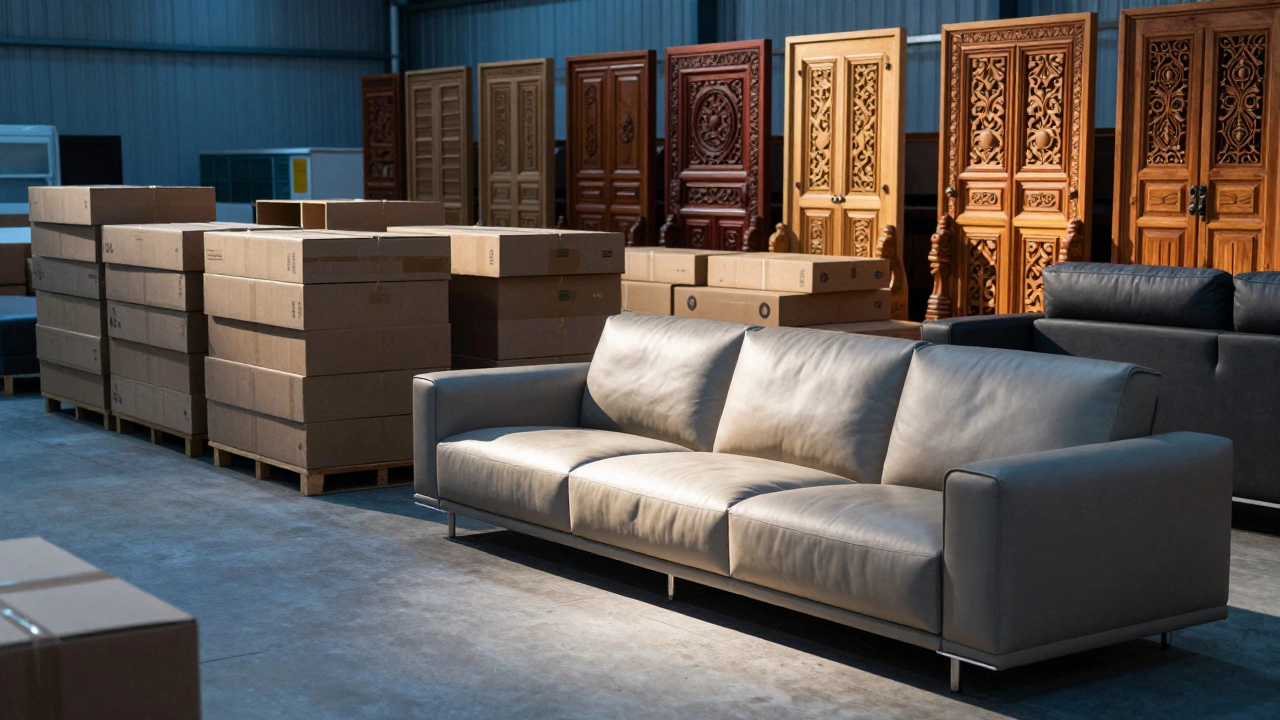
Global Furniture Sourcing Decision Tool
Select the options that best describe your furniture project requirements to find the ideal manufacturing hub.
Recommended Manufacturing Hubs
Walk into any high-end design store, and you’ll likely see a tag from Italy. Browse an online marketplace for budget-friendly home decor, and you might find shipments coming from China or Vietnam. But if you look closer at the global supply chain, especially in recent years, another name has been rising fast: India. The question "which country is good in furniture" doesn’t have a single answer because "good" depends on what you value-craftsmanship, cost, speed, or sustainability.
The global furniture market is massive, valued at over $500 billion as of 2024. It is not a monolith. Different countries dominate different segments. Italy rules luxury. China dominates mass production. Germany leads in engineering and office ergonomics. And India is becoming the go-to destination for solid wood craftsmanship and customized export orders. Understanding these distinctions helps buyers, investors, and manufacturers make smarter decisions.
The Global Landscape: Who Does What?
To understand which country is "best," we first need to map the current hierarchy of furniture manufacturing. This isn't just about who makes the most chairs; it's about specialization. The industry is split between high-volume low-margin producers and low-volume high-margin artisans.
Italy remains the gold standard for design-led luxury. Cities like Brianza are clusters of small workshops that produce limited-run, high-design pieces. Italian furniture commands premium prices globally because of its brand equity and aesthetic innovation. However, production costs are high, and lead times can be long due to the artisanal nature of the work.
In contrast, China is the factory of the world for furniture. With complete supply chains ranging from raw timber processing to upholstery fabrics and hardware, Chinese manufacturers can scale rapidly. If you need 10,000 identical plastic chairs or flat-pack wooden beds, China offers unmatched efficiency and competitive pricing. The downside? Quality control can vary wildly, and environmental standards have historically lagged behind Western markets, though this is improving with stricter regulations.
Then there is Germany, particularly strong in office furniture and ergonomic seating. Brands like Herman Miller (though American, heavily manufactured in Europe) and local German firms prioritize function, durability, and human-centric design. German manufacturing relies on precision engineering, making it ideal for B2B contracts and institutional purchases where longevity matters more than initial cost.
Why India Is Emerging as a Top Contender
While the big three get most of the headlines, India is quietly reshaping the mid-to-high end segment. Why? Because India combines skilled labor with abundant natural resources. The country is one of the largest producers of teak, rosewood, and other hardwoods. This gives Indian manufacturers a distinct advantage in solid wood furniture, a category that is seeing a resurgence as consumers move away from particle board and MDF (Medium Density Fiberboard).
The Indian furniture sector is fragmented but dynamic. It consists of large organized players like Godrej Interio and Duroflex, alongside thousands of small and medium enterprises (SMEs) clustered in hubs like Moradabad (brass and metal), Jodhpur (rosewood), and Kerala (teak). These clusters allow for specialized skills to be passed down through generations, creating a depth of craftsmanship that is hard to replicate in automated factories.
Furthermore, India’s labor cost structure allows for customization at a price point that Italian manufacturers cannot match. An exporter in the US or UK can order custom-sized teak dining tables from India at a fraction of the cost of sourcing from Europe, while still getting higher quality than typical mass-produced Asian goods. This "sweet spot" of affordability and quality is driving a surge in Indian furniture exports.
| Country | Primary Strength | Key Materials | Target Market | Avg. Lead Time |
|---|---|---|---|---|
| Italy | Design & Luxury | High-grade Wood, Leather | Premium Retail | 8-12 Weeks |
| China | Scale & Cost Efficiency | MDF, Particle Board, Metal | Mass Market / Flat-pack | 3-6 Weeks |
| India | Craftsmanship & Customization | Teak, Rosewood, Solid Hardwood | Mid-to-High End Export | 4-8 Weeks |
| Germany | Ergonomics & Engineering | Steel, Composite, Foam | Office / Institutional | 6-10 Weeks |
The Role of Raw Materials and Sustainability
You cannot talk about furniture without talking about wood. The type of wood available in a country dictates its output. India’s tropical climate supports fast-growing plantations of teak and eucalyptus, as well as natural forests of sal and bamboo. This abundance means Indian manufacturers are less dependent on imported raw materials compared to European nations, which face strict logging restrictions and rely heavily on imports from Russia or Africa.
Sustainability is no longer a buzzword; it is a regulatory requirement in many import markets. The EU’s Deforestation Regulation (EUDR), fully enforced by late 2025, requires proof that wood products did not contribute to deforestation. Indian exporters have had to adapt quickly, implementing traceability systems and partnering with certified forestry bodies. Countries that fail to meet these transparency standards risk losing access to lucrative Western markets. India’s push towards FSC (Forest Stewardship Council) certification is a critical step in maintaining its competitive edge.
Bamboo is another area where India excels. As a grass rather than a tree, bamboo regenerates much faster than hardwoods. Indian manufacturers are increasingly using engineered bamboo for flooring and modular furniture, appealing to eco-conscious consumers in North America and Europe. This shift demonstrates how resource availability drives innovation in product lines.
Manufacturing Hubs Within India
If you are looking to source from India, knowing where to look is half the battle. The industry is geographically clustered based on material expertise:
- Kerala and Karnataka: Known for teak furniture. These southern states have a long history of woodworking, producing heavy, durable pieces often finished with traditional oils rather than synthetic varnishes.
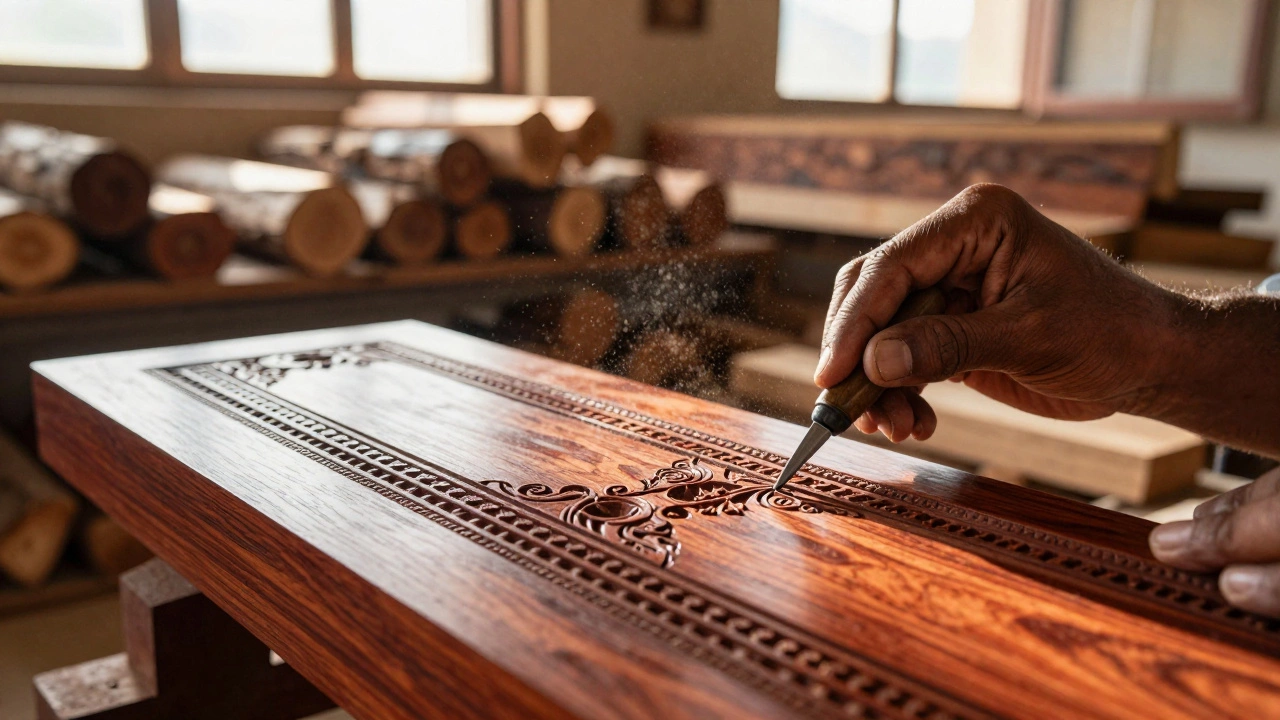
- Rajasthan (Jodhpur & Udaipur): The heartland of rosewood and sheesham (Indian walnut) furniture. Artisans here specialize in intricate carvings and joinery techniques that require minimal glue or nails, relying instead on precise mortise-and-tenon joints.
- Uttar Pradesh (Moradabad): Famous for brass and metal furniture. If you need decorative lighting fixtures, wrought iron beds, or ornamental tables, this is the hub.
- Gujarat (Ahmedabad & Surat): Strong in engineered wood and plywood-based furniture, catering more to the domestic mass market and affordable export segments.
These clusters create economies of scale for specific types of furniture. A buyer seeking hand-carved rosewood cabinets will get better results visiting Rajasthan than trying to source from a general manufacturer in Delhi. This specialization reduces waste and improves quality control.
Challenges Facing the Industry
Despite its growth, the Indian furniture sector faces significant hurdles. The biggest issue is fragmentation. Over 90% of production comes from unorganized MSMEs (Micro, Small, and Medium Enterprises). While this allows for flexibility, it also leads to inconsistent quality standards, lack of branding, and difficulties in securing large international contracts that require uniform compliance.
Logistics is another pain point. India’s port infrastructure has improved, but inland transportation costs remain high due to reliance on road freight. Moving heavy furniture from a workshop in rural Rajasthan to a port in Mumbai can add 15-20% to the final cost. Competitors like Vietnam benefit from more streamlined coastal shipping routes.
Additionally, skill gaps exist. While traditional craftsmanship is strong, there is a shortage of workers trained in modern CNC (Computer Numerical Control) machining and digital design tools. Bridging this gap is essential for India to move up the value chain from being a supplier of raw components to a creator of finished, branded global products.
Future Trends: Where Is the Industry Heading?
By 2026, several trends are reshaping the furniture landscape. First, the rise of "flat-pack" culture initiated by IKEA is being adopted by Indian manufacturers. By designing furniture that disassembles for shipping, companies can reduce volume by up to 70%, drastically cutting logistics costs. Indian firms are investing in modular designs to compete directly with Scandinavian brands.
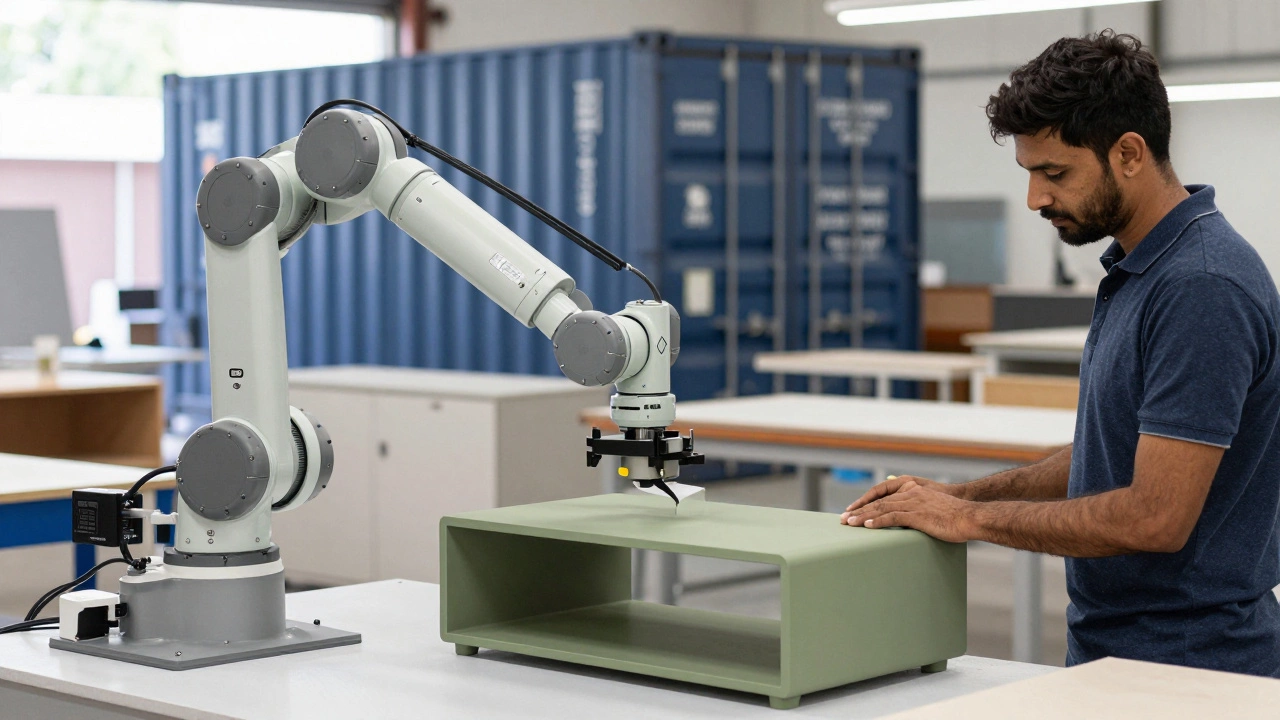
Second, automation is entering the workshop. Robots are now used for sanding and finishing, ensuring a consistent surface quality that human hands sometimes struggle to maintain uniformly. This hybrid approach-human carving combined with machine finishing-is becoming the new standard for high-quality exports.
Finally, direct-to-consumer (DTC) models are bypassing traditional distributors. Indian manufacturers are setting up warehouses in key markets like the US and UAE, allowing them to ship directly to end-users within days. This reduces dependency on middlemen and increases profit margins, making Indian furniture even more price-competitive.
How to Choose the Right Source
So, which country is actually good for your needs? Here is a quick decision guide:
- Choose Italy if: You are launching a luxury brand and design aesthetics are your primary selling point. Budget is secondary to prestige.
- Choose China if: You need massive volumes of standardized products at the lowest possible cost, and you have robust in-house quality inspection teams.
- Choose India if: You want solid wood craftsmanship, customization options, and a balance of quality and price. Ideal for boutique hotels, mid-range retail, and custom residential projects.
- Choose Germany if: You are furnishing corporate offices or healthcare facilities where ergonomics, safety certifications, and durability are non-negotiable.
For most businesses looking for a reliable partner in 2026, India offers the best combination of scalability and artisanal quality. The key is to vet suppliers carefully, visit their workshops if possible, and ensure they comply with international sustainability standards.
Is Indian furniture cheaper than Chinese furniture?
Not necessarily for mass-produced items. For basic MDF or plastic furniture, China is usually cheaper due to extreme scale. However, for solid wood furniture, India is often more cost-effective because it has lower labor costs and abundant local timber, reducing import duties on raw materials.
What is the best wood for furniture exported from India?
Teak and Sheesham (Indian Rosewood) are the most prized. Teak is highly resistant to moisture and insects, making it ideal for outdoor use. Sheesham is harder and denser, perfect for indoor dining sets and cabinets that require fine detailing.
How long does it take to ship furniture from India to the US?
Sea freight typically takes 4 to 6 weeks depending on the port of entry. Air freight is faster (3-7 days) but significantly more expensive and usually reserved for small, high-value samples or urgent orders.
Are Indian furniture manufacturers sustainable?
Many leading manufacturers are adopting sustainable practices, including FSC-certified wood sources and water-based finishes. However, the unorganized sector may not always adhere to these standards. Buyers should request certification documents before placing large orders.
Can I customize furniture designs when ordering from India?
Yes, customization is one of India’s strongest advantages. Most workshops are set up to handle bespoke orders, allowing changes in dimensions, wood type, finish, and upholstery. Clear technical drawings and sample approvals are recommended to avoid miscommunication.