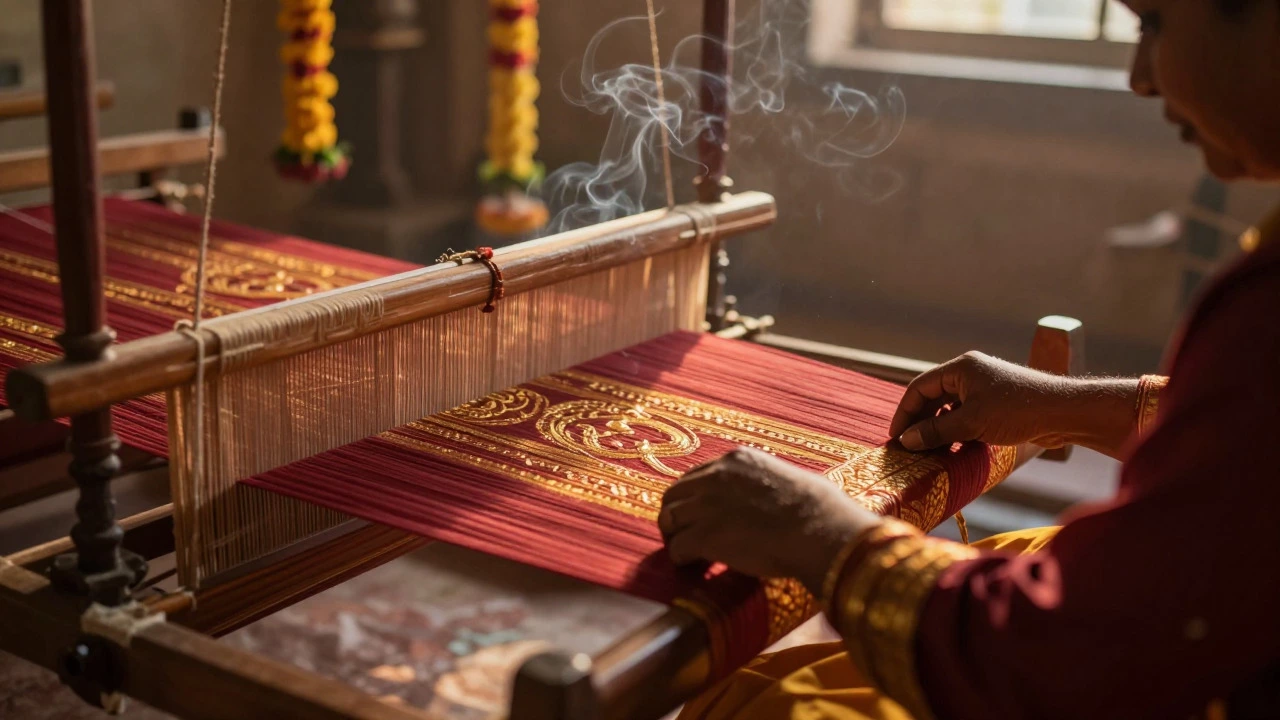
The Divine Textile Workflow
Explore how different deities are invoked at various stages of creating a textile in Indian tradition.
Click a stage on the left to see which deity is traditionally associated with it.
Walk into any traditional Indian household or temple during a festival, and you will likely see vibrant fabrics draped over idols or worn by devotees. But have you ever wondered who actually presides over the world of cloth in Hindu mythology? While many people assume there is a single, well-known deity dedicated to weaving, the answer is more nuanced than a simple name.
The short answer is that there is no single, universally recognized "God of Textiles" in the same way there is a specific god for rain (Indra) or wealth (Lakshmi). Instead, the domain of textiles is shared among several deities, primarily Ganesha, the remover of obstacles and patron of new beginnings, often associated with the arts and crafts and Saraswati, the goddess of knowledge, music, art, and wisdom, who oversees all creative endeavors including weaving. However, regional traditions and specific artisan communities often venerate other figures or local spirits connected to the loom.
Why There Is No Single Deity for Weaving
To understand why the title "God of Textiles" doesn't fit neatly onto one figure, we need to look at how ancient Indian society viewed craft. In Vedic times, weaving was considered a sacred act, but it wasn't isolated from other aspects of life. It was tied to creation, knowledge, and protection. Therefore, the divine patronage is distributed rather than centralized.
Saraswati is the most prominent figure here. As the goddess of learning and the arts, she holds a veena (a stringed instrument) and a book, symbolizing the intellectual aspect of pattern design and the rhythmic nature of weaving. For many artisans, especially those involved in intricate designs like Ikat or Kanjeevaram silks, Saraswati represents the mind behind the material. If the pattern is wrong, it's a failure of knowledge; if the thread breaks, it might be an obstacle. This duality brings us to Ganesha.
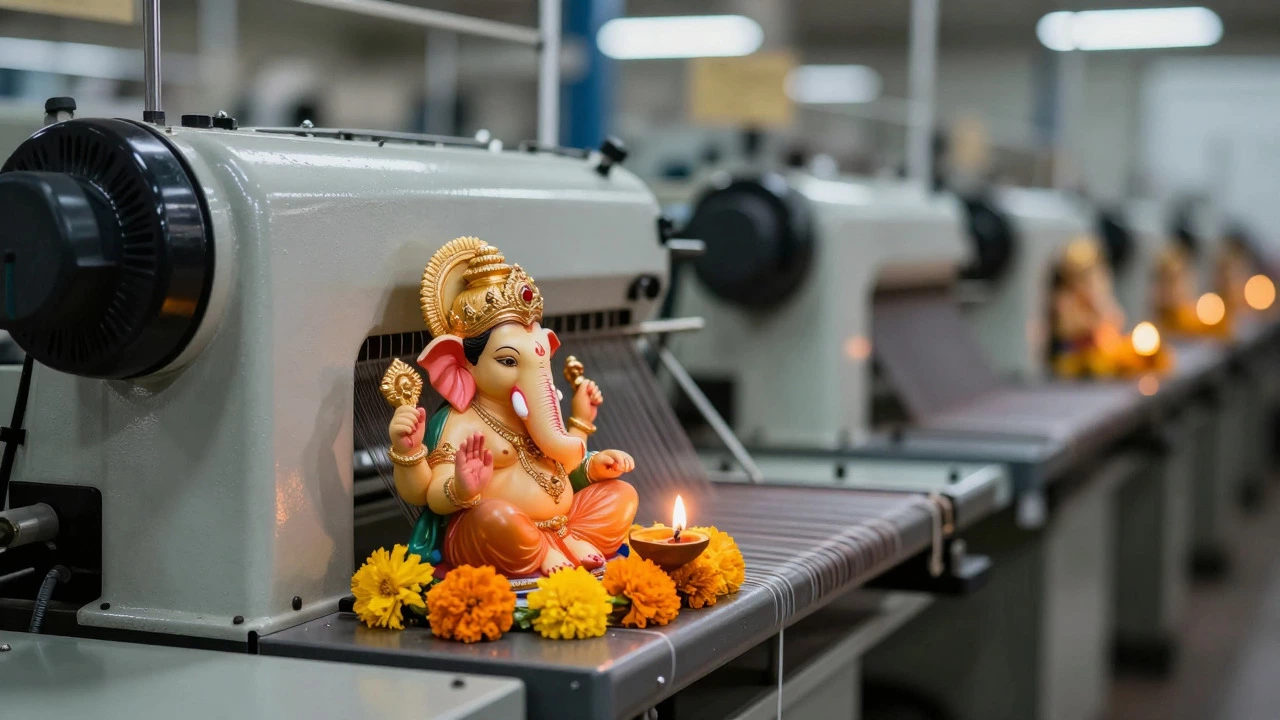
Ganesha is invoked before starting any new venture, including setting up a loom. His role is practical: he removes the snags, both literal and metaphorical. In many weaving villages, a small idol of Ganesha sits near the machinery or the workspace. This isn't just superstition; it reflects the belief that success requires both skill (Saraswati) and smooth execution (Ganesha).
Regional Variations and Local Beliefs
India is vast, and so are its textile traditions. What applies in Bengal may not apply in Gujarat or Karnataka. In some regions, the concept of a "loom spirit" exists. These aren't major pan-Indian gods but local deities or ancestors revered by specific guilds of weavers.
In parts of South India, particularly among silk weavers, Vishnu is sometimes associated with the preservation of the fabric's integrity. The idea is that the cloth, once woven, must last and protect the wearer. Vishnu, as the preserver, fits this narrative. Additionally, in some tribal communities, the act of spinning is linked to Lakshmi, not just for wealth, but because the thread is seen as a continuous line of prosperity. A broken thread could mean a break in fortune.
It’s also worth noting the role of Shiva. While not directly a god of textiles, Shiva is the dancer (Nataraja) and the ascetic. The rhythmic movement of the shuttle in a loom mirrors the rhythm of dance. Some scholars draw parallels between the meditative state required for complex weaving and Shiva’s yogic practices. This connection is subtle but present in artistic interpretations where weavers are depicted in poses reminiscent of divine forms.
The Connection Between Mythology and Modern Manufacturing
You might be thinking: "This is interesting folklore, but what does it have to do with today's textile manufacturers?" More than you'd expect. Understanding these cultural roots helps explain the resilience and pride found in the Indian textile sector.
The Indian textile industry is one of the oldest in the world, contributing significantly to the country's GDP. When we talk about textile manufacturing India, we aren't just talking about factories; we're talking about a heritage that spans thousands of years. The respect given to the craft in mythology translates into a deep-seated professional pride among artisans. Even in modern industrial settings, many factory owners maintain traditional rituals. They don't do it for tourists; they do it because they believe in the continuity of their work.
This cultural backdrop influences business practices too. Decisions are often made with a sense of long-term stewardship rather than just quarterly profits. The idea that the fabric carries a blessing or a curse adds a layer of quality control that goes beyond technical specifications. If a batch of fabric feels "off," it might be attributed to spiritual imbalance, prompting a pause in production to perform a ritual before resuming. To an outsider, this looks like inefficiency. To the manufacturer, it’s risk management.
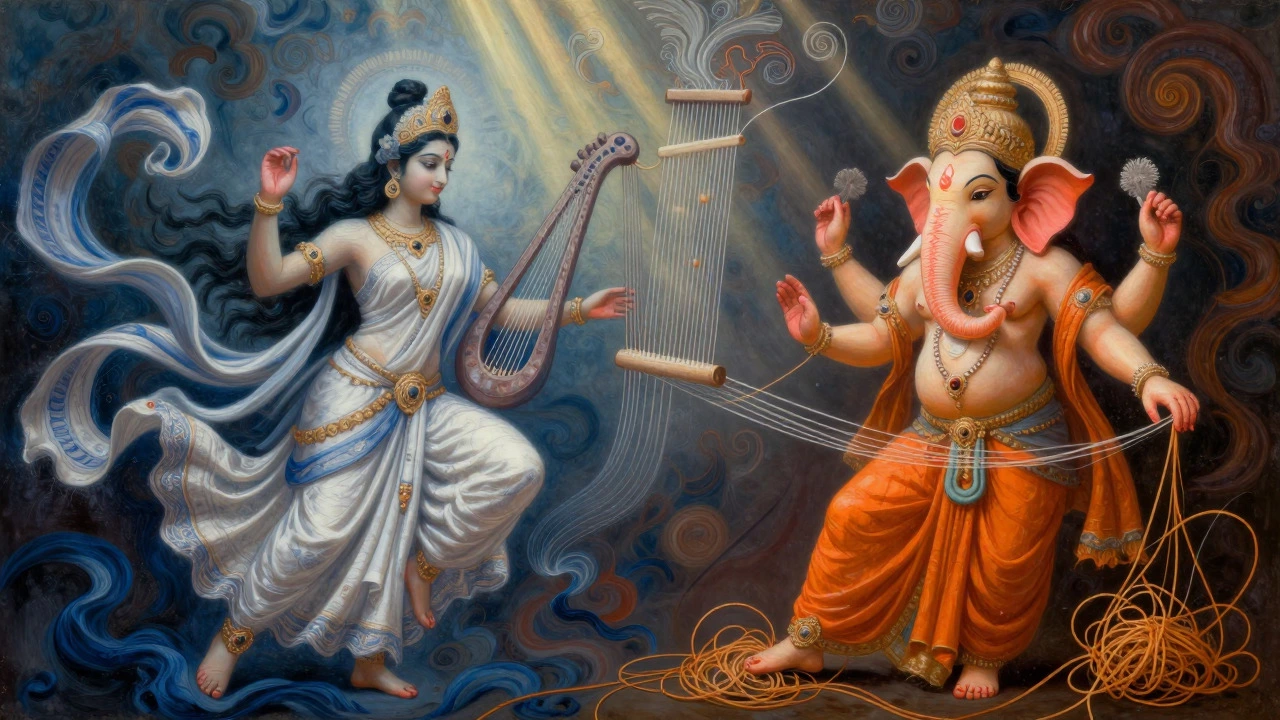
Key Deities and Their Roles in Textile Arts
To make this clearer, let's break down the specific roles different deities play in the context of textiles. This table summarizes the primary associations:
| Deity | Primary Domain | Textile Association | Typical Ritual Context |
|---|---|---|---|
| Saraswati | Knowledge, Arts, Wisdom | Pattern design, creativity, skill | Before starting a new design or collection |
| Ganesha | Remover of Obstacles | Smooth operation, avoiding errors | At the start of a new project or shift |
| Lakshmi | Wealth, Prosperity | Commercial success, abundance | During Diwali or financial milestones |
| Vishnu | Preservation | Durability, longevity of fabric | In contexts emphasizing quality and legacy |
Notice how no single deity covers the entire spectrum. You need Saraswati for the idea, Ganesha for the execution, Lakshmi for the sale, and Vishnu for the lasting value. This holistic view is characteristic of Indian philosophical approaches to work.
How Artisans View Their Craft Today
If you visit a weaving cluster in Varanasi or Kanchipuram, you’ll notice that the spiritual and the commercial are deeply intertwined. Master weavers often speak about their hands as being guided by something greater. This isn't just poetic license; it's a framework for accountability.
When a mistake happens, it’s rarely blamed solely on human error. It’s seen as a moment where the alignment between the worker and the divine was off. This perspective encourages mindfulness. Weavers are trained to stay focused, not just on the threads, but on their mental state. In a high-pressure manufacturing environment, this can be a powerful tool for reducing stress and improving precision.
For modern entrepreneurs entering the Indian textile market, understanding this dynamic is crucial. It means that building relationships with suppliers involves more than just negotiating prices. It involves respecting their traditions. Ignoring these cultural nuances can lead to friction, while acknowledging them can build loyalty and trust.
Common Misconceptions About the God of Textiles
A frequent question arises: "Isn't there a specific minor god of weavers?" In some folk traditions, yes. For example, in certain parts of West Bengal, local deities like Mari Amman or similar village goddesses might be worshipped for the safety of workers and the productivity of looms. However, these are hyper-local beliefs. They don't have the universal recognition of the major Vedic deities.
Another misconception is that the god of textiles is related to clothing itself. The deity cares about the *process* and the *material*, not the final garment. Once the cloth is sold and worn, the divine association shifts slightly towards the wearer's well-being, often invoking general blessings for health and happiness.
So, when someone asks, "Who is the Indian god of textiles?", the most accurate answer is: "It depends on which part of the process you're looking at." It’s a collaborative divine effort, mirroring the collaborative nature of the textile industry itself.
Frequently Asked Questions
Is there a specific Hindu god dedicated only to weaving?
No, there is no single major deity dedicated exclusively to weaving. The responsibilities are shared among Saraswati (for skill/design), Ganesha (for removing obstacles), and Lakshmi (for prosperity). Local deities may also play a role in specific regions.
Which goddess is most associated with the art of textile design?
Saraswati is the primary goddess associated with the art of textile design. As the deity of knowledge and the arts, she oversees the creative and intellectual aspects of weaving, including pattern creation and aesthetic beauty.
Do modern textile factories in India still follow these traditions?
Many do, especially smaller units and family-run businesses. Larger corporate factories may have fewer visible rituals, but the cultural undercurrent remains strong. Respect for tradition is still valued in supplier relationships and workforce management.
What is the significance of Ganesha in the textile industry?
Ganesha is invoked to remove obstacles. In weaving, this translates to preventing machine breakdowns, thread breakages, and design errors. He ensures the smooth flow of production processes.
How does mythology influence the quality of Indian textiles?
Mythology instills a sense of duty and mindfulness in artisans. The belief that their work has spiritual significance encourages higher standards of care and precision, contributing to the renowned quality of Indian handlooms and traditional fabrics.