India Tunneling Project Matcher
Find out which major players are likely involved in your hypothetical or real-world tunneling scenario based on the current Indian infrastructure landscape.
Ever wonder who actually digs the massive tunnels you see on highways or under cities like Mumbai and Delhi? It’s not just a bunch of guys with shovels. In India, tunneling is a high-stakes game played by a few heavyweights who control both the tunnel boring machines (TBMs) and the civil engineering expertise required to operate them. If you’re looking for the answer to "which company makes tunnels in India," you need to look at two distinct groups: the global giants supplying the iron beasts, and the Indian contractors doing the actual digging.
The Big Players in Tunnel Construction
When we talk about "making" tunnels, we usually mean constructing them. The landscape here is dominated by a mix of state-owned enterprises and private conglomerates. These aren't small local firms; we are talking about organizations that handle multi-billion dollar infrastructure projects. You might have heard of Larsen & Toubro (L&T). They are arguably the most visible name in this space. L&T has executed some of India's most complex tunneling projects, including sections of the Mumbai Metro and various highway tunnels in the Himalayas. Their capability isn't just about having cranes; they have specialized divisions dedicated solely to underground works.
Then there is Afcons Infrastructure, another major player often seen alongside L&T in joint ventures. Afcons has been pivotal in projects like the Atal Tunnel in Himachal Pradesh. Why do these names keep popping up? Because tunneling requires massive capital expenditure and risk management skills that only large entities possess. Smaller firms simply can't afford the insurance or the machinery downtime costs if something goes wrong 50 meters underground.
You also cannot ignore the role of public sector undertakings (PSUs). Rail Vikas Nigam Limited (RVNL) and National Highways Authority of India (NHAI) often act as the project owners, but they frequently contract out the physical work. However, entities like Bharat Heavy Electricals Limited (BHEL) have historically been involved in providing components, though their direct role in tunneling contracts has evolved. For metro rail projects specifically, Mumbai Metro Rail Corporation (MMRDA) oversees the process, but the digging is done by contractors like L&T or international partners.
| Company Name | Type | Notable Projects | Specialization |
|---|---|---|---|
| Larsen & Toubro (L&T) | Private Conglomerate | Mumbai Metro, Zojila Tunnel | Full EPC (Engineering, Procurement, Construction) |
| Afcons Infrastructure | Private Contractor | Atal Tunnel, Coastal Road Project | Large-scale infrastructure and tunnels |
| NCC Limited | Private Contractor | Various metro and road tunnels | Civil engineering and earthworks |
| Shapoorji Pallonji | Private Group | Delhi-Meerut Expressway tunnels | Infrastructure development |
Who Actually Builds the Machines?
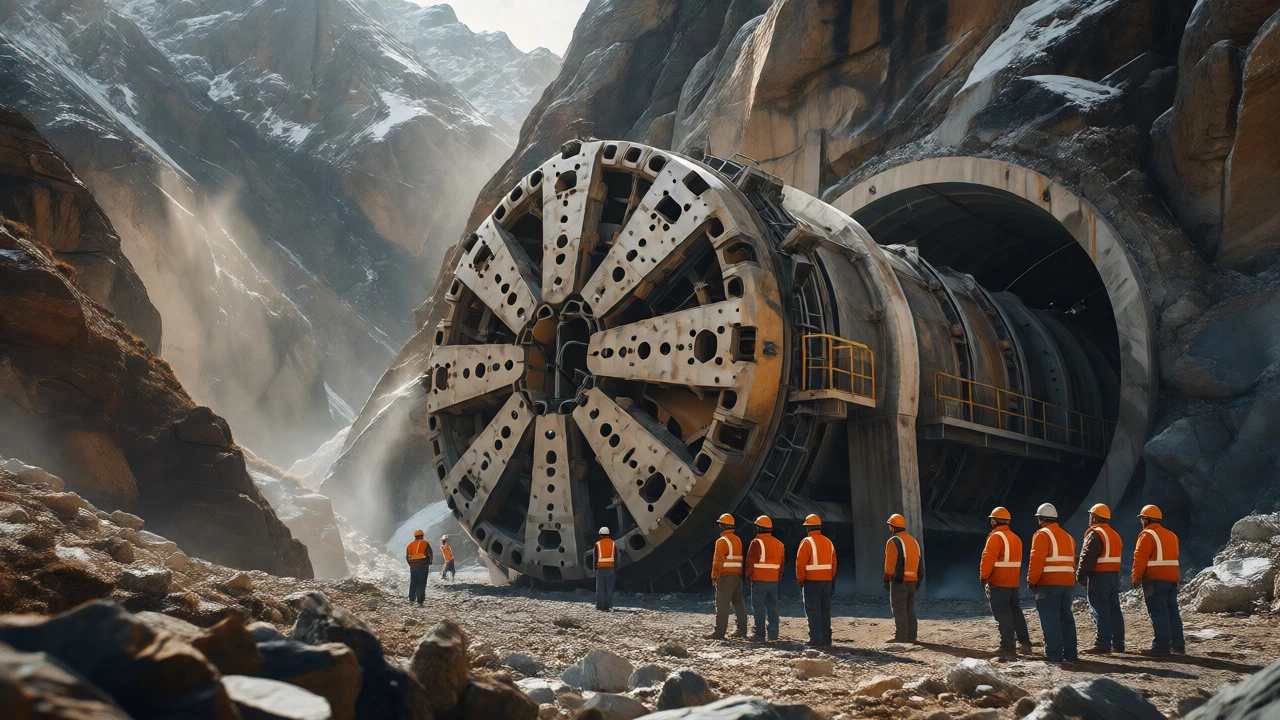
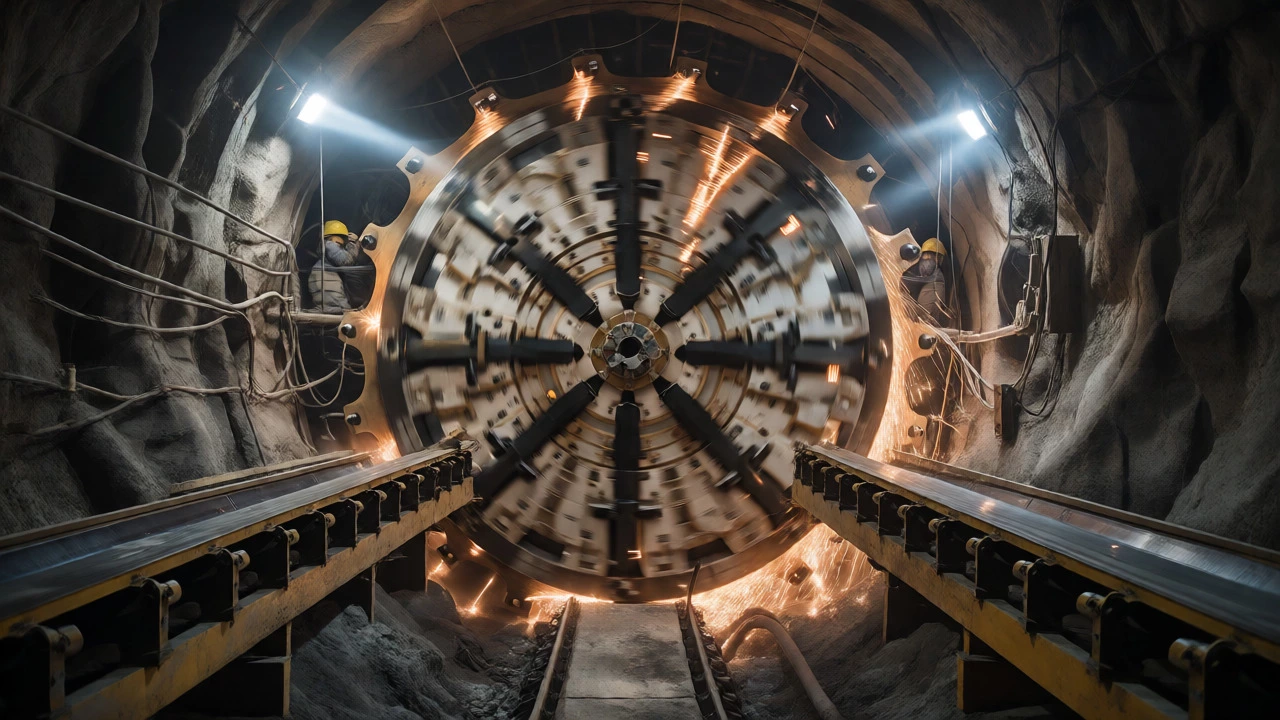
This is where things get interesting. Does an Indian company manufacture the Tunnel Boring Machine (TBM) itself? For the longest time, the answer was mostly no. The technology for TBMs-those massive rotating cylinders that chew through rock-is highly specialized. Historically, India imported almost all its TBMs from Europe and China. The primary suppliers include Herrenknecht AG from Germany, which is considered the gold standard in TBM technology globally. If you see a high-tech TBM in a sensitive urban area in Bangalore or Hyderabad, there is a good chance it came from Herrenknecht.
However, the landscape is shifting. China Railway Engineering Equipment Group (CREG) has become a massive supplier to India due to competitive pricing and aggressive delivery schedules. Many Indian contractors now lease or buy Chinese TBMs for large highway projects in the mountains. But what about domestic manufacturing? This is the critical gap. While we have the engineers to run them, we lack the industrial base to build a full-scale hard-rock TBM domestically at scale.
There are attempts to localize production. Companies like Kolkata-based engineering firms and subsidiaries of larger groups are trying to assemble parts locally. For instance, some components like cutter heads and hydraulic systems are increasingly sourced from Indian vendors to reduce dependency. Yet, calling any single Indian company the "maker" of TBMs is still a stretch. We are currently in a phase of assembly and component manufacturing rather than full indigenous design and fabrication of the core boring units.
The Role of Specialized Contractors vs. Generalists
You might ask, why doesn't every construction company do tunneling? It comes down to risk and technology. Standard builders focus on vertical structures-buildings, bridges. Tunneling is horizontal and subterranean. The geology changes every few meters. One day you hit soft clay, the next you hit hard granite. Handling this variability requires specific expertise. Firms like Gammon India (historically) and current players like Kalpataru Power Transmission have had to develop niche teams for this.
Consider the Zojila Tunnel project in Kashmir. It is one of the longest bi-directional tunnels in Asia. The contractor here wasn't just a random builder; it was a consortium led by AFCONS and Hyundai Engineering & Construction. This partnership highlights a common trend: Indian firms often partner with international experts for technology transfer and risk sharing. The Indian firm handles local logistics, labor, and regulatory compliance, while the foreign partner brings the deep-tech know-how for the boring process.
Another example is the Chenab Bridge approach tunnels. Here, the complexity wasn't just length but altitude and temperature extremes. Only firms with experience in high-altitude tunneling could bid effectively. This specialization means the list of "companies that make tunnels" is actually quite short compared to the number of companies building houses.
State-Owned Enterprises and Public Sector Roles
We must give credit where it is due. The Indian Railways has its own construction wings, such as Rail Konkan Corporation or specific zonal railway construction units, which sometimes execute smaller tunnel projects internally. They don't always outsource everything. For routine maintenance and smaller bypasses, internal teams use conventional methods like drill-and-blast, which require less sophisticated machinery than TBMs.
Similarly, Power Grid Corporation of India occasionally deals with underground cable tunnels for substations in dense urban areas. These are smaller in diameter but technically demanding due to space constraints. So, when you search for tunnel makers, remember that "tunnel" covers everything from a massive 14-meter diameter metro bore to a 3-meter utility duct. Different companies dominate different segments.
Future Outlook: Will India Build Its Own TBMs?
The government's push for "Make in India" is hitting the infrastructure sector hard. There are active discussions about setting up a dedicated TBM manufacturing facility in India. Currently, the lead times for importing a TBM can be 18-24 months. If a machine breaks down, waiting for spare parts from Germany can halt a project for weeks. Local manufacturing would cut this down significantly.
Companies like Mahindra Agri Solutions or heavy engineering arms of Tata Group are being watched closely for potential entry into this niche. While Tata hasn't announced a full TBM line yet, their capability in heavy hydraulics and steel fabrication puts them in a strong position. If the demand continues to rise with projects like the Char Dham Highway and new metro lines in Tier-2 cities, we will likely see the first fully indigenous TBM within the next decade.
For now, if you need a tunnel dug in India, you hire L&T or Afcons. If you need the machine to dig it, you likely buy or lease from Herrenknecht or CREG. The ecosystem is collaborative, global, and heavily reliant on precise engineering. Understanding who does what helps you appreciate the sheer scale of India's underground transformation.
Which company is the largest tunnel contractor in India?
Larsen & Toubro (L&T) is widely considered the largest and most prominent tunnel contractor in India. They have handled numerous high-profile projects including the Mumbai Metro, Chennai Metro, and various highway tunnels in difficult terrains like the Himalayas. Afcons Infrastructure is another top-tier competitor often working on similar scales.
Does India manufacture Tunnel Boring Machines (TBMs)?
Currently, India does not manufacture full-scale Tunnel Boring Machines (TBMs) indigenously. Most TBMs are imported from global leaders like Herrenknecht (Germany) and China Railway Engineering Equipment Group (CREG). However, efforts are underway to localize component manufacturing and assembly to reduce dependency on imports.
What is the difference between a TBM and traditional tunneling?
A Tunnel Boring Machine (TBM) is a massive, automated machine that cuts through soil or rock while simultaneously installing support lining. Traditional tunneling, often called 'drill and blast,' involves drilling holes, placing explosives, blasting the rock, and then manually removing debris. TBMs are faster, safer, and cause less surface vibration, making them ideal for urban areas.
Are there any government agencies that build tunnels directly?
Yes, agencies like Indian Railways and state public works departments sometimes execute smaller tunnel projects using their own resources and equipment. However, for large-scale, complex infrastructure projects, they typically award contracts to private engineering firms like L&T, Afcons, or NCC Ltd.
Why do Indian companies partner with foreign firms for tunneling?
Partnerships allow Indian firms to access advanced technology, specialized machinery, and global best practices without bearing the entire R&D cost. Foreign partners bring expertise in handling complex geological conditions, while Indian firms manage local labor, regulations, and logistics, creating a balanced risk-sharing model.