
Manufacturing Cash Flow Calculator
Cash Flow Calculator
Determine your cash buffer needs and identify potential gaps before they become critical.
Why This Matters
Manufacturing startups fail because of cash flow gaps, not product quality or machinery. Most need 3 months of operating expenses as a cash buffer.
Key Results
Enter your information to see your cash buffer needs and potential gaps.
Most people think starting a manufacturing business is about having a great product, good machinery, or cheap labor. But if you talk to anyone who’s actually run one - especially in the first three years - they’ll tell you something different. The product doesn’t matter as much as you think. The machine doesn’t save you. The location? Often irrelevant. What kills most manufacturing startups isn’t lack of capital or bad luck. It’s a pattern. A quiet, predictable pattern that repeats across factories in Brisbane, Bangalore, and Detroit. And it’s why 90% of them vanish before they hit year five.
You’re Not Selling What You Think You Are
Let’s say you build custom metal brackets for solar panel installers. You spent six months designing them, found a local supplier for aluminum, and bought a CNC machine. You’re proud. You even named your company BracketCraft a small manufacturing startup producing custom metal components for renewable energy systems. You think you’re selling brackets. But customers aren’t buying brackets. They’re buying reliability. They’re buying on-time delivery. They’re buying someone who doesn’t vanish when a shipment is late.Most manufacturing startups fail because they confuse product with service. They focus on making the best part, not on making the process smooth. One factory owner in Queensland told me his biggest mistake was assuming customers would forgive a two-week delay if the part was flawless. He was wrong. His client switched to a competitor who shipped in five days - even though their brackets were 12% less precise. Precision doesn’t win. Consistency does.
The Cash Flow Trap
Manufacturing eats cash. Not just upfront. Every single week. You pay for raw materials before you get paid. You pay for labor before the order ships. You pay for electricity before the client approves the invoice. And if your client is a big distributor? They take 60 to 90 days to pay. Meanwhile, your supplier wants payment in 15.That gap kills more startups than bad design. I’ve seen three businesses in Brisbane shut down because they didn’t forecast this. One made custom plastic housings for medical devices. They had $180,000 in orders lined up. But they didn’t realize their raw material costs were $45,000 per month. They ran out of cash in week 11. They had the contracts. They had the machines. They just didn’t have the working capital buffer.
There’s no magic number. But if you’re not keeping at least three months of operating expenses in cash - not projected revenue, not bank loans - you’re already one missed order away from collapse. Most startups think they’ll get a big order and everything will fix itself. It doesn’t. Cash flow isn’t a metric. It’s your oxygen.
No One Knows You Exist
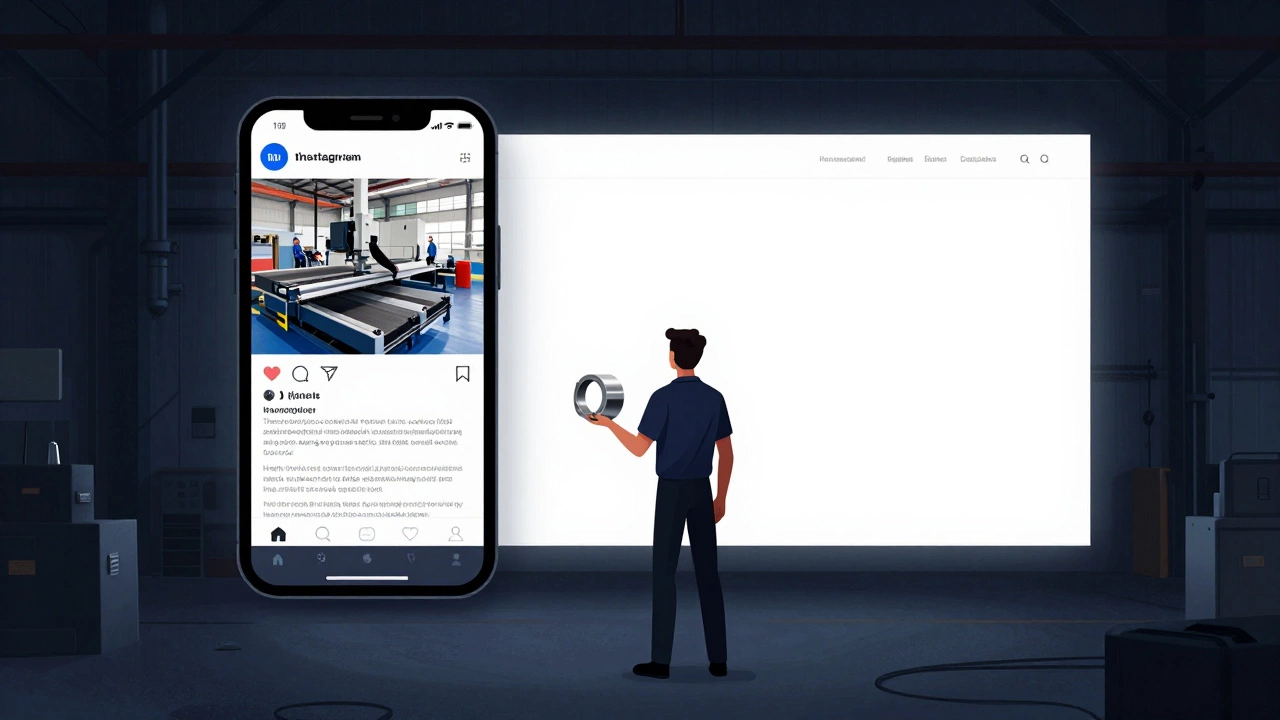
You think if you build it, they’ll come? That’s a movie line. In manufacturing, if no one knows you make it, you don’t make it. Period.One guy in Toowoomba spent $120,000 on a laser cutter and built high-precision stainless steel parts for the food industry. He didn’t have a website. Didn’t have LinkedIn. Didn’t attend any trade shows. He thought word-of-mouth would do it. After 14 months, he had one client: his cousin’s bakery. He closed shop. Meanwhile, a competitor 200 km away, who posted weekly videos of their CNC work on Instagram and showed up at every Australian Manufacturing Expo, got 17 new clients in six months.
Manufacturing isn’t invisible. But it’s quiet. You can’t rely on Google Ads or Facebook. You need to be in the rooms where buyers are. Trade shows. Industry forums. LinkedIn groups. Even cold emails to procurement managers who’ve posted about supply chain delays. If you’re not visible to the people who write purchase orders, you’re not in business.
Scaling Too Fast, Too Soon
This one hurts because it feels like success. You land your first big order. Maybe 500 units. Then 1,000. Then 2,000. You hire two more workers. Buy a second machine. Lease a bigger warehouse. You’re growing!Except you’re not. You’re stretching. And when the next order doesn’t come - because your client’s own customer canceled - you’re stuck with debt, unused equipment, and payroll you can’t cover. I talked to a factory in Ipswich that doubled its capacity after landing a contract with a major retailer. Two months later, the retailer changed suppliers. The factory had $90,000 in debt. They had to sell their CNC router for half its value.
Growth isn’t about volume. It’s about stability. Don’t scale until you have at least three clients who’ve paid you on time for three consecutive months. And even then, keep your fixed costs lean. A smaller, reliable operation beats a bloated, stressed one every time.
Ignoring Quality Control - Until It’s Too Late
You think quality is about getting certifications. ISO 9001. AS9100. That’s not quality. That’s paperwork. Real quality is consistency. Every single time. Not just the first 100 pieces. Not just the ones you inspect. All of them.A startup in Logan made custom gears for industrial mixers. They had a great prototype. Their first 50 orders shipped perfectly. Then they started cutting corners to meet demand. One batch had a 0.2mm tolerance error. It didn’t break. But it wore out 30% faster. The client didn’t sue. They just stopped ordering. And told five other companies they knew. That one mistake cost them 12 clients in six months.
Quality control isn’t a department. It’s a habit. You need to check at least one in every 20 pieces. Not just the first. Not just the last. One in the middle. One in the batch. You need to log it. Track it. Review it weekly. If you’re not doing this from day one, you’re not building a business. You’re building a time bomb.
Thinking You Can Do It All
You’re the founder. You’re the engineer. You’re the salesperson. You’re the bookkeeper. You’re the one who fixes the machine at 2 a.m. because no one else knows how.That’s not dedication. That’s a trap. You’re not scaling. You’re bottlenecking. I’ve seen 17 manufacturing startups in Queensland. Twelve of them collapsed because the owner refused to hire help. They said, “I can’t afford it.” But they didn’t realize they were costing themselves more. Every hour you spend on payroll or inventory tracking is an hour you’re not improving the product, finding new clients, or fixing a process.
Start small. Hire a part-time bookkeeper. Outsource your website. Bring on a junior technician. You don’t need a full team. But you need someone who can take one thing off your plate. Otherwise, you’re not running a business. You’re a high-skill laborer with debt.
What Actually Works
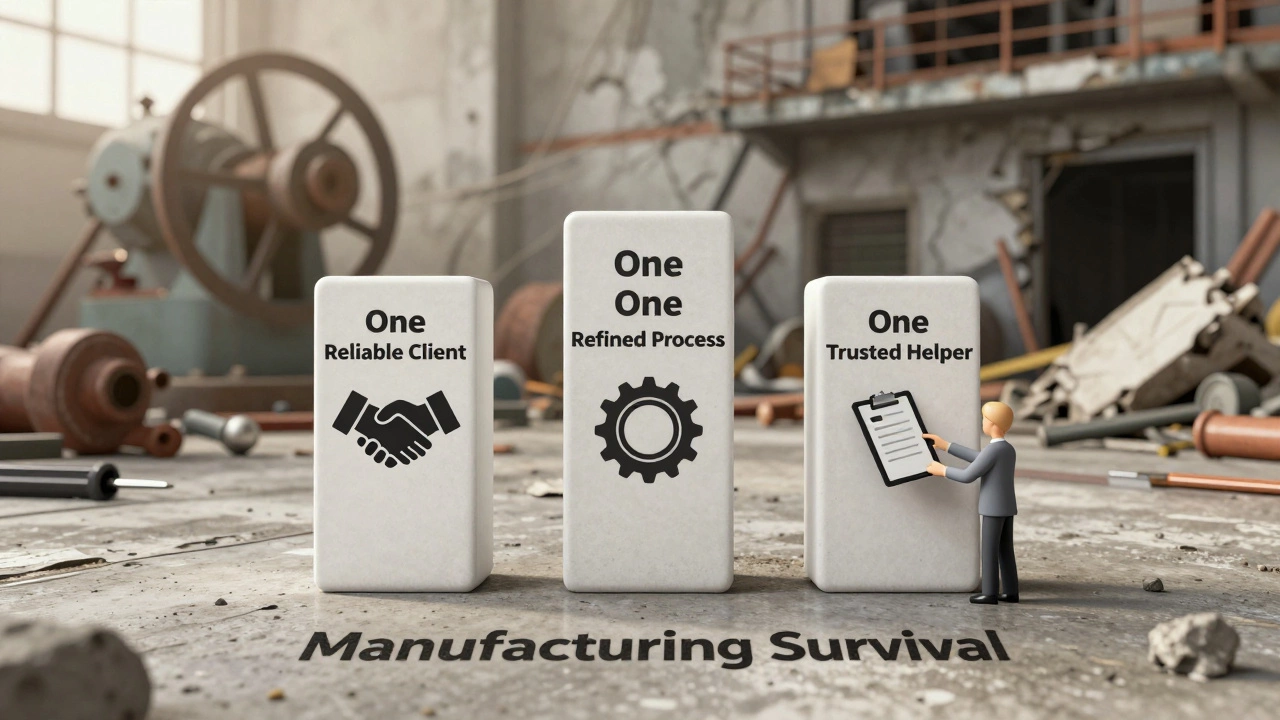
The startups that survive? They don’t have the flashiest machines. They don’t have venture funding. They have three things:- One reliable client who pays on time and gives repeat orders.
- One process they’ve refined so much it’s almost automatic.
- One person they trust to handle something - even if it’s just inventory.
That’s it. No fancy software. No AI. No investor pitch decks. Just discipline. Consistency. And a refusal to chase growth that doesn’t come with cash.
Manufacturing isn’t about innovation. It’s about repetition. The winners aren’t the ones who invent something new. They’re the ones who show up, every day, and do the boring stuff right.
Why do most manufacturing startups fail within the first two years?
Most fail because they run out of cash before they build reliable customer relationships. They focus on production instead of payment cycles, assume demand will cover costs, and don’t track working capital. The average manufacturing startup needs 6-9 months of operating cash just to survive the first order delays. Without that buffer, even profitable businesses collapse.
Is it true that bad product quality causes most failures?
Not directly. Poor quality is a symptom, not the root cause. The real issue is inconsistent quality control. Startups often produce great samples but fail to maintain standards under pressure. One batch of defective parts can destroy trust. Clients don’t leave because a part was 0.1mm off - they leave because they can’t count on you anymore.
Can a small manufacturing business survive without marketing?
No - not if you want to grow. Marketing in manufacturing isn’t about ads. It’s about visibility. Trade shows, LinkedIn posts, case studies, and direct outreach to procurement managers are how you get found. Many founders think their product speaks for itself. But in a crowded market, if no one knows you exist, you’re invisible - no matter how good your parts are.
How much cash should a manufacturing startup keep on hand?
At least three months of operating expenses - not revenue. That includes raw materials, payroll, utilities, rent, and loan payments. Many startups think they can rely on future sales to cover current costs. That’s a gamble. The average manufacturing business takes 45-75 days to get paid. If your supplier demands payment in 15, you need a cash cushion to bridge the gap.
Should I invest in expensive machinery right away?
No. Start with what you need to fulfill your first 3-5 orders. Buy used equipment if possible. Lease instead of owning. Expensive machinery looks impressive but locks you into high fixed costs. If demand drops, you’re stuck with debt and idle assets. Flexibility matters more than capacity in the early years.
What to Do Next
If you’re thinking of starting a manufacturing business, here’s what to do right now:- Identify one niche customer - not ten. Who needs exactly what you make? Get them to commit to a small order.
- Calculate your cash burn. How much do you spend per week? How long until you get paid? If it’s more than 60 days, you need more cash.
- Set up one simple quality check. Pick one product. Check one unit per batch. Log it. Do it for 30 days.
- Hire one person for one task. Bookkeeping. Inventory. Social media. Don’t do it all.
- Attend one trade show. Even if it’s local. Talk to five buyers. Listen. Don’t pitch.
Manufacturing isn’t about big dreams. It’s about small, daily wins. The 10% that survive? They didn’t have better ideas. They just didn’t quit.