Manufacturing Waste Cost Calculator
Select Waste Type
Click on the type of waste you want to analyze.
Results will appear here
Select a waste type and enter your data to see the potential hidden costs.
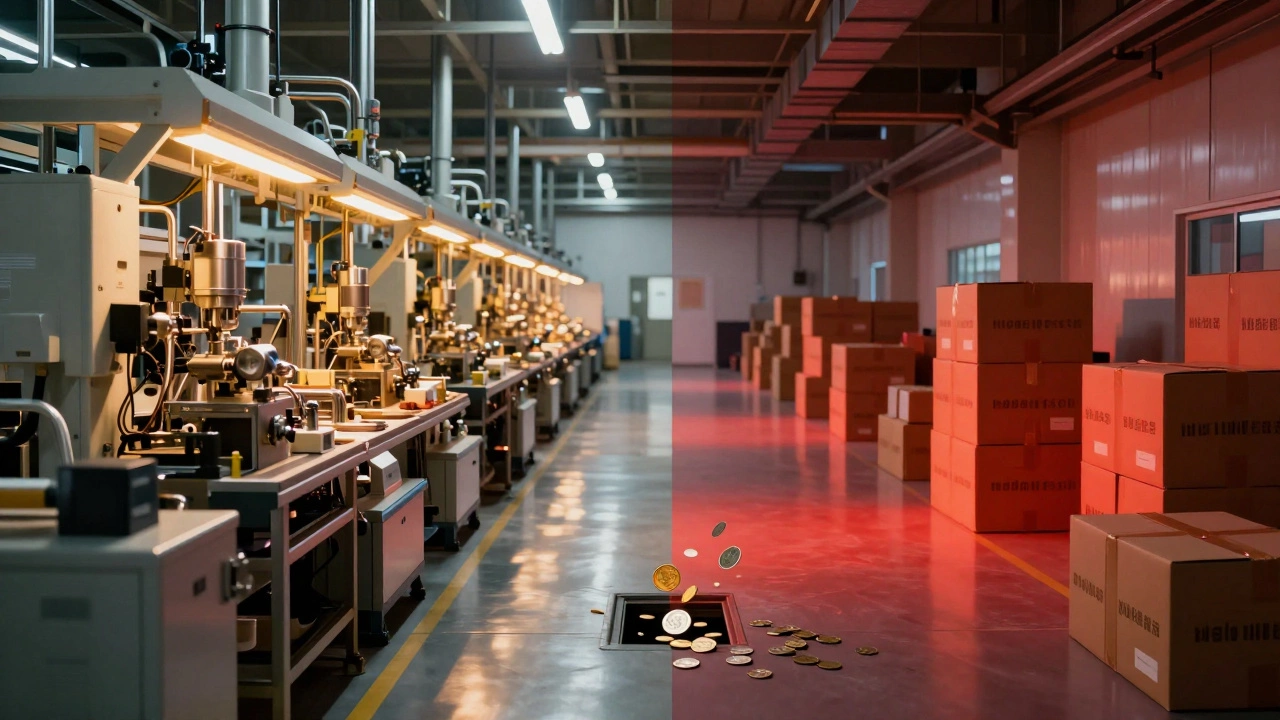
Imagine a factory floor where machines hum efficiently, but half the energy goes into heating empty space. Or picture a warehouse stacked with inventory that no customer has ordered yet, tying up cash that could fund new product development. This isn't a hypothetical nightmare; it is the daily reality for many manufacturers who struggle to identify where their resources are leaking away.
If you are looking for manufacturing startup ideas, understanding waste is your first step toward profitability. The biggest waste in manufacturing is not just scrap material or broken parts-it is often invisible inefficiencies like waiting time, overproduction, and underutilized talent. By identifying these hidden drains, you can build a business model that prioritizes flow, value, and sustainability from day one.
The Seven Types of Waste in Lean Manufacturing
To understand what constitutes the "biggest" waste, we need to look at the framework established by the Toyota Production System (TPS). Known as Muda is the Japanese term for waste in lean manufacturing, categorized into seven distinct types that reduce efficiency and increase costs. These categories help us dissect operations and find where value is lost.
- Overproduction: Making more than is needed, when it is needed. This is often cited as the worst form of waste because it hides other problems and ties up capital in inventory.
- Waiting: Idle time when people, materials, or machines are not being used effectively.
- Transportation: Unnecessary movement of products between processes, which adds cost without adding value.
- Over-processing: Doing more work on a product than the customer requires or values.
- Inventory: Excess raw materials, work-in-progress (WIP), or finished goods that sit idle.
- Motion: Unnecessary movement by people or equipment within a workspace.
- Defects: Products that do not meet quality standards, requiring rework or scrapping.
While all seven are critical, Overproduction is generally considered the most significant waste because it creates excess inventory, masks process issues, and consumes resources before there is a confirmed demand. It acts as a blanket that covers up deeper systemic failures in scheduling, communication, and quality control.
Why Overproduction Is the Root of All Evil
Think about a local bakery that bakes 100 loaves of bread every morning because they expect high demand. If only 60 sell, the remaining 40 go stale and must be thrown away. That is direct financial loss. But in manufacturing, the ripple effects are far more complex.
When you produce too early or too much, you create a buffer that seems helpful but is actually destructive. Here is why:
- It hides bottlenecks: If you have piles of WIP (Work in Progress) moving through your line, you won't notice when Machine B is slower than Machine A until the pile becomes unmanageable. Just-in-Time (JIT) production forces these issues to the surface so they can be fixed.
- It increases storage costs: Every square foot of warehouse space occupied by unsold goods is money spent on rent, insurance, and handling.
- It risks obsolescence: In industries like electronics or fashion, producing ahead of demand means your inventory might become outdated before it even sells.
For a startup, this is particularly dangerous. You likely have limited cash flow. Tying up thousands of dollars in raw materials and unfinished products can cripple your ability to pivot, hire, or market your business.
The Hidden Cost of Waiting and Motion
While overproduction gets the spotlight, Waiting is a pervasive form of waste where employees, machines, or materials remain idle due to poor scheduling, lack of information, or upstream delays. In many factories, operators spend up to 50% of their shift waiting for instructions, parts, or machine cycles to complete.
Consider a CNC machining shop. If the programmer spends two hours writing code, but the machine operator sits idle for an hour waiting for that code to be approved, you are paying for labor that produces nothing. This is not just about payroll; it is about morale. Skilled workers get frustrated when they cannot do their jobs effectively.
Similarly, Motion is unnecessary physical movement by workers, such as walking long distances to fetch tools or bending repeatedly to reach parts, which leads to fatigue and reduced productivity. A study by the National Institute for Occupational Safety and Health (NIOSH) found that ergonomic improvements reducing motion waste can cut injury rates by up to 30%. For a startup, designing your layout for minimal motion from the start saves both health costs and time.
Defects: The Double Whammy
Defects are products or services that fail to meet quality standards, resulting in rework, scrap, returns, and potential damage to brand reputation. Defects are expensive because they represent wasted material, wasted labor, and wasted shipping costs. But the real cost comes from the reaction to defects.
When a defect occurs, teams often scramble to fix it. This creates chaos. Orders get delayed. Customers get angry. And the root cause is rarely addressed-only the symptom. In lean terms, this is called "firefighting." Startups that focus on building quality into the process (Poka-Yoke, or mistake-proofing) rather than inspecting it out at the end save significantly more money in the long run.
| Type of Waste | Primary Impact | Startup Risk Level | Mitigation Strategy |
|---|---|---|---|
| Overproduction | Ties up cash flow, hides problems | Critical | Implement Pull Systems / Kanban |
| Waiting | Reduces throughput, lowers morale | High | Better scheduling, cross-training |
| Defects | Increases costs, damages reputation | High | Poka-Yoke, statistical process control |
| Inventory | Storage costs, risk of obsolescence | Medium | Just-in-Time delivery, vendor partnerships |
| Motion | Worker fatigue, slower cycle times | Low-Medium | 5S workplace organization |
How Startups Can Turn Waste Reduction Into a Competitive Advantage
Many large manufacturers are slow to change because they are bogged down by legacy systems and entrenched cultures. As a startup, you have the agility to design your processes correctly from the beginning. This is your opportunity to build a lean culture that attracts investors and customers alike.
Here are three actionable steps to eliminate waste and boost efficiency:
1. Map Your Value Stream
A Value Stream Map is a visual tool that depicts the flow of materials and information required to bring a product to the customer, highlighting areas of waste and delay. Don't guess where your waste is. Draw it out. Include every step from raw material receipt to final delivery. Identify where things stop, wait, or move unnecessarily. This simple exercise often reveals surprises, such as a bottleneck you didn't know existed.
2. Implement a Pull System
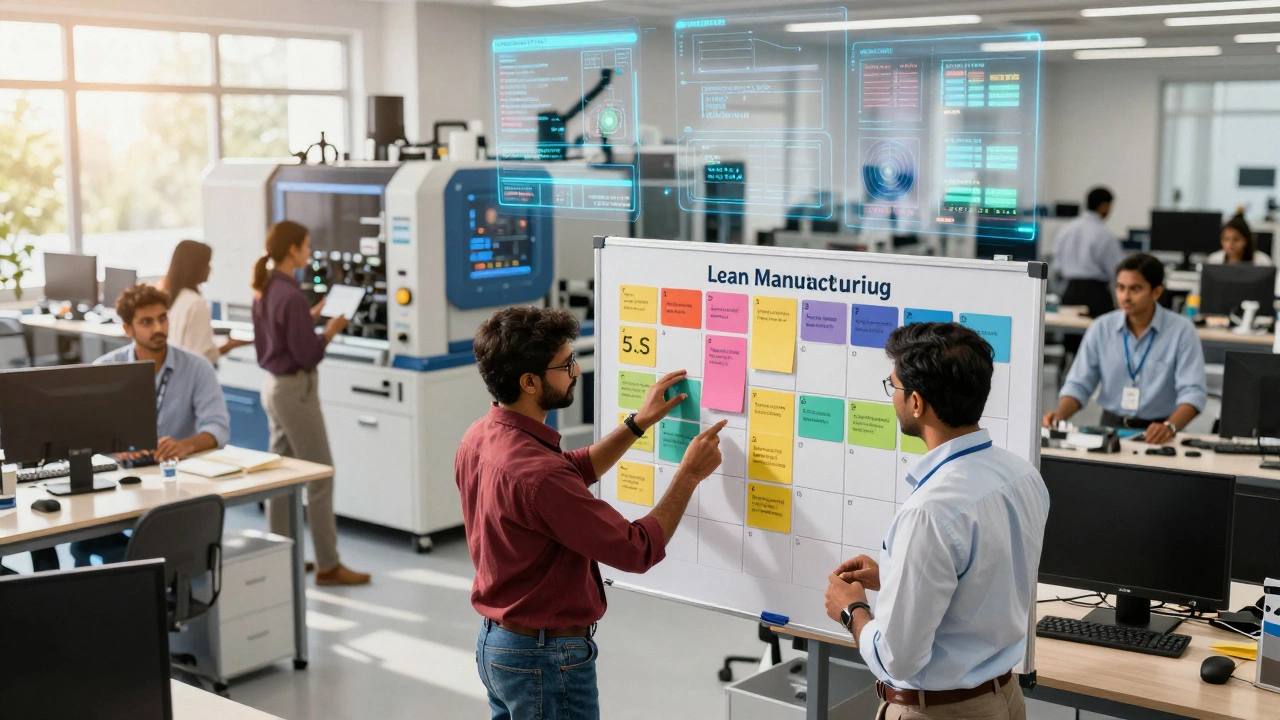
Instead of pushing products through your system based on forecasts (which are often wrong), use a pull system. Only produce what the next stage-or the customer-has requested. Tools like Kanban boards are visual signaling systems used in lean manufacturing to control the flow of work and limit work-in-progress, ensuring production matches demand. can help manage this. For a digital manufacturing startup, this might mean integrating your ERP with real-time order data to trigger production automatically.
3. Empower Your Team
Waste reduction is not just a management problem; it is a team sport. Frontline workers see the inefficiencies every day. Create a culture where employees feel safe suggesting improvements. Offer small incentives for ideas that save time or reduce scrap. When your team owns the process, they will protect its efficiency.
The Role of Technology in Modern Waste Reduction
In 2026, technology plays a bigger role than ever in identifying and eliminating waste. Industry 4.0 refers to the fourth industrial revolution, characterized by the integration of cyber-physical systems, IoT, AI, and big data analytics into manufacturing processes to enhance efficiency and flexibility.
Sensors on machines can predict maintenance needs before a breakdown occurs, preventing waiting time. AI algorithms can optimize production schedules in real-time, reducing overproduction. Digital twins allow you to simulate changes to your layout or process before implementing them physically, minimizing trial-and-error waste.
However, technology is not a silver bullet. It amplifies existing processes. If your underlying workflow is wasteful, automation will just make you waste faster. Always start with lean principles, then layer on technology to support and scale those improvements.
Conclusion: Building a Lean Startup Mindset
The biggest waste in manufacturing is not a single thing; it is a mindset that accepts inefficiency as normal. Whether it is overproduction, waiting, or defects, each type of waste erodes your profit margin and competitive edge. By adopting lean principles from the start, you position your manufacturing business for sustainable growth.
Remember, waste reduction is a journey, not a destination. Continuously monitor your processes, engage your team, and leverage technology wisely. In doing so, you won't just survive-you'll thrive in an increasingly competitive market.
What is the most common type of waste in manufacturing?
Overproduction is widely considered the most common and damaging type of waste. It involves making more products than necessary or producing them earlier than needed, which ties up capital, increases storage costs, and masks underlying process issues.
How can small manufacturers reduce waste without expensive software?
Small manufacturers can start with low-cost lean tools like 5S (Sort, Set in order, Shine, Standardize, Sustain) to organize their workspace, reducing motion and search time. Implementing visual management techniques, such as color-coded labels and shadow boards for tools, also helps minimize waste effectively.
Is inventory always considered waste?
In lean manufacturing, excess inventory is viewed as waste because it ties up cash and hides problems. However, some strategic safety stock may be necessary depending on supply chain volatility. The goal is to minimize inventory to the lowest level that still ensures smooth operations.
What is Poka-Yoke and how does it help reduce defects?
Poka-Yoke is a Japanese term meaning "mistake-proofing." It refers to mechanisms or devices designed to prevent errors before they occur. For example, a fixture that only allows a part to be inserted in the correct orientation eliminates assembly mistakes, thereby reducing defects and rework.
How does waiting impact employee morale?
Waiting causes frustration and disengagement among employees. When workers are idle due to poor planning or bottlenecks, they feel undervalued and unable to contribute effectively. Reducing waiting time improves job satisfaction and overall productivity.